
Botany
Degree
Bachelor of Arts, Bachelor of Science | College of Arts and Science
What is Botany?
Botany is not just about flowers and trees. Nearly all natural science disciplines involve plant biology in some way. Botanists study organisms ranging in size from microscopic algae in thermal springs to giant redwood trees in California and fungal organisms an acre or more in size. Botanical science ranges from the molecular to the organismal, and from individual organisms to the world biosphere.
What are the features of Miami's program?
Top ranking
More than one-third of all the Young Botanist Awards made by the Botanical Society of America since 1979 have gone to Miami undergraduates. The botany program produces approximately 15 percent of all the students in the United States who ultimately go on to receive a Ph.D. in botany or a related discipline.
Undergraduate research
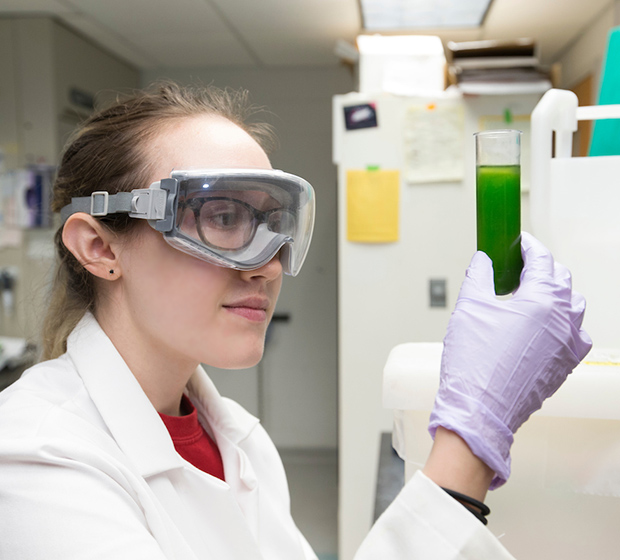
Students have unique opportunities to do hands-on research with faculty members. A full internship program is available, and students are supported with funding to do research and to travel to professional meetings. In addition, students have the opportunity to study in many locations around the world, including the Bahamas, Belize, Mexico, Kenya, and Nova Scotia. Students also publish their research in scientific literature and present their papers at national conferences.
Interdisciplinary approach
Miami's botany program has strong ties with the programs in zoology and microbiology. Because all three of these sciences are located in the same building, Pearson Hall, the departments have cross-disciplinary areas of study and research. This gives a disciplinary depth and a student learning environment typically found only in much larger research universities.
Excellent employment rate
More than 90 percent of our graduates are employed in major-related positions within six months of graduation, and placement into graduate programs approaches 100 percent.
Top-notch facilities
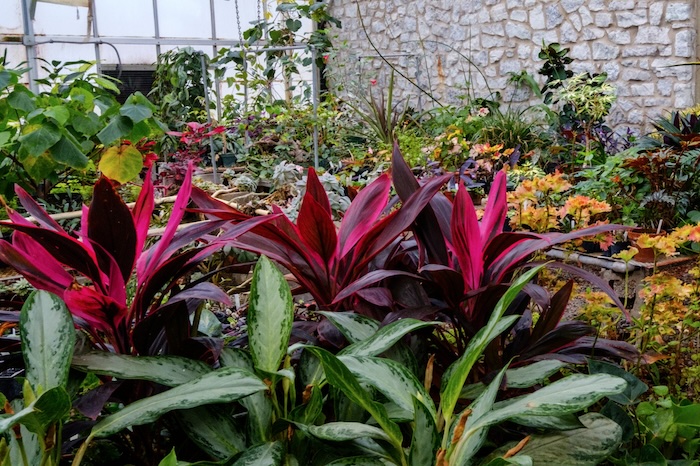
The facilities supporting study in botany at Miami include three greenhouses; the Turrell Herbarium, one of the best university herbaria (collections of preserved plants) in the United States; and a plant growth chamber facility. Our 25 teaching laboratories are located in Pearson Hall, which houses more undergraduate botany majors than any other biological sciences unit in the state of Ohio. Pearson Hall also contains the best electron microscope and molecular biology facilities in the country.
Study abroad
Outdoor study can be done not only at the Ecology Research Center, the Bachelor Wildlife Reserve, nearby Hueston Woods State Park, or the campus itself, but in many locations around the globe. Our programs of study and summer research workshops give you opportunities to learn and work in diverse geographic locales. These workshops are sometimes integrated with affiliated programs in other majors, such as geology and geography. The tropical flora of the Bahamas, the biodiversity of Kenya, and the natural history of the boreal ecosystem of Nova Scotia are some of the courses offered during the summer. Miami's botany department also has a cooperative agreement with the Autonomous University of Tamaulipas in Mexico. You can have a cross-cultural experience while doing research projects in conjunction with students from Mexico. Mexican students also come to Miami to study as part of the agreement.
Are there special admission requirements?
There are no additional admission requirements for this program.
What courses would I take?
The Bachelor of Arts programs emphasize a broad curriculum, allowing you to pursue additional studies in the liberal arts. For both the basic major and the major with Environmental Science emphasis, botany courses are a core part of study, with related courses in mathematics, chemistry, physics, geology, and geography.
Three Bachelor of Science degree programs are offered: the basic major, the major with Environmental Science emphasis, and the major with Plant Biotechnology emphasis. All programs concentrate strongly on botany courses, with the basic major requiring related courses in mathematics and physics. A thematic sequence in chemistry is also required for the Bachelor of Science, as many graduate schools require a solid background in this particular study in addition to the botany major.
What can I do with this major?
Botany majors are highly successful at gaining admission into graduate and professional schools or entering the profession in education, industry, government, and non-governmental organizations. Many of our graduates become teachers, researchers, or park naturalists upon graduation, or enter graduate schools in ecology and molecular biology, among other fields. They have a high success rate of entry into medical and law schools (with some of the latter specializing in environmental or patent law).
Who can I contact for more information?
Department of Botany
316 Pearson Hall
Miami University
Oxford, OH 45056
513-529-4200
www.muohio.edu/botany