
Miami earns perfect score on Ohio’s science of reading audit
From college classrooms to local libraries, EHS excels in reading instruction by supporting students, teachers, and families across the region
•
Published
•
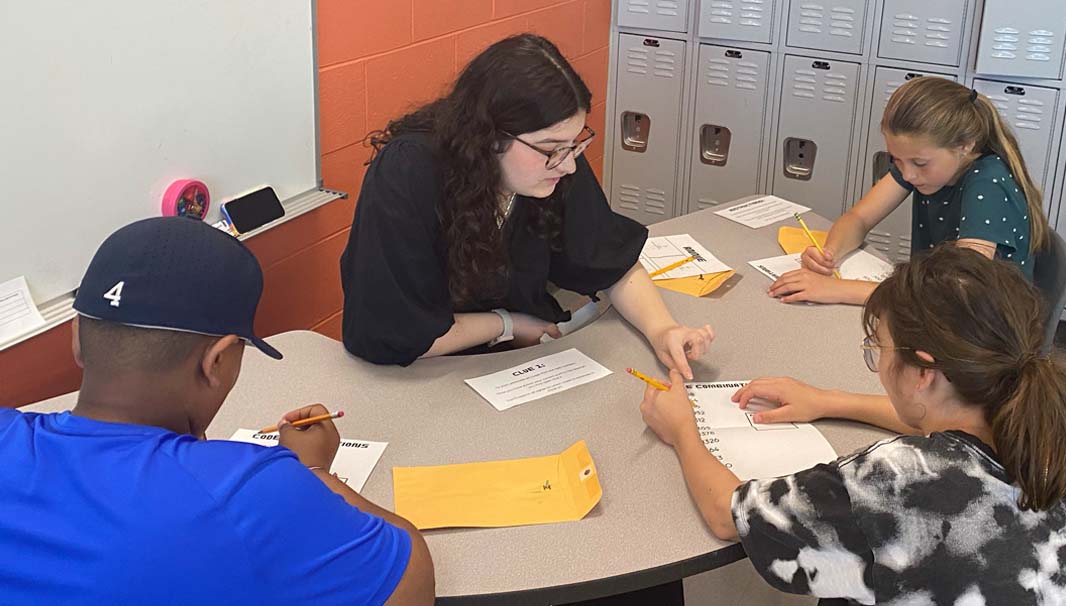
Miami students tutored and helped implement structured literacy interventions for fifth graders at Kramer Elementary
Miami earns perfect score on Ohio’s science of reading audit
From college classrooms to local libraries, EHS excels in reading instruction by supporting students, teachers, and families across the region
•
Published
•
After an intense and thorough review of its entire reading and literacy instruction curricula, the College of Education, Health, and Society (EHS) earned a perfect 100% compliance score on the science of reading audit conducted by the Ohio Department of Higher Education (ODHE).
The score reflects how closely higher education institutions aligned their coursework, instructional materials, and teaching practices with Ohio's new science of reading requirements, which represents a major shift in modern K-12 evidence-based literacy instruction for college students studying to become teachers.
This achievement was also the result of no ordinary audit.
Conducted under the direction of ODHE, the audit unfolded over several months and thoroughly reviewed all related syllabi for 23 different EHS courses, examined textbooks, course reading materials, and even observed faculty teaching and interacting with students in class. Student surveys and additional interviews with faculty and administrative leadership were conducted as well.
“They did a very comprehensive analysis,” said EHS dean Amity Noltemeyer. “The state of Ohio is really committed to making sure the new requirements were put into practice, and it was not an easy process. It really required our faculty to come together, to figure out how to rethink our curriculum, how to reorganize it, and how to ensure that everything now required will be taught.”
To meet the new directives, several departments came together including faculty from the Department of Teaching, Curriculum, and Educational Inquiry (TCE), the Department of Educational Psychology (EDP), and the Department of Education and Society through Miami’s Regional campus.
“This audit is important because it shows EHS, and our departments, at our best in regards to teamwork, curriculum work, learning new pedagogy, and organizing ourselves for teaching excellence,” said Ganiva Reyes, TCE chair and associate professor. “This was immense labor in a compressed amount of time, but the literacy faculty pulled through and came together to revise curriculum to help best prepare future teachers.”
These audit results also reflect just the latest example of EHS’s long-standing commitment to provide impactful programs and innovative approaches around reading and literacy instruction.
Earlier this year, EHS was recognized nationally when its undergraduate elementary teacher preparation program earned an “A” grade in Reading Foundations from the National Council on Teacher Quality.
Recently, EHS also expanded its literacy offerings by launching Orton-Gillingham certification workshops for undergraduate and graduate students. Led by EDP associate professor Sarah Watt, who, after completing the intensive training herself, can now provide Miami students with a hands-on, science-based reading instruction that will further strengthen their ability to enter modern classrooms.
“It’s a unique certification for undergraduate students to walk into a classroom with, and it’s highly sought out by principals and the people who are hiring them,” Watt said. “We have offered three workshops now, and with this training also comes a full curriculum. So students have all the materials to teach kindergarten through third grade.”
The EHS Field Office also just completed a two-year ODHE science of reading grant, which allowed 28 Miami student teachers to work alongside experienced Lakota Local School District teachers. This project not only offered training in science of reading principles, it also provided materials for use in Lakota classrooms and helped build a deeper relationship with a local school partner.
Across the wider region, EHS even strengthened its community engagement efforts through another partnership with local public libraries to support families in southwestern Ohio.
Now, parents visiting several Lane Library locations can attend interactive workshops and receive tool kits. Led and created by EHS faculty and students, each provides the knowledge and resources needed to give quality reading instruction at home, including the importance of reading to children, the kinds of books that best facilitate learning, how to avoid common misconceptions, and more.
Watt is overseeing additional public library programs that will soon invite retirees and other community members to get involved as well. These upcoming literacy workshops will be for anyone interested in volunteering to help tutor and teach young children how to read.
All of these programs and initiatives — in college classrooms and local schools and throughout the community — mirror EHS’s broader commitment to advance reading instruction that meets the needs of today’s learners, as well as the educators who serve them across the state.
“What we’re most proud of is how our faculty came together across programs and departments to improve our curriculum,” Noltemeyer said. “And our community-focused work also shows that we're not just concerned about preparing our students in the science of reading, but also how we work with the community to support all K-12 students.”
The score reflects how closely higher education institutions aligned their coursework, instructional materials, and teaching practices with Ohio's new science of reading requirements, which represents a major shift in modern K-12 evidence-based literacy instruction for college students studying to become teachers.
This achievement was also the result of no ordinary audit.
Conducted under the direction of ODHE, the audit unfolded over several months and thoroughly reviewed all related syllabi for 23 different EHS courses, examined textbooks, course reading materials, and even observed faculty teaching and interacting with students in class. Student surveys and additional interviews with faculty and administrative leadership were conducted as well.
“They did a very comprehensive analysis,” said EHS dean Amity Noltemeyer. “The state of Ohio is really committed to making sure the new requirements were put into practice, and it was not an easy process. It really required our faculty to come together, to figure out how to rethink our curriculum, how to reorganize it, and how to ensure that everything now required will be taught.”
To meet the new directives, several departments came together including faculty from the Department of Teaching, Curriculum, and Educational Inquiry (TCE), the Department of Educational Psychology (EDP), and the Department of Education and Society through Miami’s Regional campus.
“This audit is important because it shows EHS, and our departments, at our best in regards to teamwork, curriculum work, learning new pedagogy, and organizing ourselves for teaching excellence,” said Ganiva Reyes, TCE chair and associate professor. “This was immense labor in a compressed amount of time, but the literacy faculty pulled through and came together to revise curriculum to help best prepare future teachers.”
These audit results also reflect just the latest example of EHS’s long-standing commitment to provide impactful programs and innovative approaches around reading and literacy instruction.
Earlier this year, EHS was recognized nationally when its undergraduate elementary teacher preparation program earned an “A” grade in Reading Foundations from the National Council on Teacher Quality.
Recently, EHS also expanded its literacy offerings by launching Orton-Gillingham certification workshops for undergraduate and graduate students. Led by EDP associate professor Sarah Watt, who, after completing the intensive training herself, can now provide Miami students with a hands-on, science-based reading instruction that will further strengthen their ability to enter modern classrooms.
“It’s a unique certification for undergraduate students to walk into a classroom with, and it’s highly sought out by principals and the people who are hiring them,” Watt said. “We have offered three workshops now, and with this training also comes a full curriculum. So students have all the materials to teach kindergarten through third grade.”
The EHS Field Office also just completed a two-year ODHE science of reading grant, which allowed 28 Miami student teachers to work alongside experienced Lakota Local School District teachers. This project not only offered training in science of reading principles, it also provided materials for use in Lakota classrooms and helped build a deeper relationship with a local school partner.
Across the wider region, EHS even strengthened its community engagement efforts through another partnership with local public libraries to support families in southwestern Ohio.
Now, parents visiting several Lane Library locations can attend interactive workshops and receive tool kits. Led and created by EHS faculty and students, each provides the knowledge and resources needed to give quality reading instruction at home, including the importance of reading to children, the kinds of books that best facilitate learning, how to avoid common misconceptions, and more.
Watt is overseeing additional public library programs that will soon invite retirees and other community members to get involved as well. These upcoming literacy workshops will be for anyone interested in volunteering to help tutor and teach young children how to read.
All of these programs and initiatives — in college classrooms and local schools and throughout the community — mirror EHS’s broader commitment to advance reading instruction that meets the needs of today’s learners, as well as the educators who serve them across the state.
“What we’re most proud of is how our faculty came together across programs and departments to improve our curriculum,” Noltemeyer said. “And our community-focused work also shows that we're not just concerned about preparing our students in the science of reading, but also how we work with the community to support all K-12 students.”
Established in 1809, Miami University is located in Oxford, Ohio, with regional campuses in Hamilton and Middletown, a learning center in West Chester, and a European study center in Luxembourg. Interested in learning more about the College of Education, Health, and Society? Visit their website for more information.