
Gift from Miami faculty member expands youth leadership statewide
Gift from Miami faculty member expands youth leadership statewide
When Leah Wasburn-Moses began studying how minimal interventions could create meaningful change for young people, she did not expect that two decades of research, teaching, and community partnership would lead to one of the largest youth voice initiatives in Ohio. But this year, the professor of special education in Miami University’s Department of Educational Psychology has helped establish a permanently restricted endowment that will support youth-led advocacy and community service across all Boys and Girls Clubs of Ohio.
The endowment expands a model that Wasburn-Moses piloted in summer 2025. With support from Butler County United Way, she provided three local youth-serving organizations with modest funding and a simple structure for youth-led service projects. Each group received $200 and one page of instructions, and was then encouraged to take ownership of the work. Over eight weeks, youth leaders from the Hamilton Boys and Girls Club, Living Water in Hamilton, and CBI Middletown designed and implemented their own community projects. Their feedback helped shape the statewide program now being launched.
“It cannot rely on one single person or close oversight,” she said. “These microgrants ensure Ohio youth will always have opportunities to serve, lead, and innovate.”
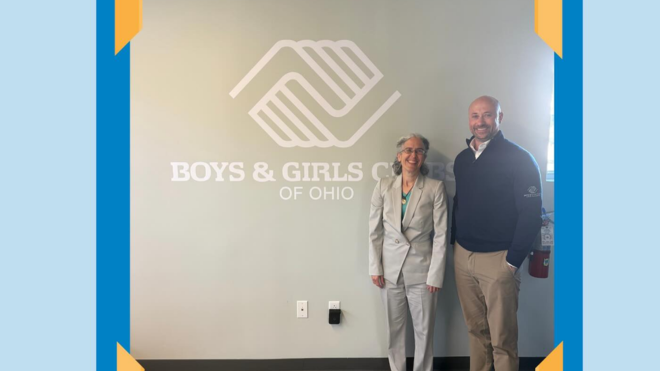
Tommy John, CEO of the Boys and Girls Clubs of Hamilton, helped connect Leah and her work to the Statewide Alliance. Inspired by the model and its early impact, Wasburn-Moses made the philanthropic gift that now establishes the long-term endowment. The funding will support an annual youth-led advocacy program in all Boys and Girls Clubs across Ohio and strengthen civic engagement opportunities for youth for years to come.
Wasburn-Moses says her contribution reflects what she has learned from her two decades at Miami. Her work has focused on school and community partnerships and on identifying minimal, research-informed strategies that help young people thrive. In recent years, she collaborated with colleagues, including Student-Teaching Placement Coordinator Kara Conniff and Miami students Janelle Tipton and Jack Komer, to test interventions that build relationships, support motivation, and promote positive behavior. In her classes, she helps future teachers understand how choice, initiative, and supportive environments prevent many common classroom challenges.
Her decision to make a philanthropic gift was also shaped by personal experience. After inheriting her parents' home in West Lafayette, Indiana, in 2023 following her father’s death from COVID, she sought to create something positive from a difficult transition. “I had always wanted to establish a legacy in the area I care about most — teens who need support to reach their full potential,” she said.
To her, the endowment is transformational because it prioritizes youth ownership in ways not typically seen. While community service is common in youth programming, she notes that fully youth-led service is less frequent, youth-controlled budgets and incentives are rare, and permanent funding is almost unheard of.
“Our youth are most often the recipients of our ideas and our service,” Wasburn-Moses said. “We need to expand this model by creating the space for youth to lead and then sit back and see where they take us.”
As the statewide effort launches, Boys and Girls Clubs will highlight and share project outcomes to elevate youth voice and build momentum across communities. For Wasburn-Moses, the most important message is simple: “Even a relatively small investment can create a unique legacy that will make this world a better place than how you found it.”
This article was written with editorial assistance from AI tools Grammarly and ChatGPT