
Academics
Education in Leadership
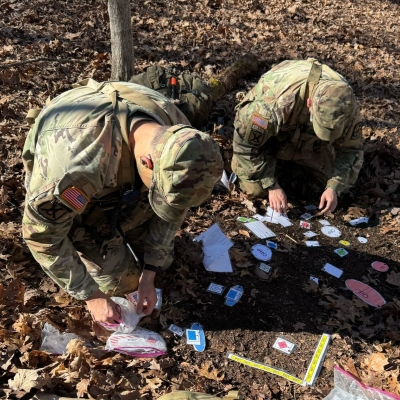
Miami University Army ROTC focuses on developing cadets as Students, Athletes, and Leaders to commission as quality Second Lieutenants for any U.S. Army component. The curriculum uses Military Science (MSC) courses with required co-requisite Leadership Labs for hands-on application of leadership, tactics, and Army values. These integrate with your major coursework. Students that complete their Junior and Senior year will earn a Minor in Military and Strategic Leadership.
Prospective cadets can enroll in lower-level courses with no military obligation. Contracted cadets (scholarship or obligation) must meet Army standards for progression, including GPA, fitness scores, and medical clearance. Juniors (MS3) are required to be contracted to enroll in advanced courses and attend Cadet Summer Training (Advanced Camp).
If you need enrollment assistance, keep your schedule open for the course's time block and contact the program cadre for an override.
Part of the ROTC Curriculum is a requirement to take a US History Course. Cadets will need to take History 111 or History 112 to meet this requirement. AP credit for HST111 or HST112 is accepted.
Courses follow Army ROTC's standard progression, with credits totaling 8 per year (including labs), keeping the program flexible alongside Miami's academics. All include mandatory weekly Leadership Labs (often Thursdays, 2+ hours) for practical training in drill, tactics, land navigation, patrolling, operation orders, and small-unit leadership—uniform required on lab days.
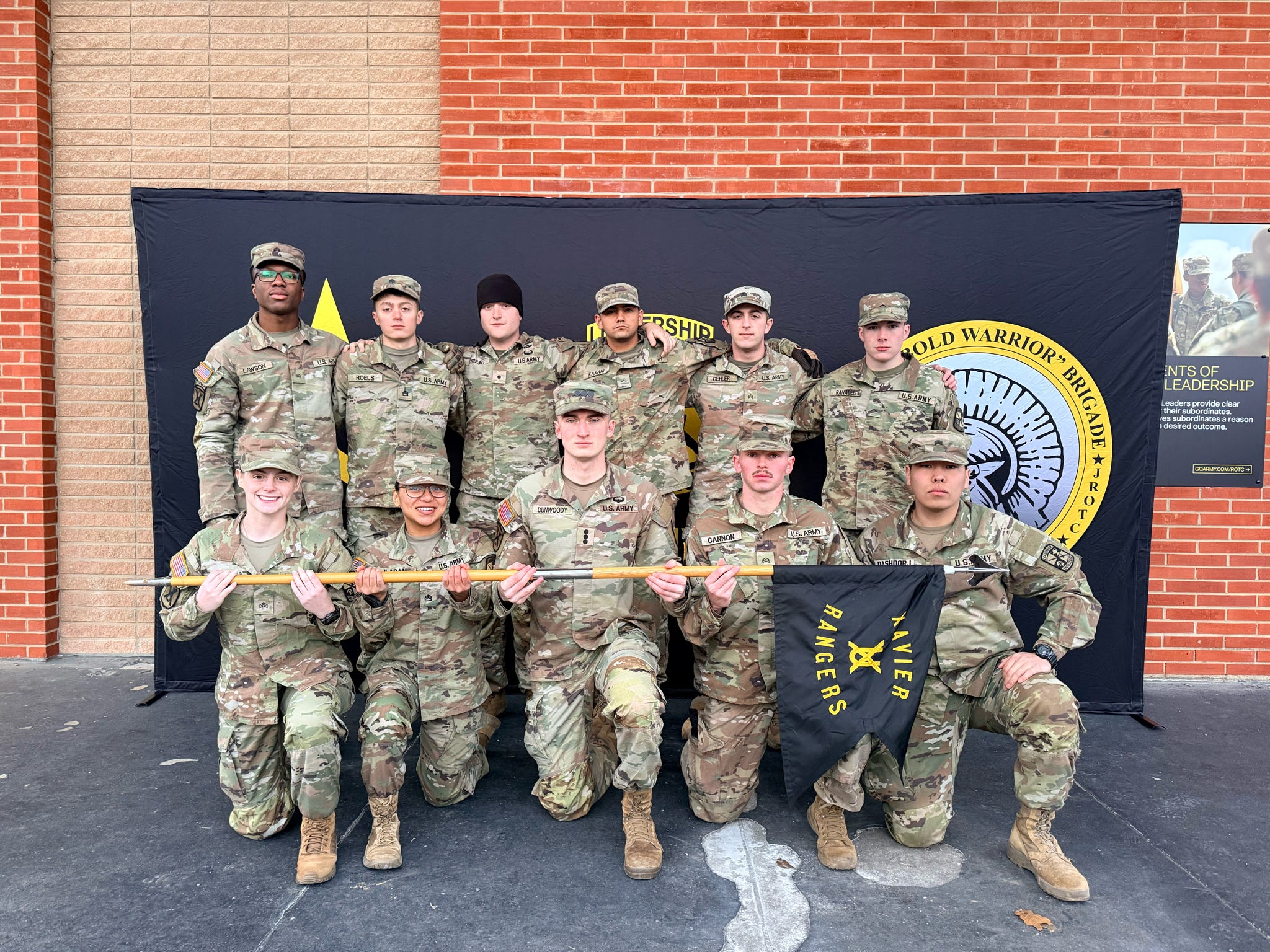
Physical Readiness Training (PRT) occurs Monday, Wednesday, and Friday from 6:00-7:30am to prepare cadets to excel on the Army Fitness Test (AFT). It's a core requirement for all cadets, emphasizing holistic health and readiness.
Additional Requirements and Opportunities
- Summer training: Basic Camp (for lateral-entry/new cadets), Advanced Camp (capstone for MS3s), and optional schools (Airborne, Air Assault, etc.).
- Extracurriculars: Ranger Challenge, Color Guard, Pershing Rifles, field training exercises (e.g., weekend FTXs), and competitive events enhance skills.
- Check the official Bulletin for the latest (schedules/credits can vary slightly year-to-year).
Miami MSC Curriculum Bulletin Link
This structure delivers rigorous yet balanced leadership development, preparing you to commission while thriving at Miami—reach out to cadre for your personalized path!
Military and Strategic Leadership Minor
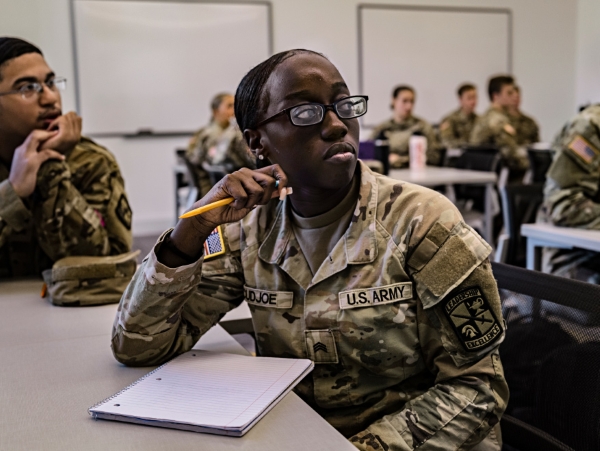
The Military and Strategic Leadership Minor provides students with advanced study in leadership, decision-making, and organizational management through the U.S. Army Reserve Officer Training Corps (ROTC) program. The curriculum emphasizes adaptive leadership, ethical reasoning, and critical thinking, with students applying classroom instruction in hands-on leadership laboratories that simulate real-world military and organizational challenges.
The minor is restricted to students who have met the prerequisites for theU.S. Army ROTC Advanced Course by successfully completing one of the following: the MSI and MSII ROTC course curriculum, ROTC Basic Camp, or U.S. Army Basic Combat Training. Courses are taught by U.S. Army–certified instructors.
Miami Army ROTC Program Links
Miami University Army ROTC
Boyd Hall, Room 102551 Western College Drive
Oxford, OH 45056 arotc@miamioh.edu (513) 529-3527