
Humanitarian engineering students study abroad with sustainability organizations
Students with a minor in Humanitarian Engineering and Computing travel to Guatemala to engage with ongoing sustainability and resource projects
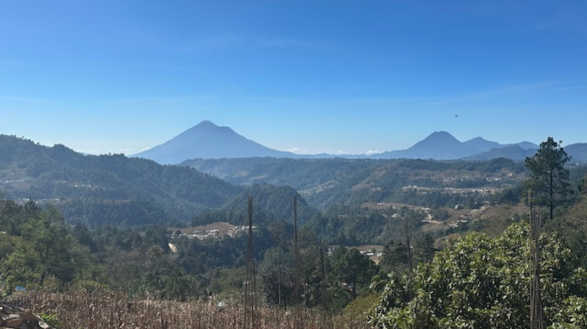
Humanitarian engineering students study abroad with sustainability organizations
Students with a minor in Humanitarian Engineering and Computing travel to Guatemala to engage with ongoing sustainability and resource projects
Miami students with a minor in Humanitarian Engineering and Computing spent last Winter Term working with sustainable food organizations and interacting with clean water initiatives.
During the two-week trip, students visited towns in Guatemala rich with cultural history. While they visited places such as Antigua and Panajachel, students primarily stayed in Jocotenango. Staying with different host families, they were able to appreciate the beauty of Guatemala while immersing themselves in their traditions, values, and daily lives.
Below are some of the individuals and projects the CEC students participating in this study abroad experience encountered!
Working with Cinco Azul
During their time abroad, students were able to coordinate with Cinco Azul, a sustainable food organization that was founded by a woman they met named Michelle. She created the company with the intention of providing fresh food to nearby communities while supporting local farmers. As an organic business, they ensure all of their products have no synthetic fertilizers, radiation, genetic modifications, growth hormones, or antibiotics. Along with this, they go beyond the bare minimum by doing things such as using their packages to transport and unload produce only to decontaminate and rotate them through the remaining orders, making the process ecofriendly by minimizing waste. Student Bri Snider was able to engage with this process as she was tasked with determining how to verify the organic quality of the products in a way that could be done in their building.
Meeting local innovators
In addition to this, students met with Yoeli, a woman who began a sustainable water initiative there. She experienced firsthand the hardships of not having access to clean water, so when she married and moved to a new location where she lived above a water deposit, she took it upon herself to transport water to communities. Building wells on their property, she created her business and began to distribute water and filtration systems at an affordable price. She even fills semi-trucks with water to reach communities at a farther distance. Her initiative has become such a large distributor that they have inspectors check their water once a month.
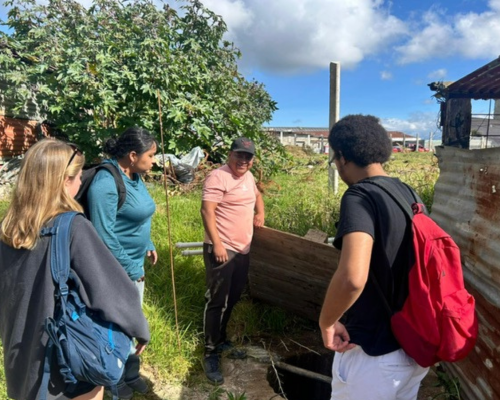
During their stay, students also met Juana, who leads an organization that provides glasses to women who need good eyesight to continue their profession of weaving. The communities they supply to are unfamiliar with the benefits of this type of technology or are far from the big cities of Guatemala where glasses are easy to access, making this distribution incredibly beneficial. The money from this establishment has even been used to fund education for children in the community.
Exploring ethics
Through meeting influential people stationed in Guatemala, students were able to comprehend global inequality and obtain higher ethical awareness, making the entire experience more personal.
“The overall experience deepened my awareness of the necessity of ethical consumption and sustainable development as well as the steps needed in order to make solutions that impact a larger and diverse community,” Snider said.
Looking ahead
Even now, less than a year later, students have already begun implementing the things they learned in Guatemala into their work.
“I didn’t know it was even possible for engineering majors to go give service and give back to different communities and countries,” student Alba Ordoñez said. "That was really cool, giving a new perspective as well as new opportunities for things you don’t see in the classroom."
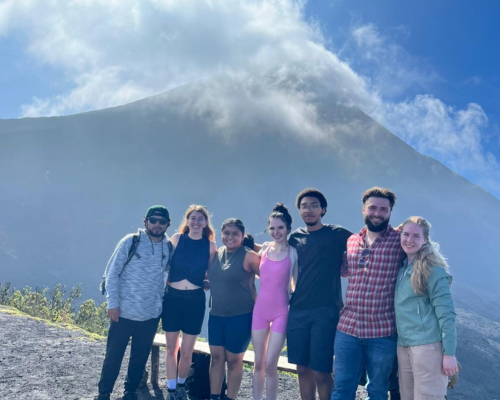 Bri Snider and Alba Ordoñez stand second and third from the left with other participants in the study abroad experience in Guatemala. Photo courtesy of Quinton Davis-Smith (third from right).
Studying abroad impacted Ordoñez to the point where she began a solar panel project the semester after she went to Guatemala. Doing this, she was able to aid Cinco Azul with the frequent blackouts in Guatemala that interfere with their refrigerating system. Alba provided them with a backup plan to preserve fresh produce if a blackout occurs overnight by working on their system, speaking with contractors in Guatemala, and making the process as cost effective as possible.
By seeing firsthand the necessity for sustainability and access to resources, students were able to create a personal connection with these issues, which has already made them more capable students and inspired them to be better citizens.