
Fall 2025 Howe Writing Center Creative Writing Contests Winners
This fall the Howe Writing Center held two overlapping creative writing contests. The first invited writers to write a prose poem engaging with works in the Department of Art Faculty and Alumni Art Exhibition at the Richard and Carole Cocks Art Museum, and the second asked for a short narrative essay focused on a cultural interaction experienced in a country different from the writers own.
Fall 2025 Howe Writing Center Creative Writing Contests Winners
This fall the Howe Writing Center held two overlapping creative writing contests. The first invited writers to write a prose poem engaging with works in the Department of Art Faculty and Alumni Art Exhibition at the Richard and Carole Cocks Art Museum, and the second asked for a short narrative essay focused on a cultural interaction experienced in a country different from the writers own.
 The Howe Writing Center is thrilled to announce the winners of their Fall 2025 Creative Writing Contests. The first contest invited writers to submit a prose poem response to an artwork in the Faculty and Alumni Art Exhibition at the Richard and Carole Cocks Art Museum, while the second sought a travel narrative about an intercultural experience.
Every semester the Howe Writing Center holds a creative writing contest, with the mission to cultivate a culture of writing that honors a range of voices and perspectives at Miami. The contests are open to submissions from any Miami undergraduate or graduate student writer.
Congratulations to our winners and thank you to everyone who submitted work for the contests!
Experiencing Faculty and Alumni Art Through Prose Poetry
Our HWC Creative Writing Contest invited writers to create prose poems engaging with a piece of artwork found in the current Faculty and Alumni Art Exhibition at the Richard and Carole Cocks Art Museum.
Here are this year’s winners:
- 1st prize: Quarter of a Thousand , Natassia York
- After Elaine Yuen’s Senbazuru’s Recall: One Thousand Cranes for Peace
- 2nd prize: Resuscitation period, Shannon Mahoney
- After Understory by Rob Robbins
- 3rd prize: Overlap, Venezia McHenry
- After Understory by Rob Robbins
- Staff Pick: Ashland, Virginia , Maureen Wilson
- After Horse in Orange by Sarah-Faith Strait
Snapshot: A Travel Writing Contest
In a joint contest with Global Initiatives, writers were asked to submit narratives about an intercultural experience--a specific interaction with a culture in a country different from your own.
Here are this year’s winners:
- 1st prize: The Road Where Strangers Stop by Anastasija Mladenovska
- 2nd prize: Seeing Mont St. Michel by Reese Horstman
- 3rd prize: Notre Dame by Emily Blanford
- Staff Pick: An Interlude in Zealandia by Natassia York
Experiencing Faculty and Alumni Art Through Prose Poetry
Quarter of a Thousand, Natassia York
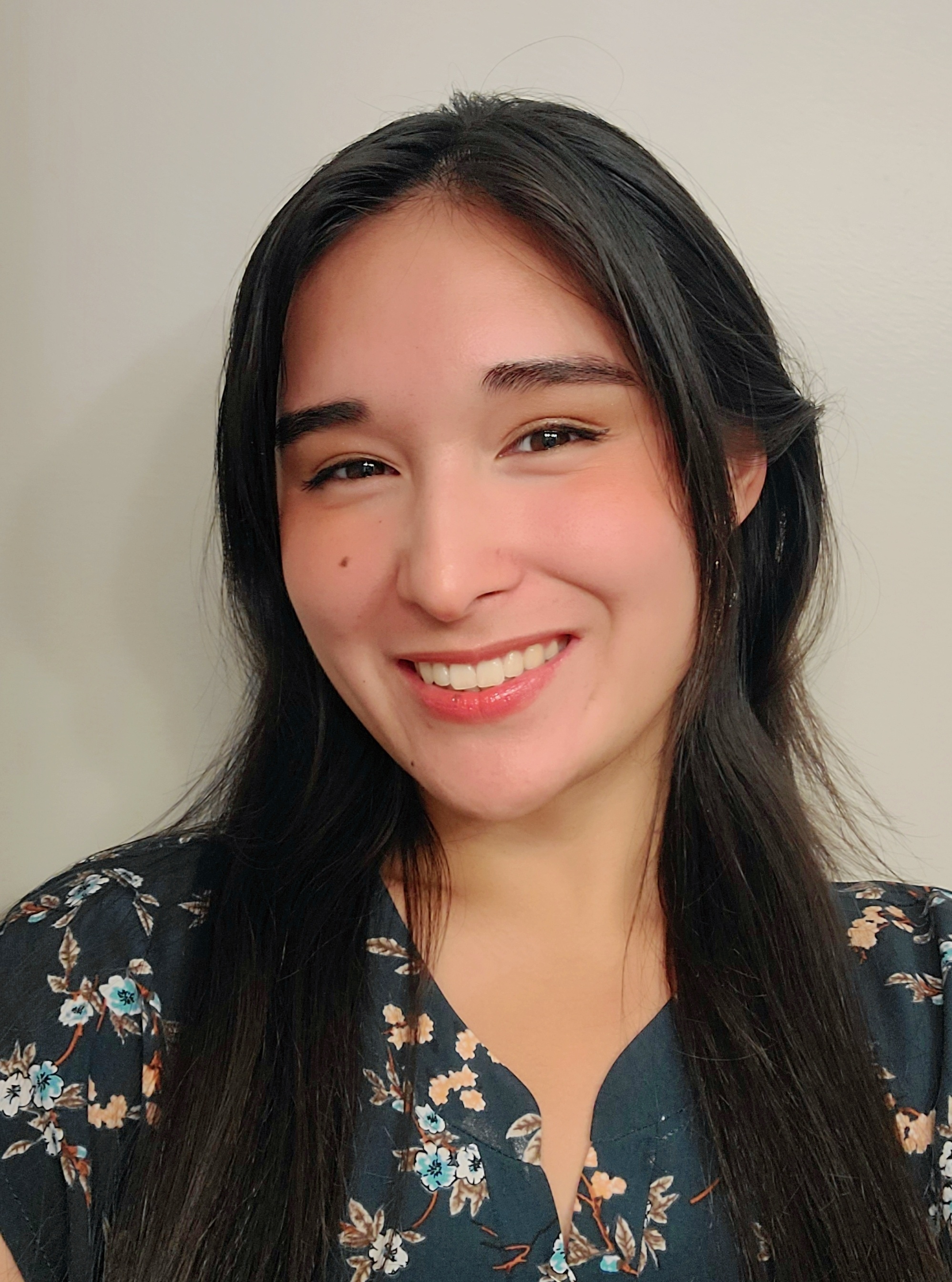 Natassia is a sophomore Art History and French double major at Miami University. Previously, she has published a creative nonfiction piece called Down Under. She is part of the executive board of the Oxford chapter of Asian American Association, which has provided an exploration of her Japanese and Chinese heritage that is a prominent inspiration in her prose piece, A Quarter of a Thousand. Professor Elaine Yuen's artwork Senbazuru's Recall: One Thousand Cranes for Peace, was the focal visual element of inspiration of this poem.
Quarter of a Thousand
After Elaine Yuen’s Senbazuru’s Recall: One Thousand Cranes for Peace
The papercut stings on my fore finger, a slice of blood like the sunset on the lakeside on the origami wing. Red on green, but would I be luckier if I learned to spread these feathers a little earlier, a little younger? Two-hundred-fifty cranes is all it would take to satisfy the quantum in my veins, but in a clan of cousins of quarter Japanese, we only manage fifty-one on the eve of Ichiro’s admittance to paper-printed eternity. Fabric fluttering head to toe and colors blooming far from home, the arteries pulse as the feeling grows; the branches twisting into roots, the bark hardening too soon; I see my features in those I pass in the street, but they don’t see themselves when they see me. It’s hard to know if I count, to know who I am, when the matriline is hushed to murmurs, safe in silence, language trailing off like the ends of my mother’s sentences, the lost adverbs corrected with red pen. Long strokes of ink seep into paper, history knotted in tongues, records obsolete in my illiteracy. It’s not so clear as textbooks make it: what is the difference between internment and enslavement? It’s a never ending line of stories aging into something so much more sour than wine, something that we sing but never speak. I’ve grown so ivory, words on a page all I have, my flesh no longer tanned, even the moss of the evergreens once overgrown now burned in helpless summers: is it vanity? What it is to get my blessed education? The petals of the skirt are browning, oxidising, mulling over into a perfume pungent enough to cloud my head with doubt. Am I a contradiction? What about the last three generations? If there was any at all, a chinaman’s national shame couldn’t touch american streets paved with gold, the diplomat patriarch unopposed to his final son’s Japanese bride. Would that long-gone Cantonese man know what I mean when I beg and plead, aidez-moi vous connaître? Nineteen out of twenty cranes made, I’m starting to commit the process to memory, the austere curve of their necks beginning to take shape. My existence was never antithetical to the globalized elegance of my gilded history, this longing to learn embedded in certain fragments in me, and chosen by others—hands brushing rice fields, the very same forming these paper birds neatly. You may fold it in halves, or fold it in quarters, but the page will always be whole, embroidery anchoring it as a constant piece of me. Feathers fall and the next migration awaits, my heart beating intrepidly, every ounce of blood that rushes through as red as the last.
Resuscitation period, Shannon Mahoney
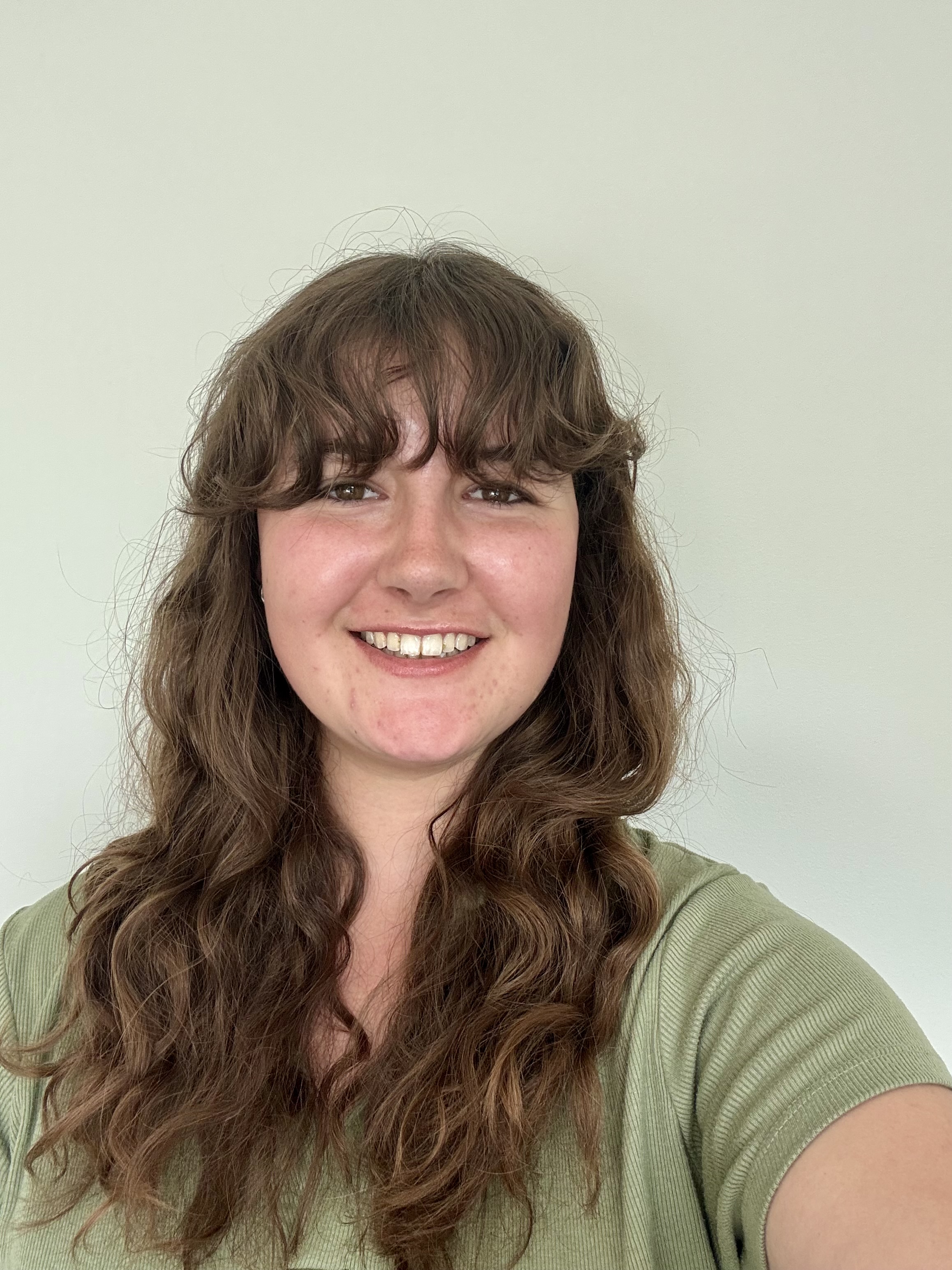 Shannon Mahoney is a sophomore creative writing and strategic communication double major. She is an assistant editor for The Miami Student and writing director for Inklings Arts and Letters. Her previous work can be found in The Offing, Dulcet Literary Magazine, and the Sheepshead Review.
Resuscitation period
After Rob Robbin's Understory
the forest is the forest in the forest—breathe. Deep. Exercises presented to me on a silver screen; zoom call pencilled in on top of my work like it might help. Inhale deep and name (bronchi, bronchioles), brace myself. I travel inside the smoke, then exhale until the psyche unwinds. My friend comments on my predicament via raucous laughter that ignites the organs with white lightning. It’s tender. Tinder. But I can’t see the forest for the trees. Vanished, un-acted, taken back, but I wanted it to hold. I wanted to alchemize the same kind of chemistry. Feather-light conversation that branches out until there is nothing left except our skeletal selves, ribcage fluttering gently like a paper thing. In the forest. A person can drown in two inches of water. Rain in the forest. It’s only a measure of oxygen, how much, and to whom. Logged forests. Lips on lips with an urgency to mold them together, to make something whole. Root
systems. I exhale and count to three again and again and again. The forest—a soft wind. The way the lungs look aboreal when shown in a textbook. In the forest, the sun comes up; brilliant orange and lighting its way through the carefully woven branches that reach for each other, if only to touch in the most innocent of ways.
Overlap, Venezia McHenry
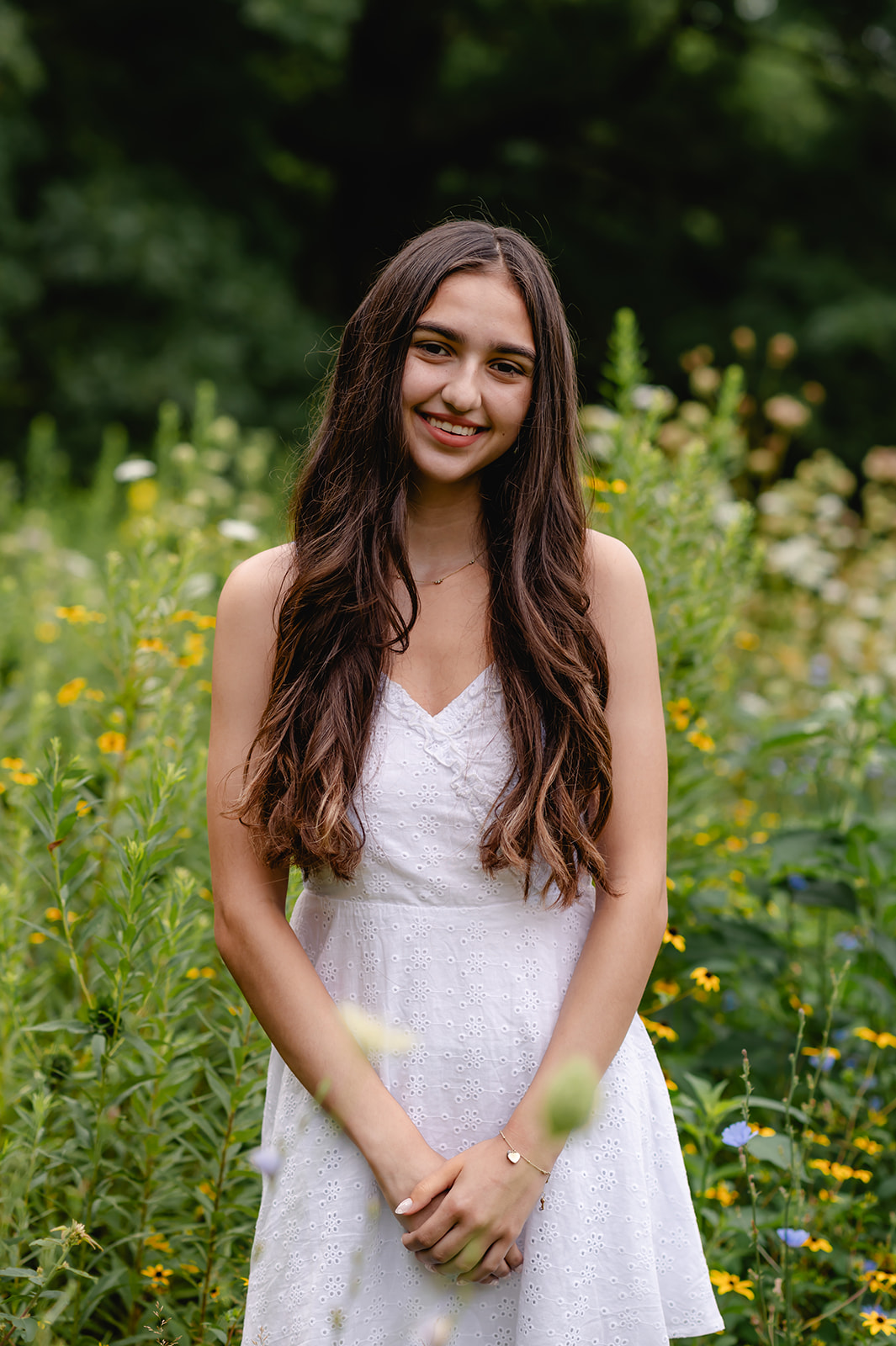 Venezia is a sophomore double majoring in journalism and creative writing. She is also a senior staff writer for The Miami Student newspaper and loves writing about the environment and sustainability. In her free time she likes to run, read, paint or try new food with her friends.
Overlap
After Rob Robbin's Understory
Thousands of branches overlap and collide like strings pinned on a board. A winter’s night of blue and white snow sparkling against a black sky. The orange sunlight glows behind the tree limbs with a promise of warmth. The twigs stretch out and cover the scene so I must peek through the gaps to see behind. I see these trees when I am driving on the highway. I go so fast it looks like the forest is speeding by me too. I observe life through a window, distanced from the touch of bark and the smell of pine. Memories of the sun rising over the pond and the sound of morning doves cooing seem so long ago. I stare at the blue light of my phone screen so often worrying about the future and what comes next. I speed through life as though I am driving my body down a highway, anxiously waiting for the next exit. I keep my eyes focused forward, I don’t look to the left or right to see the sun setting through the trees. I don’t see the foxes playing in the snow. I don’t notice what is behind the thousands of overlapping branches until I stop, put my phone down and get out.
Ashland, Virginia, Maureen Wilson
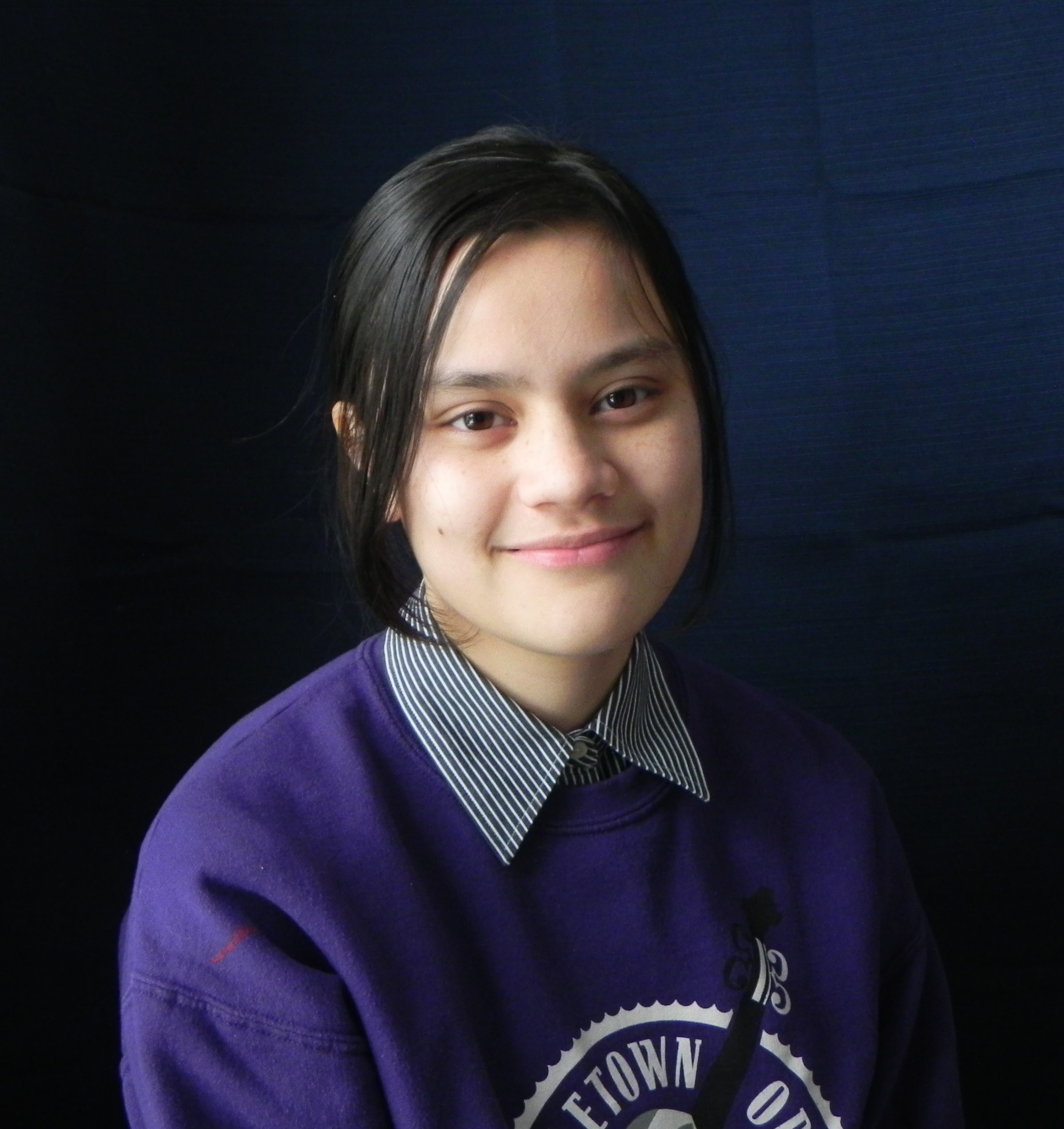 Maureen Wilson is a first-year student majoring in Media & Communication and minoring in Creative Writing and Journalism. She has been published in Illuminati: Journal of the Arts , Inklings , and was a recipient of the Malcolm Sedam Creative Writing Award in 2024. Maureen first drafted "Ashland, Virginia" during her ENG 330 class with distant nostalgia in mind.
Ashland, Virginia
After Sarah-Faith Strait’s Horse in Orange
Thousands of branches overlap and collide like strings pinned on a board. A winter’s night of blue and white snow sparkling against a black sky. The orange sunlight glows behind the tree limbs with a promise of warmth. The twigs stretch out and cover the scene so I must peek through the gaps to see behind. I see these trees when I am driving on the highway. I go so fast it looks like the forest is speeding by me too. I observe life through a window, distanced from the touch of bark and the smell of pine. Memories of the sun rising over the pond and the sound of morning doves cooing seem so long ago. I stare at the blue light of my phone screen so often worrying about the future and what comes next. I speed through life as though I am driving my body down a highway, anxiously waiting for the next exit. I keep my eyes focused forward, I don’t look to the left or right to see the sun setting through the trees. I don’t see the foxes playing in the snow. I don’t notice what is behind the thousands of overlapping branches until I stop, put my phone down and get out.
Snapshot: A Travel Writing Contest
The Road Where Strangers Stop by Anastasija Mladenovska
 Anastasija Mladenovska is a senior at Miami University majoring in Political Science and Russian, East European, and Eurasian Studies. Her essays and fiction have appeared in outlets including the University of Oxford Political Review, Happy Captive, and The New Contemporary. Her submission, “The Road Where Strangers Stop,” captures a moment of unexpected safety and human connection during her travels in Tashkent. A fun fact: she published her first book, Искра, at age sixteen.
The Road Where Strangers Stop
Tashkent is not a city that shouts. It hums. Its beauty does not strike like lightning. It seeps in slowly, through the steam of plov at a late lunch, through the blue tiles of a metro station ceiling, through glances exchanged between strangers. When I arrived in Uzbekistan for an international conference, I thought I was there to speak, to learn, to take notes. But the memory that has never left me is not about the conference at all. It lives on a dark, quiet road, when the car broke down and strangers began to stop.
That night, the air was dry and still. The road near our hotel, on the outskirts of the city, was almost empty, unpaved and uneven, framed by fields and silence. I was sitting in the passenger seat of my friend’s sister’s car when the engine gave a hollow cough and went quiet. There was no signal and no streetlights. Just the two of us and the dark. I opened my mouth to ask what we should do, but before a word left it, headlights cut through the night.
A car slowed. Then stopped. Then another. And another.
Men and women stepped out with the ease of people doing something they had done many times before. Someone brought tools. Another handed us water. They did not ask who we were. They did not hesitate. They simply acted. Their faces were open, their hands sure. We were two young women stranded on an empty road in a city that was not mine, and yet I felt none of the fear I had been trained to expect. Instead, I felt the quiet certainty of being held by a place I did not yet know how to name as safe.
When the car finally roared back to life, the strangers cheered as if we were old friends. And just as easily as they had appeared, they melted back into the night, their headlights tracing a brief constellation on the dark road. No one asked for anything in return. No one lingered for praise. Hospitality here was not ceremony. It was reflex.
That moment is where Tashkent revealed itself to me. Everything else, the turquoise dome of Chorsu Bazaar where she bargained fiercely for chapans embroidered like memory, the quiet reverence of Kosmonavt metro station with its cosmonauts watching over the travelers, the layered architecture where mosques breathe through Soviet concrete, now feels like a road that led me to that night. A city built at the crossroads of histories taught me, not through monuments, but through strangers who stopped without asking.
I came to Uzbekistan for a conference. I left with a lesson I cannot quite file under any official category: that safety can arrive wordlessly, that a place can hold you without needing your name, that kindness can be muscle memory.
Tashkent hums. But on a quiet road, it spoke to me loudest.
Seeing Mont St. Michel by Reese Horstman
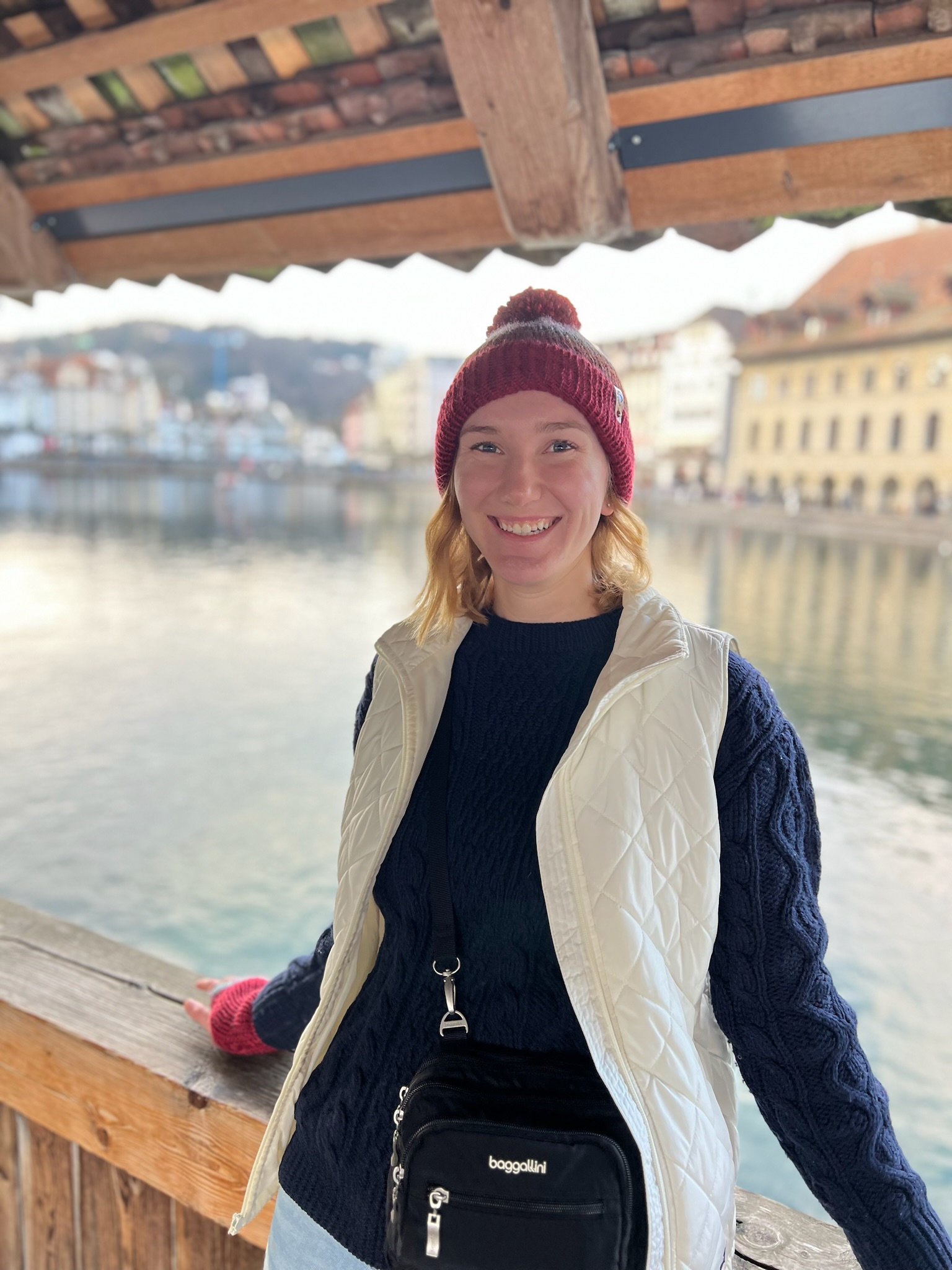 Reese Horstman is a sophomore Psychology major and Neuroscience comajor who loves to explore new opportunities. The first thing she does in each new place she visits is find something to eat and a place with books.
Seeing Mont St. Michel
This past summer, I interned in Paris, France for two months. During the last week of my internship, my co-intern and I decided to visit Mont Saint-Michel. She had gone the weekend prior but wanted to go back. I had always wanted to visit because of its cultural impact. Alright, it’s also the castle animators referenced when creating Tangled.
The morning of our trip, we took the metro to Saint-Lazare where our RER train would depart to take us to Pontorson, the closest station to Mont St Michel. We settled into our seats ready to relax for the three hour ride, but, halfway through the journey, an announcement came on.
What you need to understand is that, despite five years of French classes, I am far from fluent in the language.
So, the announcement came on stating “the trains to Granville and Pontorson were switched. To travel to Pontorson, get off at the following stop and board the next train that arrives at the station.” At least, that’s what I thought it said. I was wrong.
Now, at the time, I thought this was odd, so I talked to a few workers on the train. “Do you speak English?” I’d ask, before clarifying the situation. I was told, “Yes, the switchover happens at the next station.” Thus, my friend and I got off the train in a small town with nothing but a church, a Buffalo Grill, and a McDonald’s. Vire. We spent three hours stranded in Vire.
Of course, we didn’t just accept defeat. We talked to the woman running the desk at the station. I said, or I think I said, “Good morning, we misunderstood an announcement. Is a train going to arrive on the way to Pontorson? We’re trying to get to Mont St. Michel.” “Mont St. Michel?” she said, “C’est pas possible.”
It’s not possible. Well, that couldn’t be right.
We tried everything. Ordering an Uber, ten Ubers, an Uber for half the distance. I guess Uber drivers don’t want to drive an hour in the French countryside. Maybe we could walk? Sure! If we had 15 hours. Buses? Down. Car rentals? Down. Hopping on a bike? Tour de France wouldn’t arrive until the day after.
There simply didn’t seem to be a way out.
Eventually, we went back to the train station and asked for her advice. We paid for a train ticket to Granville, a small beach town on the coast of France. From Granville to Jullouville, Avranches, and more. We took buses, walked, and called a taxi. Everywhere we went, “Mont St. Michel? C’est pas possible.”
I had a variety of friendly conversations, all in French. I learned about the road system, someone’s yearly beach trip, the best of the French countryside to visit in the future, why, and how. My experiences thoroughly disproved any notion of French arrogance, an unjust stereotype, and the journey became an opportunity for connection.
Eventually, we made it to Pontorson, just in time to catch our train back to Paris. In the end, all I saw of Mont St. Michel was a glimpse across the water through a bus window somewhere between Carolles and Champeaux.
So now I know, when things go wrong, it’s always best to have a friend with you. A positive attitude can turn a drama into a comedy. And sometimes, when someone says “c’est pas possible,” it’s just, not possible. That isn’t always a bad thing though. Personally, I have no regrets about the day I ‘saw’ Mont Saint-Michel.
Notre Dame by Emily Blanford
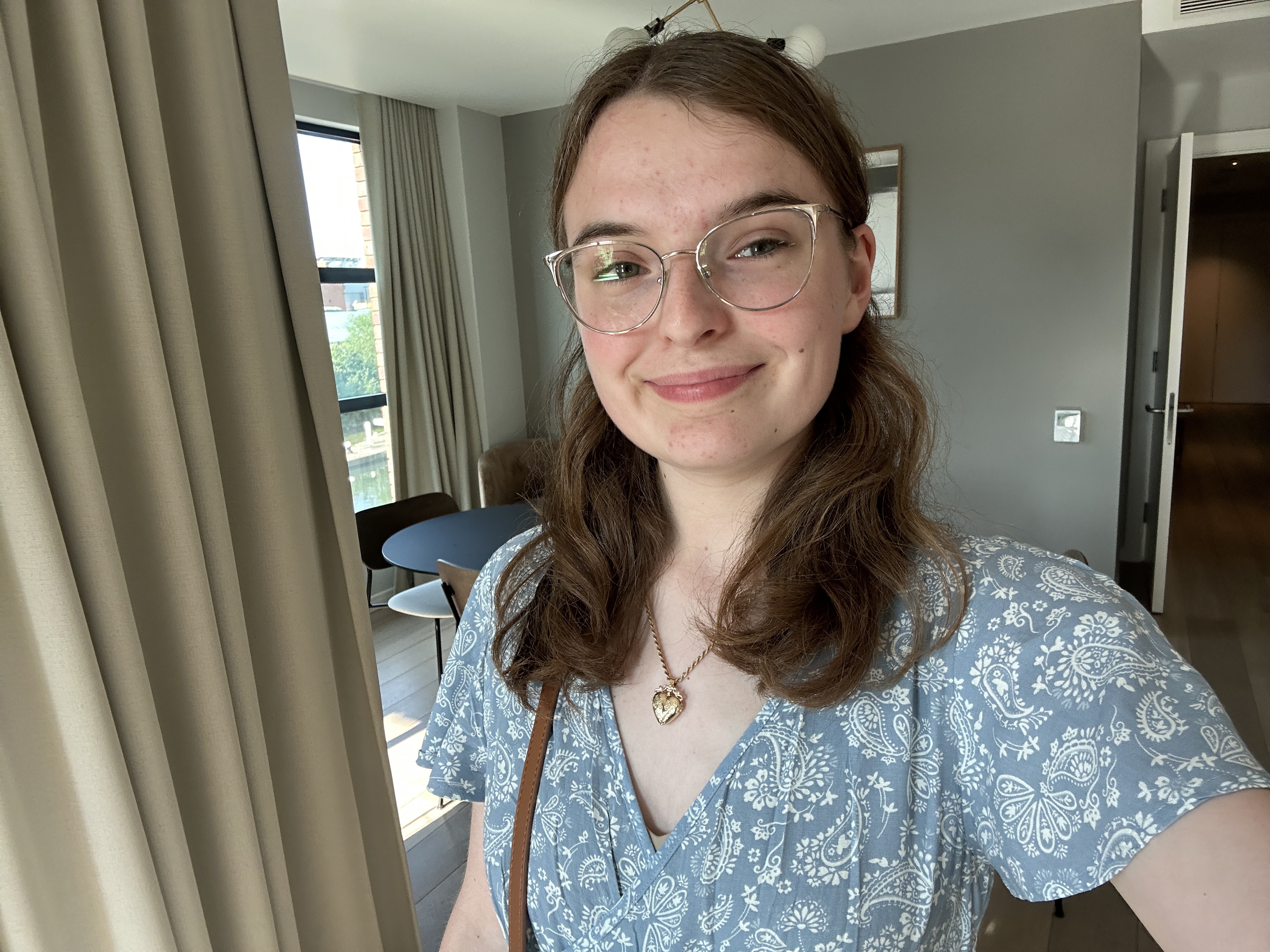 Emily Blanford is a Sophomore studying English Literature with a minor in Art History at Miami University. While studying abroad in London over the summer through the English Department’s Literary London program she took a weekend trip with friends to Paris. There her desire to experience gothic architecture accidentally coincided with a mass at Notre Dame, which became the inspiration for this submission.
Notre Dame
If you know me, you know that I was excited about two things in Paris: seeing the stained glass in the interior of Sainte-Chapelle and experiencing Notre Dame. I took an art history class the semester before I went abroad and we learned about both cathedrals in class. As soon as I saw photos of each in my professor's powerpoint presentation I knew I had to visit them in real life. When I got the opportunity to study abroad in London, I knew I had to capitalize on this chance and take a weekend trip to Paris.
Now, waiting in line has its perks, but only if it includes waiting outside Notre Dame on a beautiful sunny day. I was so giddy while waiting in line I couldn’t stand still. I was practically jumping up and down with excitement by the time I made it to the front door. I was taking in everything from the jamb figures carved in the portals to the flying buttresses lining the top of the cathedral itself. Not only is Notre Dame huge, but the architecture is incredibly impressive. It made me reflect on what it would’ve been like to visit Notre Dame back when it was first built and the divine experience the people building this cathedral wanted it to exude. When I entered the cathedral through the massive wooden doors I felt it.
I’ve never been a very religious person, but there's something special in looking down the central nave of Notre Dame. The massive columns lining the sides, pointed groin vaulting around the side aisles, and stained glass windows lining the top of the walls. It was beautiful. I turned to my right and was immediately left with a statue of the Virgin Mary and Christ Child lightly illuminated by a light off to the side. They looked otherworldly and I felt a different presence that I’ve never felt before. I slowly made my way around the cathedral and noticed that people were sitting down or praying to a certain altarpiece kept in a side room. One person just stood in the corner with their head bowed and eyes closed in prayer. I was slowly making my way around the cathedral when I noticed that the organ started playing. That’s when I realized I was about to stumble into mass at Notre Dame. I stood in the front row right behind the rope and watched the priest in procession. I witnessed the signing and him saying prayers. I couldn’t understand anything he was saying because he was speaking French, but I understood what was being conveyed.
I silenced my phone, put it in my back pocket, and looked around at the people surrounding me. I put my head down when needed and occasionally heard people whispering prayers to themselves while mass was happening. I ended up moving to the back of the row to give people who wanted to experience it a better view. Silently, I made my way around the rest of the cathedral and took in the beautiful music of the organ one last time before walking out the left main portal. Once I got outside all I could think about was how beautiful it was that thousands of people from different backgrounds came together.
An Interlude in Zealandia by Natassia York
Natassia is a sophomore Art History and French double major at Miami University. Previously, she has published a creative nonfiction piece called Down Under. Her piece, An Interlude in Zealandia is being published alongside another piece in Howe Writing Center competitions, A Quarter of a Thousand. Growing up, she moved from Seattle to Sydney, Australia and back again, her brief vacation in New Zealand a moment of cultural identity realization and the onset of reverse culture shock.
An Interlude in Zealandia
This last Wednesday reminds me of a day I once lived in Wellington.
The world was filled with storm clouds and refreshing breaths, the last moment I’d spend in the southern hemisphere before being slung up north for the rest of my childhood. I can’t quite remember if I was excited. I would see my old family and friends again, but at the cost of the community that had just begun to bloom on jellyfish laden shores. It was New Year’s. I made no resolution to change, but I did regardless.
It was wet. The park grounds were rather hummocky, the clouds likewise. Soggy leaves dangled from trees, not yet mulching the ground as they are here. The scent was dark and green, my mind filled with hobbity thoughts as my dad pointed out the small roadside slope where the Black Rider searched for Frodo in the Fellowship of the Ring film. I couldn’t get over the perspective of it. The idea of Elijah Wood crouched down in the leaf litter, shimmering with magic head to toe, the frigid ring touching his flesh flinchingly, a terrified expression twisting his brow in place: all beside a busy road, a well trodden footpath—a tourist like me.
Tourist. I haven’t been that in a little while. Not until that moment in Wellington, the sense of Sydney sands still fresh on my skin, browned with the eternal sunshine of New South Wales. Sitting by the path, watching people take the left side, I wasn’t befuddled at all, the Little Lunch theme song stuck in my head, the craving for a pavlova, wondering how I would shake up some cordial when I got back to the states—a newfound mystery. I’ll be in America again by this time tomorrow, I thought to myself. Once the final rains of our vacation fell, we’d be off and away into the trees and cliffsides of the Pacific Northwest.
I watched a woman walk by, pushing a child in her pram, trying to get out of the cold. I felt my eyes go wide, not blue or pure like a Baggins’, but shocked just the same. What do you call that? In American English? That pram. I couldn’t remember, everything feeling askew.
Cram all you can remember back into your head.
I’m not that all American girl. Not anymore. I tried so hard to be, refusing to change my accent, presentations lined with red white and blue parfaits, Fourth of July printed on my essays. I’ve spent all this time being the foreign girl of my class, thinking that it would just go back to “normal” once I returned to that States, but I can’t even remember the correct words to say.
Roll her down the hill, I won’t stroll, I have to run.
Everything is different. It’s linguistic. It’s cuisine. It’s how I think of myself.
Leaves stuck to my skin, am I running to or from my homeland?
I don’t know if something can be home once you’ve been away so long. I don’t know if it should.
Is my culture my own anymore?
The rain kept falling. Onto my bare arms. Onto the jacket tied around my waist. Pattering quiet on everything, the swaying trees, the dribbling mud, the oil-stained pavement. My parents always said that I was a third culture kid. I didn’t realize that the culture shock worked in the reverse. Despite its inevitability, I’m not afraid.
Walking along the path, leaving the image of Frodo and the Black Rider in the grass, we take the bend.
I’ve crossed the ocean before. I know I can adapt. Perhaps I’m quite ready for another adventure.