
Passport To Success
Alex Wood, director of the Passport Scholars Program, talks with Zoë Hill about his journey from high school counselor to Miami University, and his vision for the future of the program.
Passport To Success
Alex Wood, director of the Passport Scholars Program, talks with Zoë Hill about his journey from high school counselor to Miami University, and his vision for the future of the program.
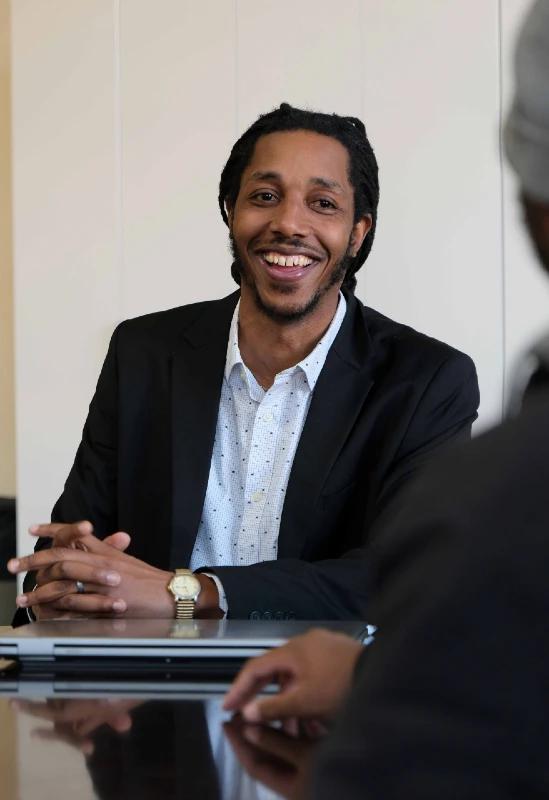
Alex Wood joined Miami University four years ago as an Assistant Dean of Students. Less than a year ago, he moved into a new role serving Farmer School of Business students as the director of the Passport Scholars program.
Zoë Hill: How about you start by introducing yourself. How did you find your way to FSB?
Alex Wood: When I got word that this position was opening over in FSB, I remember saying to myself, ‘what would it look like if I was able to work with students in this student support space that weren't in an area of crisis?’ My role in the Dean of Students Office was supporting students that were in some form of crises. So for me, the opportunity to still support students and work with them in different ways, and see their journey from start to finish was really intriguing. I was really, really excited about that as an opportunity. My formal training and background is in education as a school counselor. So for me, transitioning over into this role, it sealed a lot of those vacancies. Asking, ‘how can we support students in terms of programming to help them develop their personal identities, their professional traits, while also supporting them academically and then ultimately helping them on their path to reach their outcomes?’ Having the opportunity to be a part of that was something that I felt like I couldn’t pass up.
ZH: A few years down the road, you’ll be seeing the complete journey of graduating Passport Scholars students.
AW: In our program, we bring our first year scholars onto campus a week early through a pre-semester program that we operate, and to see them literally from that point, right from a week before school starts up until now. They are completely different individuals. So I can only imagine seeing a student from that pre-semester first year through graduation will be spectacular. The students that are in our program have amazing stories, and to be able to be a part of their journey as they're overcoming whatever hurdles that they came into the university with, whatever they stumble into while they're here, is really, really cool to be a part of. One of our taglines that we say here is ‘We do college together.’
ZH: Jumping back four years, when you started here at Miami, what drew you to the university? How did you end up in Oxford?
AW: As I said, my formal training is in education as a school counselor, and when I first started in that space, I had always said to myself that I wanted to live and work in a community that gave something to me. My original goal was to move back to my hometown of Cleveland and work in the school district that I came up in, but things didn't quite go that way. So when I had the opportunity to come to Miami, that mentality came back. I was already in love with the institution; It provided me with the educational resources to get to where I am now. It also has provided me with an avenue to what your future family would look like, because I'm also a Miami Merger. I now have my wonderful wife and two beautiful children, and I like to believe that I have Miami to thank for a lot of that. Being back and living here and then getting the opportunity to work at Miami in a capacity, I felt like I couldn't pass up the opportunity. It also just felt like a natural progression for me as well, to go from that high school space to now this collegiate space.
ZH: It's almost like you've been following the growth of students throughout your career. What’s that been like?
AW: Different populations and spaces, but yeah, I've enjoyed every step of it. Knowing my very first group of students are now juniors in college or wherever they are in their path, and seeing the wonderful things they're doing, it just kind of gives me that hope that, when I’ve been with Passport for four years, I'll be able to be in a space to see those students in their journey. It's awesome.
ZH: What has been the most fulfilling part of being here at Miami and working specifically in this role?
AW: Student success. Access, probably more so than that too. A lot of our students in our program come from disenfranchised spaces. First-generation college students, high financial need, and some different iterations in there. They've dealt with some traumatic turmoil, things in their previous lives, and some are still battling with those things right now on a day-to-day basis. So being able to see them grow, to see them persevere through whatever they have going on, and being able to make it to the next step, to the next phase, is really the best part for me. But also, since I've come over to FSB and began working with faculty and staff more directly, I understand how much everybody here in the business school is really determined to help any student in need. It is a really powerful place.
ZH: You mentioned the types of students in the Passport program. Can you give me the elevator pitch on who they are, what they do, how they get in the Passport program?
AW: The program itself has been around for six or seven or so years, and the program has shifted a bit. But ultimately, the goal of the program was, and still is at its core, to support students that would generally need that extra push. A large majority of our students are first-generation college students or have high financial need, meaning that they may need a little bit of extra support when it comes to books or professional attire, things like that. And I believe even within these demographics, what tends to happen is that our students from these backgrounds come in with a different sense of identity and diversity, whether that be diversity of thought or experiences, to then come together and share that amongst us as a cohort, as they come into our community.
Our program is attempting to spend time in the K-12 space, specifically in high schools, to get Passport in front of students in classrooms or through their school counselors to let them know about the opportunities that the program and Miami have to offer. We’re helping them understand what it would look like to be a Miami student, and more importantly, a Farmer, School of Business student. We’re exposing them to the expectations of FSB because ultimately, we want to use our program as a way to bring in students to Miami that may have thought that this was not an opportunity for them in any other capacity.
ZH: What do you want to see from the Passport program as you develop in the role?
AW: The biggest thing for me is in alignment with what we're trying to do in FSB in general with the idea of a transformative student experience. Something I am looking forward to creating for the program is an understanding with students that they can have these hallmark experiences throughout each year that they're here on campus. Right now, we have that with our pre-semester program. If you talk to any student that has come through here, they still always harken back to that first week before they came on the campus when they met the rest of their cohort and were exposed to Miami, the Business School and everything before everybody else got here. There are a lot of plans moving forward to create those hallmark experiences every year. We are piloting programs to have our sophomores get an opportunity to have off campus experience in a different city and get an understanding of what job opportunities there are in other spaces. Then in their junior year, they’ll have their internship experience. We are also creating celebratory moments like a signing day for seniors before they graduate. We are really excited about creating those kinds of student experiences.
ZH: What is your advice to first year students? What do you always tell them on day one?
AW: Three things. The first is to read your email, check your emails daily. A lot of really good information and opportunities come through there because that’s our primary means of communication. Two, make sure that you are connecting and reaching out to your faculty members for support. They are building networks in their communities that they don't even really realize they’ve created. The third piece of advice I give to first-year students is to raise your hand for help. A lot of folks come into Miami as very high achievers. They've come in with a host of co-curricular activities and things on their resumes. And I think that there can be a loss of identity for students coming into the university because they come in as a regular student. Raising your hand and asking for help, whether that be in your residence hall, in your classroom, or in a program like ours, you can find that support. Miami is a wonderful place where everyone here is ready and willing to support you. We just need to know that you need help and support in the first place.
ZH: Anything else you’d like to add?
AW: I think Passport and programs like it are really, really beneficial and helpful because they provide a safe place for students to be able to grow and to develop . These are transformative experiences for students, and that's really the point. How can we help them see a world and a vision that maybe they didn't know was possible before they thought about coming to Miami or joining a program like Passport.