From Cello to CEO: Building the Foundation for Leadership in the Arts
Accountancy minor using skills to plan for future in music leadership

From Cello to CEO: Building the Foundation for Leadership in the Arts
Accountancy minor using skills to plan for future in music leadership
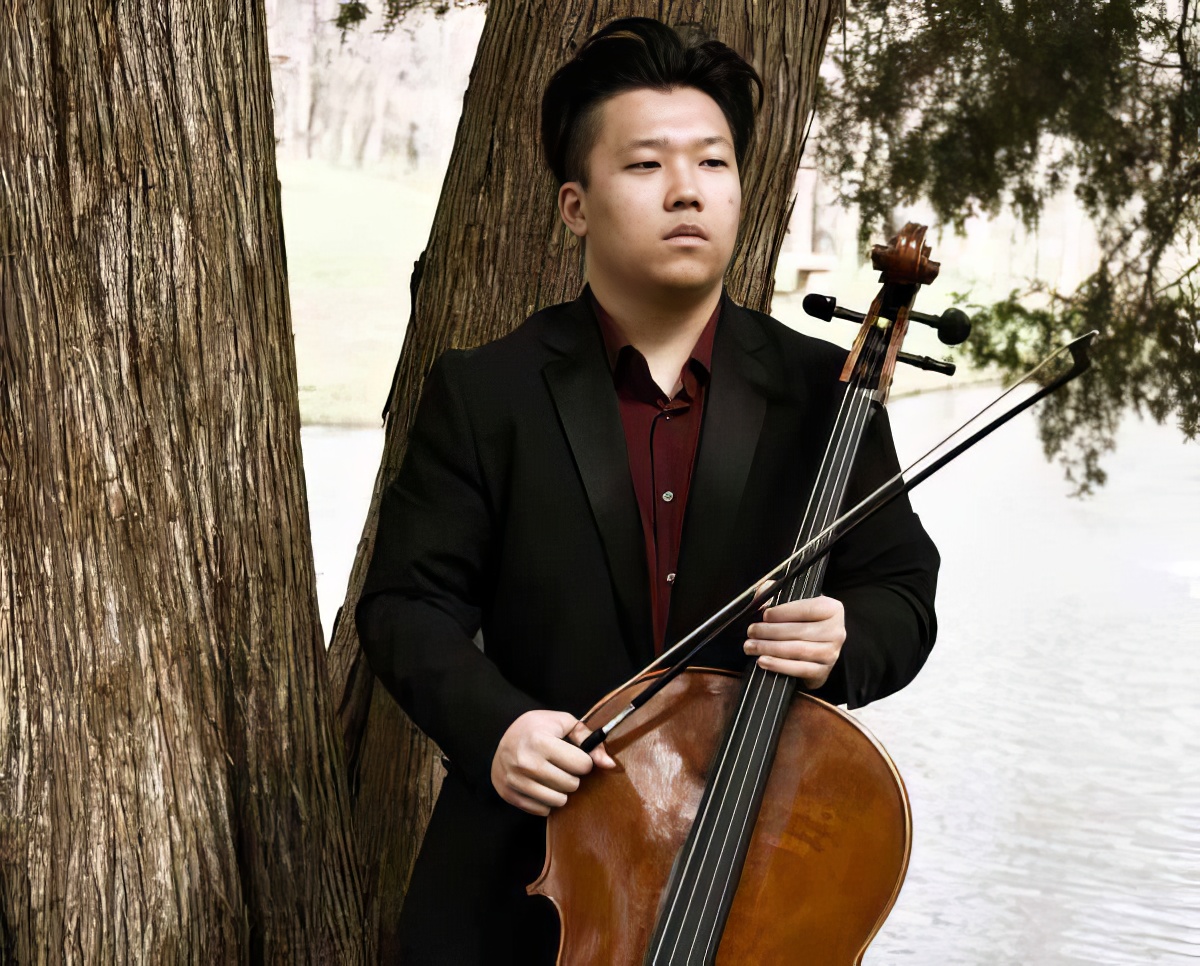
At Miami University, the accountancy program equips students with skills that extend well beyond any single discipline. Case in point: for Marcus Cheung '26, pursuing an Accountancy minor has been an unexpected but invaluable piece of his academic journey, one that will help him shape a future career in arts leadership. Marcus plays the cello and is pursuing a double major in Music Performance and Arts Management and Entrepreneurship. With music at the heart of his goals, Marcus saw an opportunity to broaden his skill set in a way that would support his long-term career ambitions.
His college search was initially focused on music programs. “I’ve been playing for a decade now, and at that time, I was in love with playing the instrument, and I couldn’t see myself not playing it.” During a visit to UC’s Cincinnati Conservatory of Music, he worked with a faculty professor who encouraged him to also try a lesson with his wife, Sarah Kim, a cello professor at Miami. Marcus stumbled upon the arts management track while learning more about Miami, and saw an opportunity to add business skills to the mix, “originally thinking to market myself, especially as a musician, that’s something we definitely can struggle with at times to advocate for ourselves in that way.”
Building Financial Fluency for the Arts
What drew him to accounting was the chance to build real, practical skills that aren’t always easy to acquire independently. “While I saw a lot of the other minors, say marketing or entrepreneurship, as skills that you can learn quickly by taking classes, they’re skills that I can definitely learn also outside of the classroom,” he explained. “Accounting seemed like a good skill to focus on, one that is, in some ways, like a different language, especially reading financial statements and understanding accounting terminology… I don’t have quite as much knowledge with that, and that could be something a bit more challenging to figure out.”
He also received advice that reinforced the universal value of accounting skills. “A lot of the advice I got was, you can never go wrong with having accounting knowledge,” he said. “That’s always a staple in any business, any for-profit, non-profit, doesn’t matter.”
One course in particular made a lasting impression. “I was taking the not-for-profit and government accounting course with Professor Qing Burke… and that’s been one of the best, in terms of really learning what a not-for-profit financial statement is,” Marcus said. He emphasized that the accountancy minor also keeps future options open. “I have a foot in the door if I want to go into for-profit companies with that knowledge as well,” he said.
Marcus puts his accounting knowledge to work while serving as treasurer of Miami’s Asian American Association, the university’s largest multicultural student organization. “I’ve definitely utilized a lot of the accounting information from the way I’ve been budgeting for our organization,” he said.
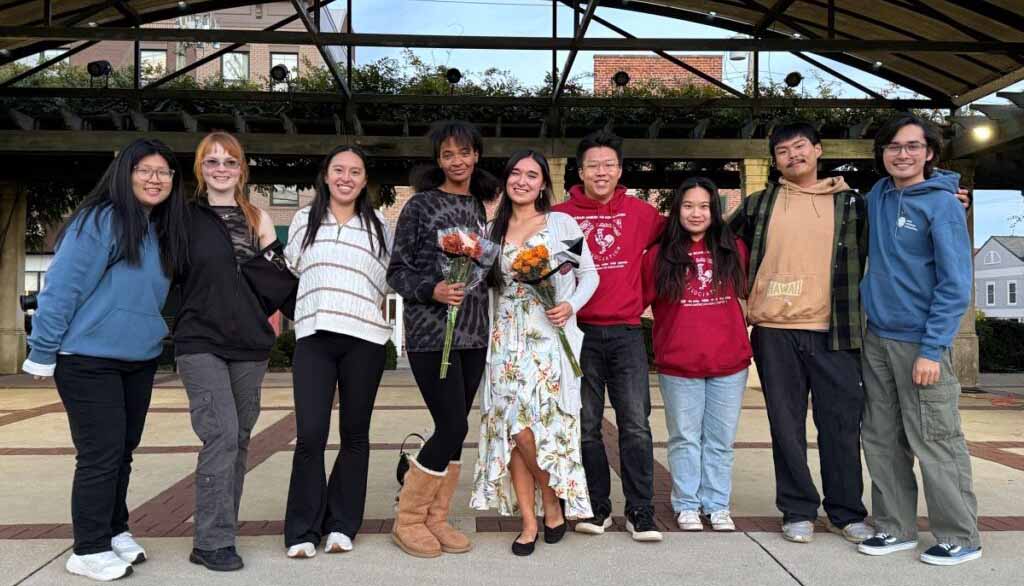
Asian American Association board at the Asian Cultural Festival
From the Classroom to the Real World
Marcus has also pursued multiple internships that combine arts administration, data analysis, and performance — leaning on his accountancy background throughout. His first internship with the Institute for Public Arts (Cincinnati) had him design surveys, upload data, and analyze results alongside partner arts organizations.
But Marcus’s experiences aren’t limited to the United States. In Europe, he took a monthlong internship in orchestra administration with Prague Summer Nights 2025, an orchestra and opera festival where he tackled “a lot of the pre-festival work… from scheduling to the actual production side.” He served as stage manager for three different concerts in different cities in the Czech Republic.
Amid the extensive coordination and planning, he also gained rare professional opportunities, including playing Dvořák’s New World Symphony with internationally renowned conductor Marin Alsop and studying with Vienna Philharmonic Orchestra principal cellist Tamas Varga—experiences most students only dream about.

New World Symphony performance, Czech Republic
Looking ahead, Marcus plans to pursue a career in orchestra administration, with the long-term goal of becoming a CEO of an orchestra. He sees accounting knowledge as essential preparation for that responsibility. “When you get to that kind of position, you have to be knowledgeable about every department of whatever company you’re working for,” he said. “One of those that was glaring to me was, I’m gonna have to know the financial department.”
Most recently, Marcus has applied his insights in an arts leadership role closer to home as the artistic administration intern for Summermusik (Cincinnati Chamber Orchestra). There, he’s engaged in everything from marketing and fundraising to donor relations and grant writing — real tasks that require both creative thinking and financial awareness. “Marketing to development… fundraising, to, like, grants to donor relations,” he said, pointing to how financial literacy underpins the work.
Marcus’s story showcases a core advantage of choosing an accountancy minor: students benefit when they add financial fluency to their existing passions and strengths. Whether a student aims to lead a nonprofit, manage an arts organization, or launch a business, the accountancy minor builds confidence, versatility, and a foundation for thoughtful decision-making.