
Miami, Mexican university students join forces for data visualization project
Students from two nations worked together on a project to examine food insecurity along their shared border
Miami, Mexican university students join forces for data visualization project
Students from two nations worked together on a project to examine food insecurity along their shared border
A Farmer School of Business information systems and analytics class partnered with a Mexican university’s class on a data visualization project last semester.
Alan Vazquez, an assistant professor of Industrial Engineering at the Tecnologico de Monterrey, said he decided to take part in his university’s Global Shared Learning Classroom, a project where one of the university’s courses is linked with one or more courses from an international university, using technological tools to connect students, foster collaboration and facilitate learning in intercultural environments.
“I think for me, it's important that my students get to collaborate with people from other countries, so that they learn other working cultures. Another thing that I like is for them to be exposed to other ways to teach, so in that way, they get to know other ways of learning,” he said.
Vazquez said he put out a request online for a collaborator, and FSB professor Fadel Megahed responded. The two previously knew of each other through their similar research projects.
“He said he would be teaching a data visualization class, so I reached out to him and said I teach data visualization too, and I'd be happy to join forces,” Megahed said.
“I happen to collaborate with researchers in the U.S. I’ve worked in the U.S., so I know the system, and I wanted my students to experience the system,” Vazquez said.
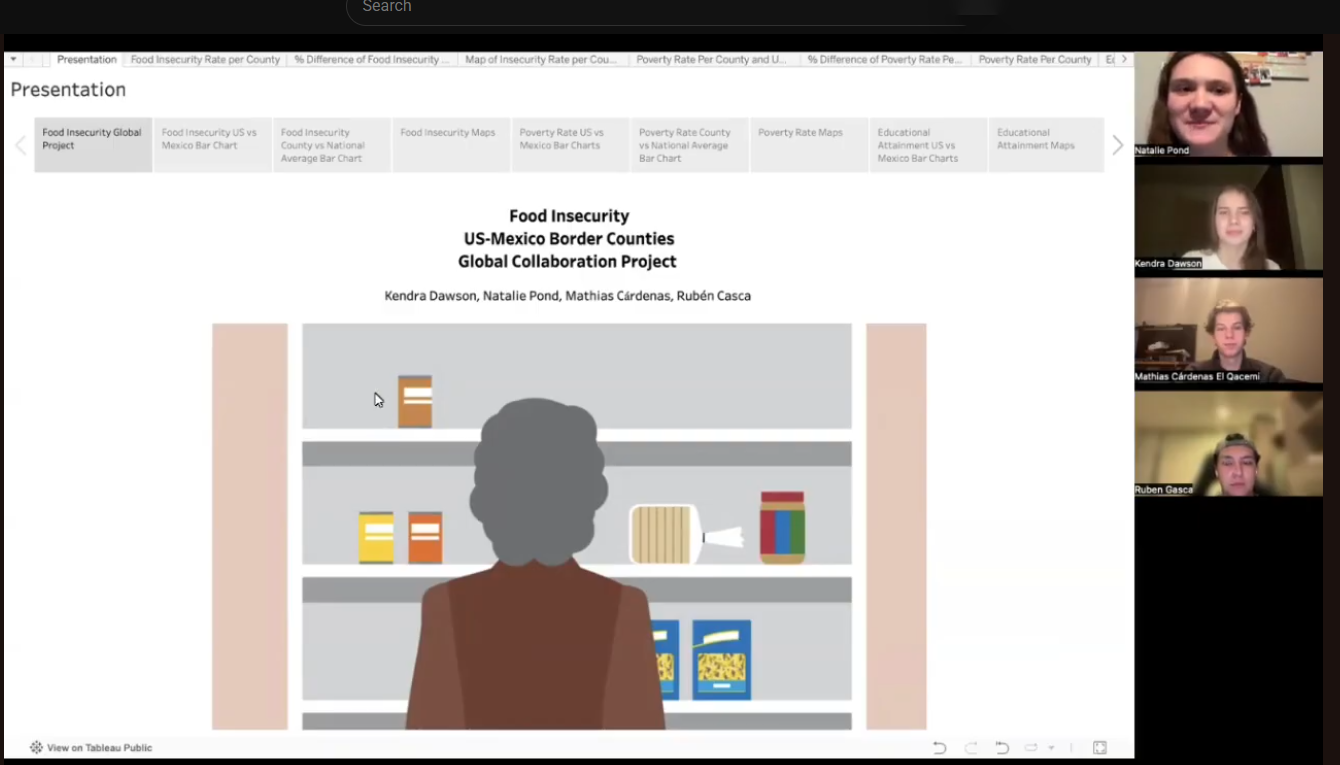
The project Vazquez and Megahed decided on was to examine food insecurity of people living along the U.S./Mexico border. The classes formed 16 groups, each comprised of at least two students from each school, to work on the project over a five-week period.
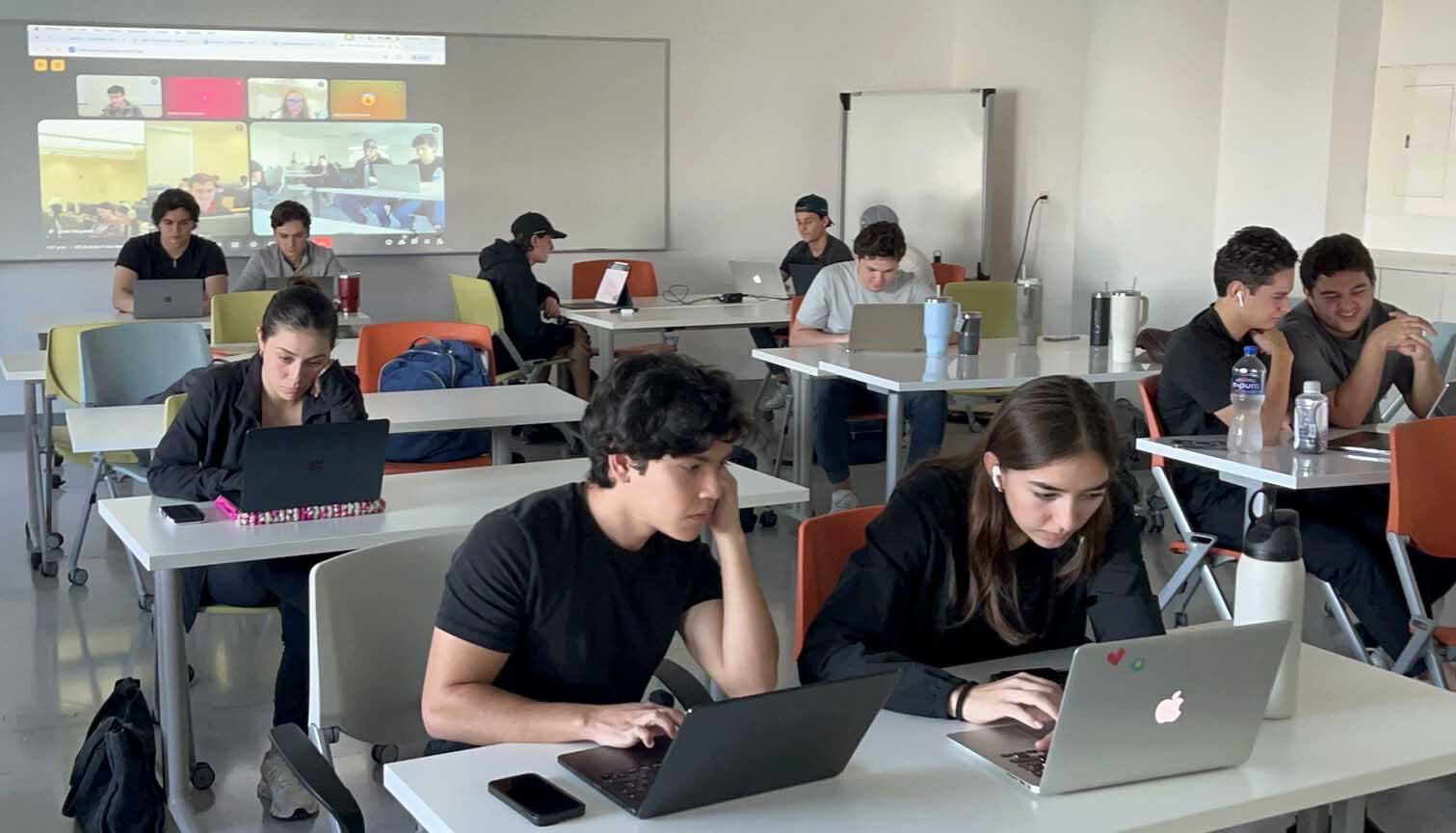
The first step was to overcome some logistical challenges, such as class timing, communication preferences, and holiday schedules. Then, the groups went to work on a series of deliverables.
“I told the students that the ask was quite general, so they could focus on specific counties. They could focus on states. They could focus on getting just macroeconomic-type data. They could kind of look at some social data as well. They could look at different ways to define food insecurity,” Megahed said. “We had them do some analysis and make some visualizations for each country separately. Then once they had these analyses, try to come up with a coherent story where you make a final presentation that exposes some of the similarities and differences between both countries.”
The students found that some information was more readily available for one country than the other, and that even within the U.S., some states considered counties as being “near the border” more broadly than others. The students also found that Miami and Monterrey tended to use slightly different analytics tools, which required some work to reconcile.
“I think the general conclusion that students tended to find is food insecurity was worse on the U.S. side of the border compared to the Mexican side of the border, where these counties tended to be in a little bit better economic shape than the rest of the country,” Megahed said.
At the end of the experience, students from both schools said they enjoyed working with their foreign counterparts and the project as a whole.
“The students at Monterrey Tech were both great. They were definitely good teammates. I like that they got their work done and they were very communicative with us. So I really appreciated that,” senior Accountancy major Charlie Barry said. “I definitely enjoyed this project. I think it should continue in later years.”
“What I enjoyed the most while collaborating with other students is that you can see how they work and how we work, and we can gather the best of both and turn it into the best result possible,” Monterrey student Elena Lopez Alara said. “I think it's really good to do these kind of interactions because I think you learn a lot from them.”
“I really enjoyed the topic. I thought it was very interesting. And I also enjoyed just collaborating with a different team,” sophomore Nursing major Audrey Thomas said. “I thought it really made the project more challenging, and it really helped to open my eyes to see how different people work in teams.”
“I really enjoyed working with Aubrey and Thomas, it was a pleasure working with them. I really like meeting people from other places and doing stuff I don't normally do,” Monterrey student Victoria Delgado said. “The whole group worked really well. We communicated really well, too. I think we did a great job, and we had the dedication to turn in a great project.”
“I just realized how similar we are, even 1000s of miles away, with different cultures, it seems like we live very comparable lives. I thought was really cool,” senior Finance and Accountancy major Jacob Spaulding said.
“I think one of the things that I liked is that they mentioned that they are more similar than what they thought,” Vazquez said. “They shared the same hobbies, same interests. They almost didn't feel like much of a cultural difference whatsoever.”
