
Student research highlight: Early Life Stress on Adult Behavioral Flexibility in Alcohol-Seeking Behavior
Student research highlight: Early Life Stress on Adult Behavioral Flexibility in Alcohol-Seeking Behavior
Students in the behavioral neuroscience Quinn Lab work on a variety of mice and rat research projects, primarily about early life stress (ELS) and its effects on behavior and cognition. Currently, the undergraduates are researching the effects of ELS on alcohol reversal in mice.
Gabrielle Brown, a senior Psychological Science and Neuroscience co-major at Miami Regionals, led the alcohol reversal project in the Quinn Lab.
Brown completed a project comparing the behavioral flexibility of mice with acute or chronic early life stress (ELS) in relation to ethanol consumption. Acute ELS is one traumatic event in youth while chronic ELS is stress maintained over a longer period of time.
“We can compare how long it takes the mice to recover cognitively from these experiences and as well as what the presence of alcohol would have on the effects and the cognitive abilities and behavioral flexibility,” Brown said.
The mice act as a model, giving insight into similar processes in humans.
Brown worked with George Wirtz, a freshman Biology major with a Neuroscience and Pre-Med co-major, to complete her research. Both Brown and Wirtz agree research is a commitment worth making. Every hour in the lab is valuable experience and a chance to learn something new.
“Working in a lab is hugely advantageous. I’ve gotten a huge amount of experience, hundreds of hours in the lab,” Brown said. “The opportunity to lead projects and feel what that feels like and get that experience is going to make a big difference in graduate school and in my professional career.”
Wirtz agreed and included the value of connecting classwork to work in the lab.
“I feel like it's helped me do better in my classes because some of the things that we've learned in basic biopsychology have tied into what we do in the lab in different paradigms,” Wirtz said.
“I also appreciate the team building. You get to meet new people, to learn, to lead, and to teach, so a lot of different experiences that are really helpful for me as a person,” he added.
Both Brown and Wirtz spoke positively about the mentorship of Jennifer Quinn, associate professor of Psychology.
“I think that she has found this very beautiful, perfect balance between being really carefree and fun and being very serious and passionate about what she does,” Brown said. “It's very impressive.”
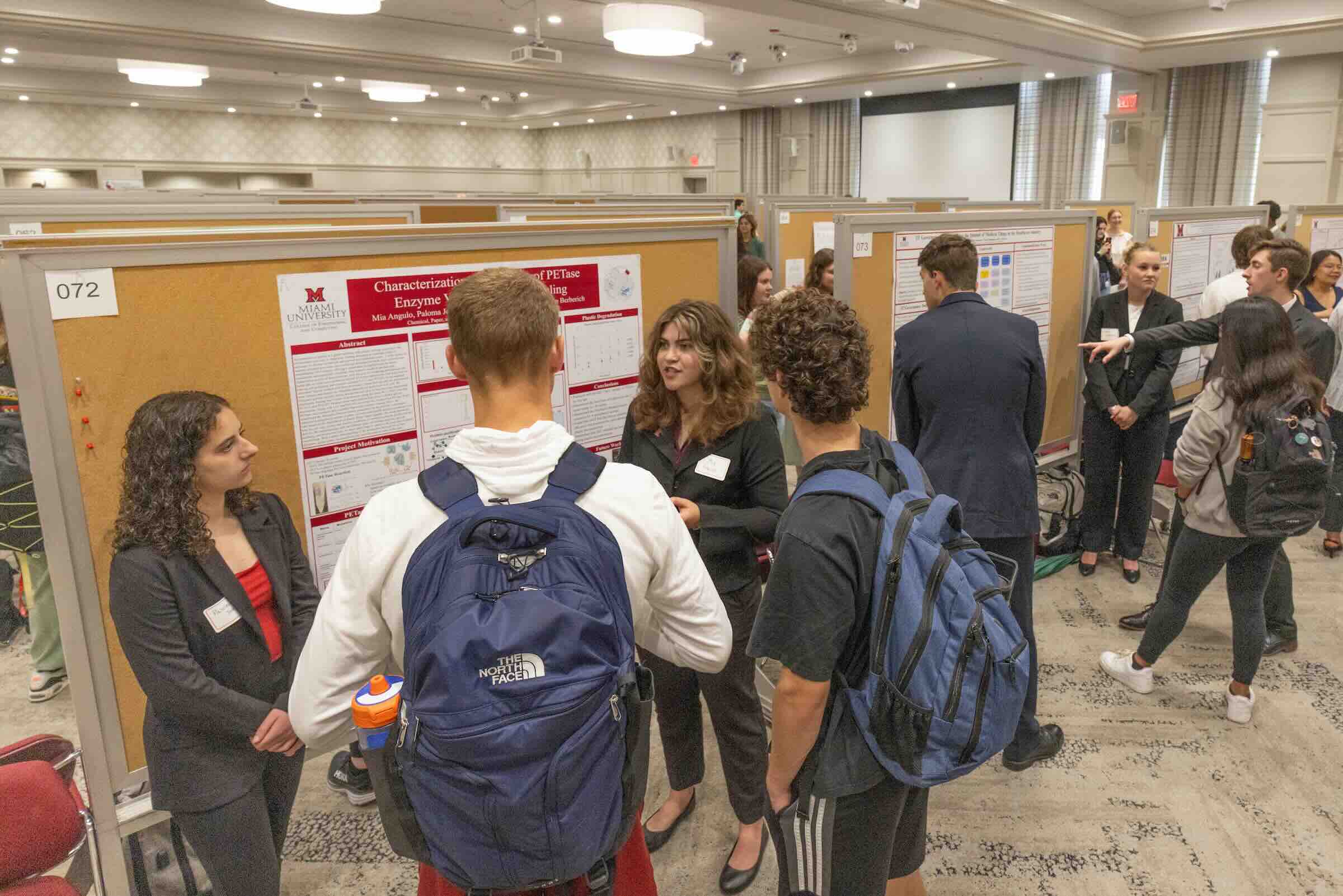
Brown and Wirtz hope to continue their research in the Quinn Lab before continuing on for further education. They encourage other students to consider participating in research during their undergraduate studies. To learn more about their research, considering visiting their poster presentation at the Undergraduate Research Forum Friday, April 24th.