
Centerville, Ohio, woman to earn bachelor’s degree from Miami University nearly 50 years after she left
‘This has been one of the biggest highlights of my life,’ Debbie Brown said
Centerville, Ohio, woman to earn bachelor’s degree from Miami University nearly 50 years after she left
‘This has been one of the biggest highlights of my life,’ Debbie Brown said
Video by Zach Burnett and Cameron Johnson
Financial reasons forced Debbie Brown to drop out of Miami University in 1976 after two years on campus. With the science courses she had taken, she pivoted, earning an associate degree from Sinclair Community College to enjoy a fulfilling 41-year career as a dental hygienist.
But Brown, who retired in 2020 at the height of the pandemic, never forgot about Miami or that bachelor’s degree. She committed to achieving her bucket-list goal before turning 70 this May.
On Dec. 12, she will don a red cap and gown and graduate with a Bachelor of Arts in History, finishing with a 3.6 GPA.
“This has been one of the biggest highlights of my life,” said Brown, who is married with two grown children and two grandchildren.
She is proud of the accomplishment.
“I won’t sugarcoat and say it has been easy, because it has not. Trying to fit in studying, driving to classes four days a week, and having a family and friends life outside of Miami has been a challenge,” Brown said. “But I would suggest it to anyone who has a personal goal to complete their education, if only for the knowledge I have learned.”
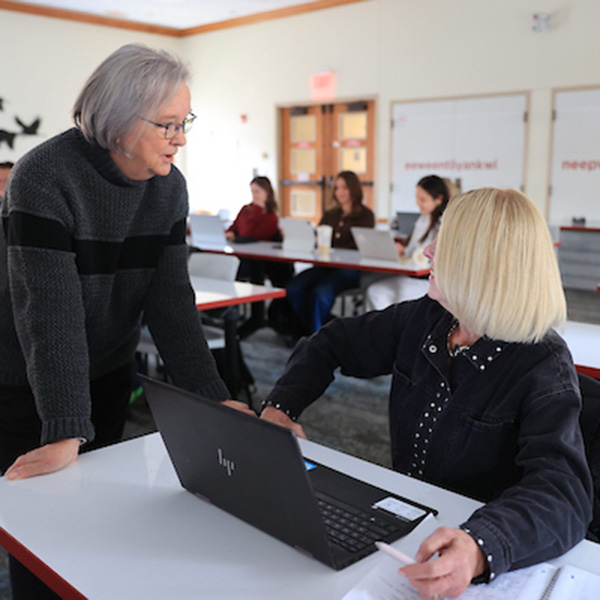
Brown began taking academic courses at Miami five and a half years ago. The first two years were online before she began driving to the Oxford campus so she could attend in person. This semester, she is commuting an hour each way four days a week.
Her husband, Jim Brown, said he is extremely proud of his wife of 45 years. They met when she was a student at Miami and he was a student at the University of Dayton, so he’s familiar with the commute to Oxford.
“She jumped into it with both feet,” he said, likening her to “a wide-eyed freshman” with everything in front of her.
He has seen her study at their dining room table for three to four hours a night, books open and laptop on. She has even taken on extra hours as a substitute hygienist to help pay for tuition, he noted.
The biggest challenge was getting acclimated to the technology. “Once she got that set up, she never wavered on her focus,” he said. “I have the utmost respect for somebody, at any age, going back to school and finishing it.”
Helen Sheumaker, teaching professor of History and Global and Intercultural Studies and lead departmental advisor for the Department of History, has been inspired by Brown’s journey.
“I'm very proud of her work as a student at Miami University. She has excelled at this new challenge she set for herself,” Sheumaker said, adding that Brown has been “a joy to work with, an asset in the classroom, and has added a note of grace and energy to the department.”
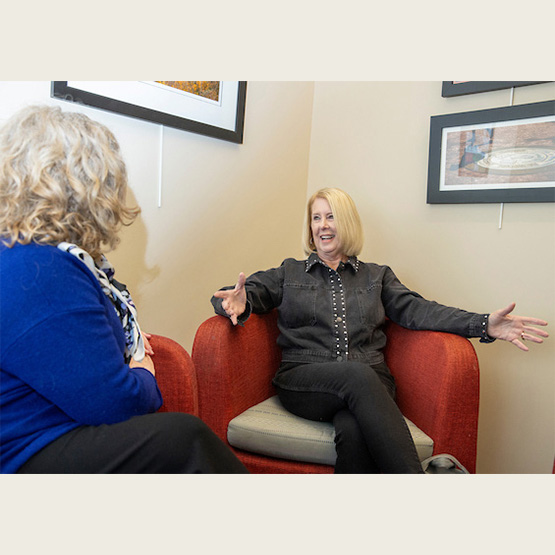
Finding her academic transcripts
A Miami employee visited the archives in the basement of a campus building to find the 1974-1976 academic transcripts for Brown, then Debbie Saunders. Both names will appear on her diploma.
During her first time at Miami, Brown was a B student. “A 3-point was fine, plus doing all the fun stuff” gave her the full college experience, she said. She was part of the Delta Gamma sorority, where she met two students who remain close friends.
The Kettering native said she was paying her own way through college when she ran out of money.
“I would have gotten a loan for the last two years, but I was actually, at this point, undecided about my major,” she said. “I always thought I would be a teacher, but I changed my mind.”
Sheumaker started working with Brown in 2023 as she was making the switch from online to in-person classes.
“The College of Arts and Science advising office also worked with Debbie to streamline her time to degree,” she said. “One challenge Debbie faced is — having last been a student in 1976, long before the adoption of the Miami Plan in 1989 — it was a whole new world of university and college requirements.”
Brown said Sheumaker was extremely helpful showing her what courses she needed and how to track her progress toward her degree using Degree Audit Reporting System (DARS) software.
The academic advisor works with dozens of students each semester, including non-History majors and minors on such things as seeking transfer credit or petitioning for classes. Brown said she advocated on her behalf to take a couple of courses.
Sheumaker said, “I was a first-generation undergraduate and I have a commitment to help students as much as I am able to navigate the higher ed world they are in. I enjoy my work as an advisor because I can often untangle the knots they encounter and I get to see them reach their goals.”
She has enjoyed watching Brown achieve this milestone, especially after a rigorous semester.
“Debbie is taking a full load, 15 credit hours, of courses at the 300- and 400-level her final semester,” she said. “It's her first full-time semester, an enormous time commitment, and an intellectual challenge.”
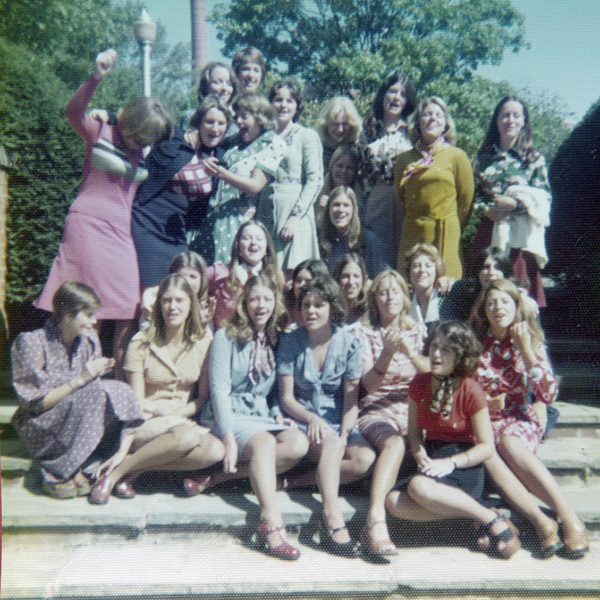
Lots of changes over 50 years
Brown shared her observations about the changes she’s noticed since she was on campus nearly 50 years ago. Back then, she used $3,000 in savings to cover her tuition for two years.
Costs have risen over the decades. “There is no senior discount,” she quipped.
Another big change?
“In 1974, everybody talked” before class, she said. These days, many students are on their cell phones during those few minutes before classes start.
Brown also wasn’t sure why sometimes students would sit in a classroom with the lights off. The first time, she flipped them on — only to have the professor turn them off when he entered the room. She discovered that many students prefer to work without the glare of overhead lights when they are on their computers.
Of course, that wasn’t an issue in the 1970s. “There were no computers and no cell phones when I was here before,” she said. “There was no technology,” only overhead projectors.
These days, she carries a laptop in her backpack but still prefers to take notes by hand.
“I have my Five Star notebooks,” she said with a laugh, “and my pens, pencils, and markers just like I had back in the ’70s. Nothing has changed on that.”
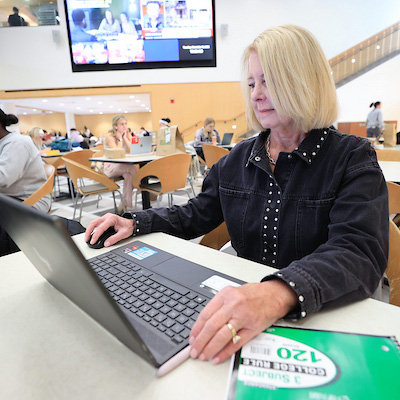
Embracing technology
Brown is grateful for the students who work in the Tech Support Lounge at Armstrong Student Center, where she could go when her laptop started acting up.
As a dental hygienist, she didn’t need polished computer skills for most of her career, but that changed as a college student.
“That was a learning curve,” she said during an interview in the Armstrong Student Center, which didn’t exist back then either. It opened in 2014.
“The IT gentlemen know me very well. They know me because I come to them frequently: ‘Hi, Mrs. Brown,’” she said, chuckling. “They are so polite.” Once when her laptop went on the fritz, “it was 30 seconds and he fixed it.”
She also learned to work with other technology — making slides for a class and a podcast “which about did me in” for another. She completed both assignments.
Brown discovered that these days, many professors use a team approach for student projects, much different than the usual approach she experienced in the 1970s of a couple of major exams built around lectures.
“Almost all the classes, they get to know you and do the team approach,” she said.
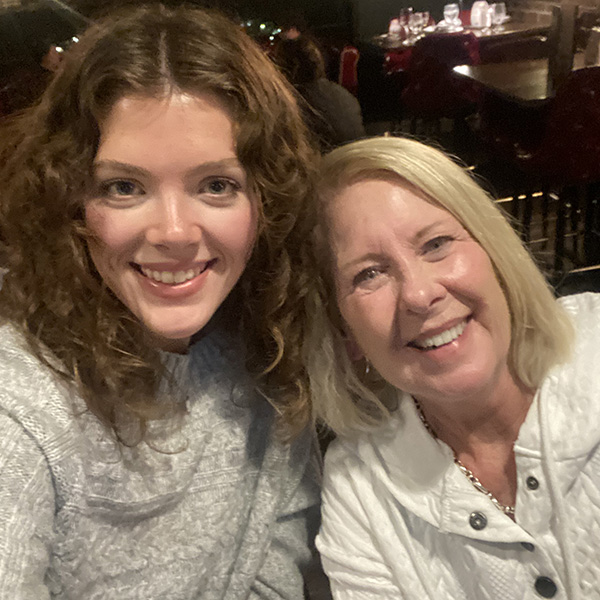
A lasting friendship
It was in a History of the Arctic course that Brown sat beside Nicole Corn ’25, who is in the BA/MA program for History. The two became fast friends and have stayed in touch, getting together in Oxford when their busy schedules allow. Brown described Corn as “an old soul” who seems more mature than most women her age.
Corn said that particular course had a unique topic, “so I would often turn to Debbie, asking her questions and clarifying class material. Eventually, when we came to class, we would chat before the lecture about what we were up to and give each other updates on our lives.”
Corn is impressed with Brown’s passion for learning and history.
“When I first encountered her, I assumed she still wanted to go into teaching or have some kind of history-related job or outlet. However, she later told me it was something she just wanted to accomplish for herself because she never got to finish her original degree from Miami,” Corn said.
“I have been inspired by this because it makes me consider how lucky I am to pursue something I am passionate about. I am reminded by Debbie’s return to Miami that I should savor my college moments and enjoy every second.”
Corn said she admires Brown’s ability to be a good student, supportive friend, and caring grandmother all at the same time.
“I hope her second experience at Miami gave her everything she wanted,” Corn said, “and I know she will cherish this accomplishment and use it as a model for her grandchildren — that you can do anything you set your mind to.”
As for what Brown hopes to do with her degree?
“My grandson wants me to sub at his school,” she said. She may give the second-grader’s elementary school in Sidney a call to see if they could use her as a substitute teacher on occasion.
'The thing I’ve learned is …'
Meantime, Brown is excited to start piano lessons in January. But first, she is focused on finishing strong this semester. She has really enjoyed the upper-level courses and has been impressed by those she got to know and learn from at Miami.
“The thing I’ve learned is the kids, and they might have been like this back in the ’70s, they are so sharp,” she said. “Oh my gosh, so academic. I’m blown away.”
The same goes for the professors. Brown describes them as unbelievably sharp.
“With age comes greater appreciation of life,” she said, “and these professors have wowed me.”
Sandra Garner, chair and associate professor of Global and Intercultural Studies, teaches Brown’s 300-level course on Native American women.
Like Brown, Garner also was a non-traditional student, beginning her undergraduate studies at age 48. She worked straight through to earn her bachelor’s, master’s, and doctorate within 10 years from Ohio State University.
“I really respect her efforts to finish this up,” Garner said, recalling her own experience of feeling like a fish out of water as a non-traditional student at a much larger campus with a bigger student body.
“Debbie does not have that same experience,” she said. “She is outgoing in class and seems to build good relationships with students in the class. I like having her as she raises the bar for in-class discussions, whether or not the students know it.”
John Ousley ’77, a third-generation Miami graduate who has known Brown since the ninth grade, said he was very surprised when his friend wanted to return to the university. He wondered: After such a long time, how could she get back into the swing of college life?
“I figured she may take a few classes and give up, but she showed me that I was wrong. She has worked very hard,” he said. “I know when she left Miami it was very tough for her as she loved everything about Miami.”
When he asked her about walking at commencement on Dec. 12, she told him he was silly but changed her mind when he said everyone wants to celebrate such an accomplishment.
“We are all so proud of her,” Ousley said.