
The stories we’re told: an undergraduate researcher on adoption and identity
Rising senior Ann Bixel studied identity development in international transracial adoptees
The stories we’re told: an undergraduate researcher on adoption and identity
Rising senior Ann Bixel studied identity development in international transracial adoptees
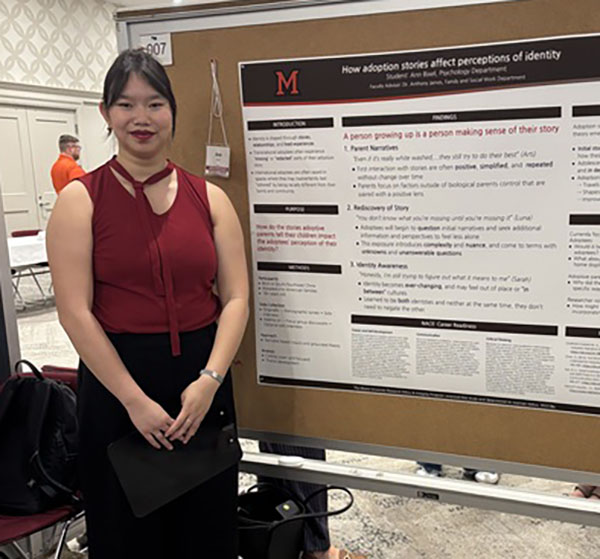
Through research interviews, rising senior Psychology and Professional Writing double major Ann Bixel found that the adoption stories parents tell shape how secure international transracial adoptees feel in exploring their identities later in life.
Mentored by Anthony James, professor of Family Science and Social Work, Bixel surveyed and interviewed adults aged 18 and older who were born in South or Southeast China and adopted into American families. Her research found that people with complex cultural or familial backgrounds often navigate identity through the adoption stories told by their parents, and those stories can either confine them or help them claim a secure, nuanced identity.
The timing and openness of parents' stories about the adoption and the adoptee’s birth culture have a lasting impact on identity exploration when they’re older. Adoptees interviewed by Bixel felt more secure and supported to explore their identity as a transracial adoptee if their adoptive parents shared honest and age-appropriate stories about the circumstances of the adoption and welcomed questions about their child’s origins as they grew older. Bixel also found that adoptees whose parents were less open to discussing their adoption or birth culture were more likely to report navigating identity development without support.
In childhood, adoption stories from parents were often positive, simplified, and repeated without change over time. In adolescence, adoptees asked more questions about this initial narrative and sought out more information, especially surrounding unknowns or unanswerable questions about their adoption. These early stories, Bixel posited, impact when and how adoptees rediscover and reclaim their identities.
“They’re going to learn about their identity and their history, it’s just whether or not they’re going to do it with a secure network to fall back on or if they feel like they’re going to be doing it all on their own, which can also impact how they move themselves forward in society,” Bixel said.
Her work can inform adoptive parents on how to talk about adoption and birth cultures more openly to ensure their children feel supported and help adoptees feel seen and validated.
Bixel was interested in pursuing this research as she herself is a Chinese American adoptee.
“I was adopted from China, but I was raised by white parents and grew up very similarly to my white peers,” Bixel said. “Physically, I look Chinese, but behaviorally, I’m not. So this puts me in a weird little gray area where I don’t quite know if I’m both or neither.”
As it turns out, Bixel’s findings suggested that others like her occupied this “both or neither” identity status as well.
“What I found is that you’re somewhere in between. You can be both identities and you can be neither at the same time. Both are 100% okay. The stories that your parents tell you impacts how you perceive yourself and how you go through your identity development,” Bixel said.
Bixel initially started working on the research as a high school capstone project and decided she wanted to expand upon it with an undergraduate research project. She plans to continue her work on the topic and is considering opening the study to focus on international transracial adoptees from other countries.