
Miami University ecologist awarded grant to study sturgeon-vessel collisions in New York Harbor
Tyler Wagner’s team will track sturgeon and cargo ships to reduce collision risks
Miami University ecologist awarded grant to study sturgeon-vessel collisions in New York Harbor
Tyler Wagner’s team will track sturgeon and cargo ships to reduce collision risks
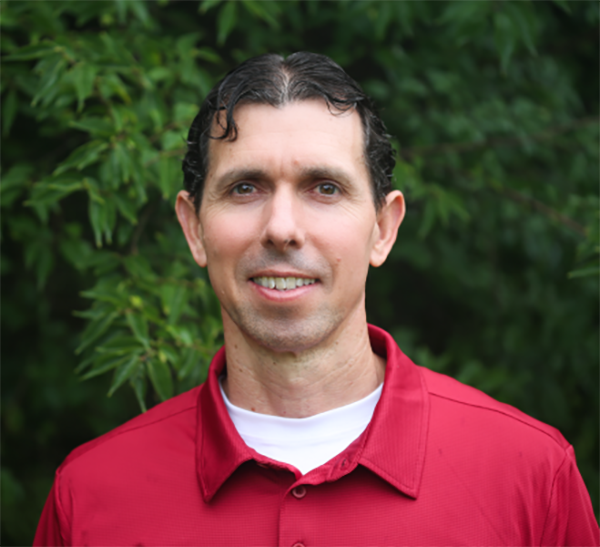
An interdisciplinary team led by Miami University Eminent Scholar in Ecology Tyler Wagner will track Atlantic and shortnose sturgeon movement and habitat use in New York Harbor while analyzing vessel traffic in the same waters. Their goal is to reduce the risk of vessel strikes to sturgeon and help inform conservation efforts for the species.
The Hudson River Foundation — a non-profit organization that supports scientific research, ecological restoration, and stewardship of the Hudson River ecosystem, its estuary, and its watershed — has awarded $750,000 to fund the research project.
Fieldwork for the project will begin in spring 2027 and the project will conclude in May 2030. An acoustic array will collect location and movement data from sturgeon implanted with transmitters (tracking tags) during previous studies as the fish move through the shipping channel, while GPS data will track the movement of cargo ships; environmental data will be factored in alongside both. The researchers will then use this combined data to develop modeling tools that better assess vessel-strike risk to sturgeon, with findings expected to inform dialogues on navigation channel management and conservation efforts.
“Our hope is that the framework for this type of risk assessment would be transferable to other species and other estuaries when trying to understand vessel-strike risk,” Wagner said.
Priority for conservation
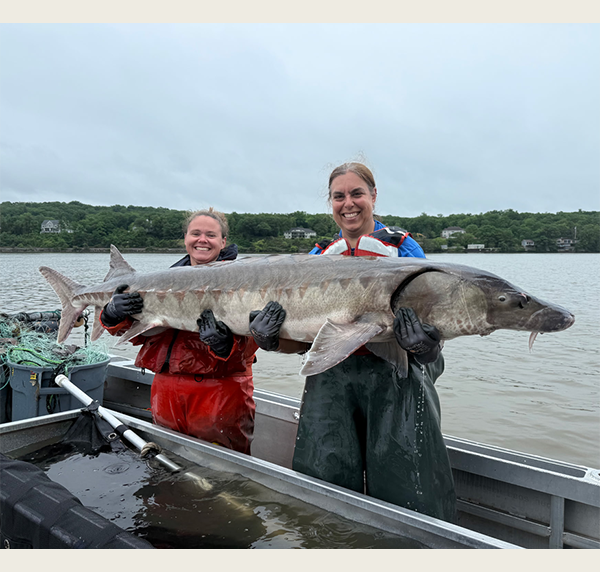
Sturgeon, seen as living fossils due to their appearance and ancient ancestry, face declining populations due to overfishing and habitat loss. Their protected status under the Endangered Species Act has made them a priority for conservation from both state and federal agencies.
Although sturgeon are native to New York Harbor, questions remain about where they spend most of their time and what environmental conditions influence their movements, according to Wagner. Sturgeon are long-lived, surviving 30 to 60 years, but human activity subjects them to a range of stressors. Among those stressors are vessel strikes from recreational boats and cargo ships, which can disrupt their normal behaviors or cause fatalities.
“Cargo ships represent the bigger threat in terms of interactions. They are much larger so they go much deeper into the water column and when they go through the channel into the harbor, they have a higher likelihood of potentially interacting with a sturgeon,” Wagner said. He added that people often think of marine mammals being struck by boats but don’t think of fish in the same manner.
Wagner, professor of Biology, joined Miami University in August. He previously served as acting unit leader and adjunct professor of Fisheries Ecology, USGS Pennsylvania Cooperative Fish and Wildlife Research Unit at Pennsylvania State State University. He has been working on applied fishery problems for 20 years, researching the effects of human stressors on fish populations’ behavior and habitat use to inform policy and decision-making processes. Some of this work has been on recreationally important fish or fish of conservation concern, like sturgeon.