
Miami University experts featured in ‘Kevin Costner’s The West’ docuseries: a Q-and-A with Daryl Baldwin and Cameron Shriver
Myaamia Center founder, researcher offer historical and cultural context in ‘Fallen Timbers’ episode
Miami University experts featured in ‘Kevin Costner’s The West’ docuseries: a Q-and-A with Daryl Baldwin and Cameron Shriver
Myaamia Center founder, researcher offer historical and cultural context in ‘Fallen Timbers’ episode
The Myaamia Center’s Daryl Baldwin and Cameron Shriver offer historical and cultural context in “Kevin Costner’s The West,” a docuseries on the History Channel.
Baldwin, executive director of the Myaamia Center and a citizen of the Miami Tribe of Oklahoma, and Shriver, senior research associate at the Myaamia Center and adjunct assistant professor of History, appear in “Fallen Timbers,” the first episode of the series that also is available for streaming on platforms such as Disney+, Hulu, and the Roku Channel. Individual episodes can be purchased on Apple TV and Amazon Prime Video.
The eight-part series examines major 18th- and 19th-century conflicts of the American frontier. The Oscar-winning Costner is host and co-executive producer with Pulitzer Prize-winning historian, Doris Kearns Goodwin.
We asked Baldwin and Shriver about their experience appearing in “The West” and what they want people to know about the Battle of Fallen Timbers and the Myaamia experience.
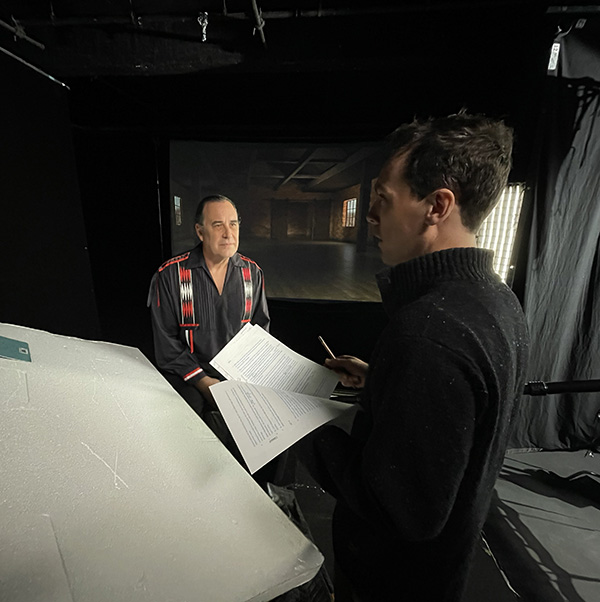
What was it like appearing in this docuseries and why was it important to do so? How did the connection get made between you and the producers from RadicalMedia?
Daryl: I guess for me, I am always a bit shy talking about ancestors. Feels a bit personal to me and their roles in history set them up for high levels of critique. But I also think it's very important for the Myaamia to have a voice in their history and probably for that reason alone, I agreed to participate.
Cameron: I’ll give the producers credit: I don’t think they would have made the episode without Myaamia input, including on screen.
I found it interesting how focused on the August 1794 Fallen Timbers battle the producers were. I came to the interview planning to discuss what happened afterward — the transition following the treaty, the dynamics of American colonialism, economic and social changes, for instance. They were fairly laser-focused on the granular details of the immediate lead-up and battle.
You are both interviewed in the episode that focuses on the Battle of Fallen Timbers on Aug. 20, 1794, near present-day Toledo. It involved U.S. forces and the Northwest Confederacy of Native American tribes led by Miami Chief Little Turtle. Why was this battle significant?
Daryl: After two important victories for the tribes of the Old Northwest (against armies led by Harmar in 1790 and St. Clair in 1791), the Little Turtle and other leaders had to have some level of hope in preserving a boundary between themselves and the encroaching settlements of Americans. Following, Gen. Anthony Wayne began to prepare for yet another conflict for the same region, which led to a loss on the battlefield for tribes. There had to be some reflection by tribal leaders as to what was possible and realistic moving forward. Among the Miami, there was much disagreement and confusion among tribal leaders after this battle, and Little Turtle's arguments for peace would fall out of favor among his own people.
Cameron: 1794 was a potential turning point both for the Miami Nation and the American Nation. On the one hand, Myaamia families were defending their territory from military invasion. That’s easy enough to understand. On the other hand, Americans had decided that their nation required expansion into Indigenous lands. Remember, this is in the direct aftermath of the Revolution and Constitutional crises that followed. The American economy, the loyalty of Western settlers to the fragile federal government, the legitimacy of this new nation in the eyes of Native nations and European empires — all of these were existential issues for the U.S. in 1794. The battle, and really the 1795 Treaty of Greenville, helped resolve some of those immediate and immense challenges for the U.S. That treaty is why Miami University can exist where it does. I’m in Treaty of Greenville territory right now where I’m sitting. All people who have been connected with Miami University are hugely shaped by this stuff, even though we might think of it as old history.
Tell us more about Miami Chief Little Turtle. Daryl, he was your great-grandfather?
Daryl: Mihšihkinaahkwa (aka The Little Turtle) was my 6th great-grandfather. I was fortunate to grow up as a child hunting, fishing, and trapping along the Maumee River and very near to many historic sites, including the Fallen Timbers Battlefield. As a young boy, I spent many summers along the Foot of the Rapids and Roche de Boeuf rock. It was at this location Little Turtle gave an important speech before heading into battle. I was fully aware of this history that was passed on to me by my grandparents. My childhood landscape became my history book, serving to remind me of my connection to places and the people who lived there for many generations prior to me. One takeaway from my knowledge of Little Turtle is that his attempts at peace were a reflection of his desire to preserve the tribal nation. I have extended this understanding to my work in language and cultural revitalization as a way to help preserve the tribal nation. In many ways, the struggle to survive has only changed in form during contemporary times.
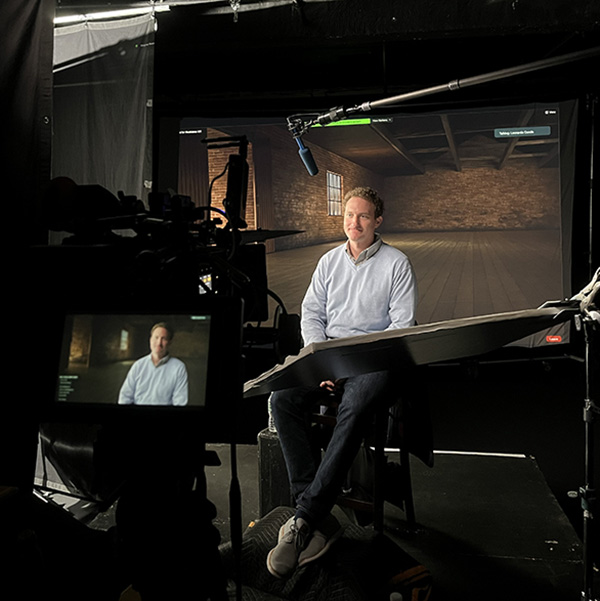
The Fallen Timbers battle and the Treaty of Greenville, signed on Aug. 3, 1795, marked a major turning point in the control of the Old Northwest and westward expansion. What was the impact of those two events on the Myaamia people?
Daryl: The Greenville treaty was the first of the major land cession treaties that set in motion a series of following treaties that would slowly chip away at our loss of rights to the lands we had called home since time immemorial.
Another one of my ancestors, Eepiihkanita (aka William Wells), served as an interpreter during treaty negotiations. He was taken captive by the Miami around age 14 and grew among them thus being fluent in our language and eventually marrying a daughter of Little Turtle. It’s easy to discount the importance of a good interpreter during these high-level negotiations. Wells was trusted by Little Turtle to serve in this capacity.
Wells also served as a spy for General Wayne leading up to the battle. It was a smaller world back then and leaders on both sides were well acquainted with each other. I was always told growing up that both Little Turtle and Wells remained in accord with each other throughout the conflict. My takeaway in life is that failed negotiations can lead to loss but loss doesn't define you in the end. What you do with that loss is what's important.
Cameron: I agree. I think it’s important that this treaty was the first of 15 treaties between the Miamis and Americans. Beginning in 1795, the U.S. government increasingly asserted control over Miami lives. Incomplete control, of course, but significant nonetheless. It’s a multi-generational process of colonization.
This year, the Myaamia Center — the research arm for the Miami Tribe of Oklahoma — celebrates 25 years at Miami University. Daryl, what has it been like leading the groundbreaking work in language and cultural revitalization?
Daryl: 25 years is just a spot on the spectrum of evolutionary history for the Miami Tribe of Oklahoma. The Myaamia Center exists because of the generations of loss our ancestors experienced. Many of us were born into the vacuum of loss that was left for us and it’s our turn to make something good of it. It's hard to know what the future holds in store for us, but drawing on the strength of our culture and ways of knowing and being are important in shaping the next generation of tribal citizens. I feel very lucky to have been born into this phase of ‘revitalization’ that the Miami Tribe is experiencing. The partnership with Miami University and the birth of the Myaamia Center have been good for both of us. Incredible advances can be made when we collaborate.
Cameron, your grandfather, Phillip Shriver — president of Miami University from 1965-1981 — is credited with forging the relationship with Miami Tribe of Oklahoma Chief Forest Olds in 1974. When Chief Olds visited Miami, he seemed pleased to be on ancestral homelands and becoming acquainted with a university that carried the name of his people. How has this personal connection impacted you and your career?
Cameron: There’s no doubt that he was proud of the relationship between the two Miamis; he thought it was special. The conversations that began in the 1970s are ongoing. So many people deserve credit for making and remaking the relationship over time. Just personally, the idea that history is fascinating (and that it is important), and the basic awareness that Miami people are around (not dead and gone, which is a pretty common misconception) are two truths that have really influenced me and, of course, my career.