
Pat Casino '27
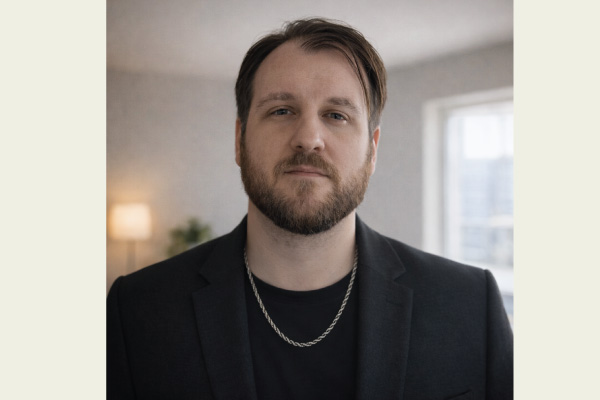
Pat Casino '27
- Hometown: Siler City, N.C.
- High School: Pinecrest High School
- Class: 2027
- Major: Electrical and Computer Engineering Technology
- Clubs and Organizations: Phi Theta Kappa

Why Miami University?
Miami had a co-op program with my community college. I could do distance learning through the community college while attending Miami, and it let me take classes I would otherwise have had to take in-person. That's what made a bachelor's degree possible. I was going to stop at my associate's in electrical engineering. Miami's Engineering Technology program and its age and reputation mattered, too, but the co-op is why I went.
How did you choose your major?
I knew I wanted electrical engineering the moment I started looking at engineering. I've always built things: welding, carpentry, art, refurbishing vehicles. But none of it ever came to life. Electrical engineering did that. Computer science came after, because a signal only carries information, and software is what lets a system think and respond.
Tell us about any special experiential learning opportunities -- research, study abroad/away, student organizations, internships, athletics, or other things -- that have influenced you in a positive way.
My internship was rebuilding and debugging Bitcoin miners, which gave me hands-on experience with high-density electronics debugging and programming. Most of the rest of what I know came from work. I've held nearly every kind of low-paying job there is, and I've turned what I learned from those jobs and from my coursework into a platform for people in the position I came from. Between work, family, and school, there hasn't been room for traditional extracurriculars.
As a Miami student, what are some of your awards and accomplishments?
I was inducted into Phi Theta Kappa Honor Society and made the Dean's List. I was also invited to join the student electoral committee at my community college, but I had to decline because I needed to work to support my family. My leadership has come from work. I've been a manager at nearly every place I've worked over the past 16 years, mostly in fast food and similar jobs. It's some of the hardest work there is, and it's where I learned to lead people.
What are your plans for after you graduate from Miami?
I never had the luxury of counting on a job waiting for me after graduation, so I'm building my own. When I started my last year, I launched a tech company. That gives me a year of runway to make the launch succeed.
If you had an opportunity to talk to a student considering coming to Miami, what would you tell them?
Choose Miami. You can tell the school is invested in your success. They aren't trying to push you through to boost their numbers. They want to develop capable people who go on to become the next generation of successful workers and employers.
Is there anything else you'd like to share about your Miami experience that we didn't cover?
What I appreciate most about Miami is how the professors responded when work left me little time for school. They were willing to work with me. They understood that there's life outside of education. Education matters a great deal, but it doesn't keep you alive, and juggling the two can feel nearly impossible. They were there for me anyway, and that mattered.
Has Miami provided you with opportunities to engage in research, partnerships, or experiences that shaped your way of thinking?
As a distance student, I haven't had access to many of the campus experiences other students get. The partnership that mattered most was the co-op between Miami and my community college, which let me take Miami classes remotely and made a bachelor's degree possible. My internship rebuilding and debugging Bitcoin miners gave me hands-on experience with high-density electronics. What I've learned at both schools shaped how I understand technology and AI.
Have you used what you learned in different subjects to solve a problem or come up with a new idea?
I use everything I learn across both schools and my programming classes to build my company. The electrical engineering taught me how to bring things to life, the computer science taught me how to make them think, and together they gave me the understanding of technology and AI that ArcVelvet is built on.
Have your experiences at Miami helped you develop an entrepreneurial mindset — like being resilient, adaptable, or willing to take risks?
I've wanted to be a business owner since eighth grade, when I sold my Halloween candy. I'd sell my candy until everyone else ran out, keep the rest in the freezer, and sell it at school after that. The old saying that it takes money to make money is still true, and I've worked around that my whole life. Miami gave me the knowledge I needed, and I started my own company in my final year with no safety net.
Have you used your knowledge or skills from Miami to positively impact your community or the world around you?
ArcVelvet exists to protect artists and creators from an extraction economy and to teach basic rights around owning their own work. It starts at the bare bones: a creator can record that they made something, and everything else is built on that evidence. More people are forced out of physical labor and into creative work every year, and I want those people to have that protection. Creators are now joining the site and posting consistently.
Has Miami helped you build meaningful connections with people from diverse backgrounds or viewpoints?
Because I'm a distance learner, I haven't had many chances to build connections outside my classes. I've worked in a few team settings and I'm always open to meeting more people.
Have you taken on leadership roles or responsibilities — whether in your classes, work, or community — during your time at Miami?
I regularly end up the de facto team leader on class projects and group tasks. I've managed teams at nearly every place I've worked over the past 16 years. Now, as a founder with creators joining the platform, people are starting to look to me for guidance on building and monetizing their work.
Tell us about something that you have built at Miami? (Project, Skill Set, Outcomes)
I built ArcVelvet, a digital provenance platform that lets creators record that they made their work. It's built on a patent-pending serverless architecture for cryptographic attribution (provisional patent filed April 2026), and it draws on my electronics debugging and programming skills. I started with my own provenance record. After I submitted it to the C2PA through their contact form, the chair of its Technical Working Group encouraged me to build on the open standard and join its ecosystem, and within days I had C2PA Content Credentials running on every signing and sale. I've since applied to the C2PA Conformance Program and am waiting on review. ArcVelvet is now live in four languages: English, French, Spanish and Japanese.
What is the biggest challenge you have overcome?
Money. Money takes away your time and your ability to focus. It forces you into jobs that don't value your education and don't leave you time for it, because you have to keep up with bills and life. I kept going anyway, and I'm still here.