
Pong Ping Pong returns to Western Campus
Influential experimental filmmaker Bill Brand revives one of his early works on Miami’s campus after over 50 years.
Pong Ping Pong returns to Western Campus
Influential experimental filmmaker Bill Brand revives one of his early works on Miami’s campus after over 50 years.
Bill Brand (b. 1949) is a renowned New York-based artist and experimental filmmaker, challenging what it means to experience film. Focusing on questions surrounding time, motion, and abstraction, Brand creates subversive films that engage the viewer using novel techniques.
Brand began studying the relationship between film and its audience while pursuing an undergraduate degree at Antioch College in Yellow Springs, Ohio, where he studied under Paul Sharits. With this connection to the Midwest, Brand invited innovative ideas to local communities, including Oxford, Ohio, with the installation of his 1971 piece, Pong Ping Pong.
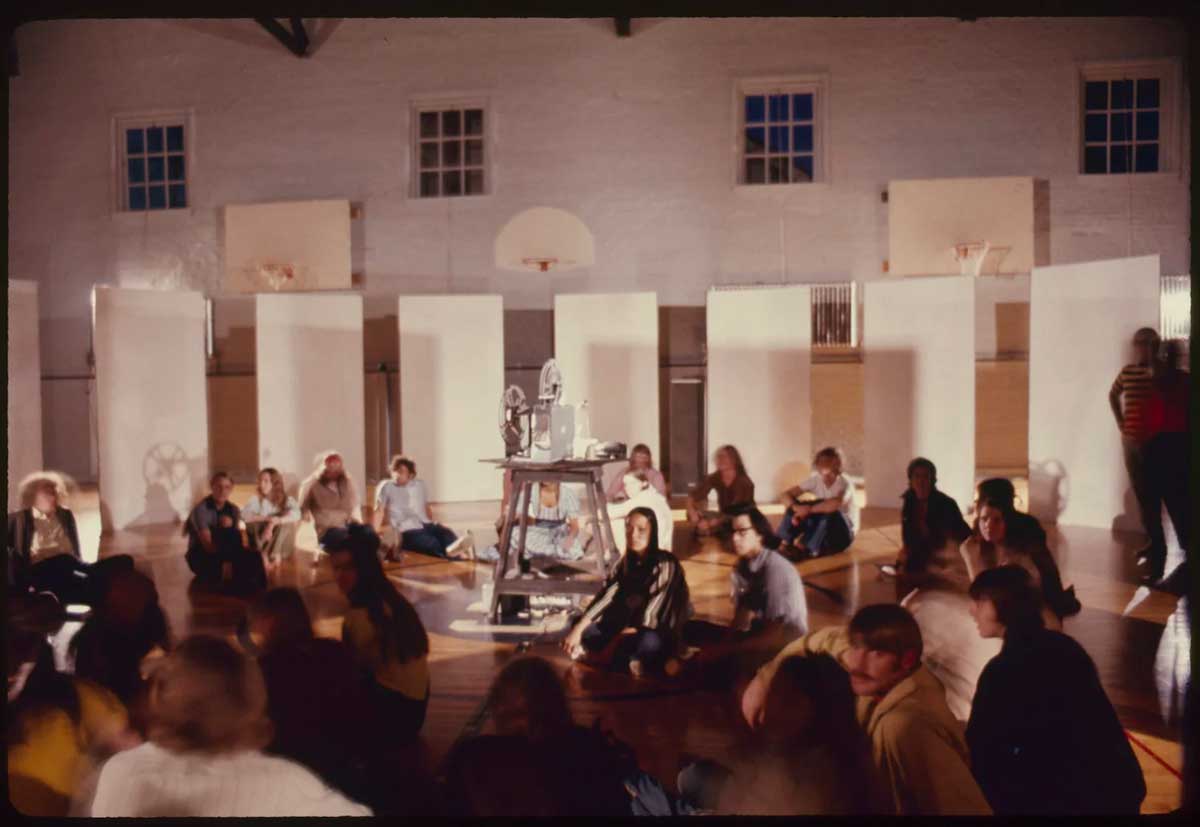
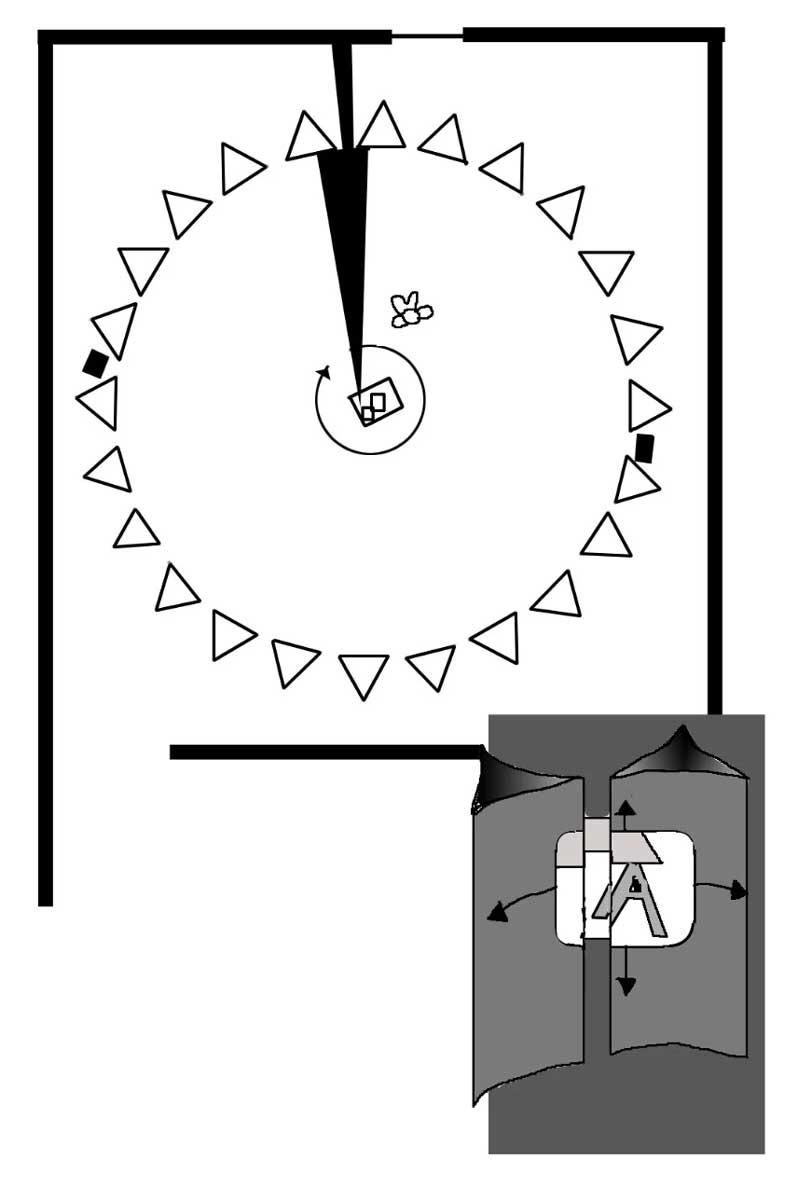
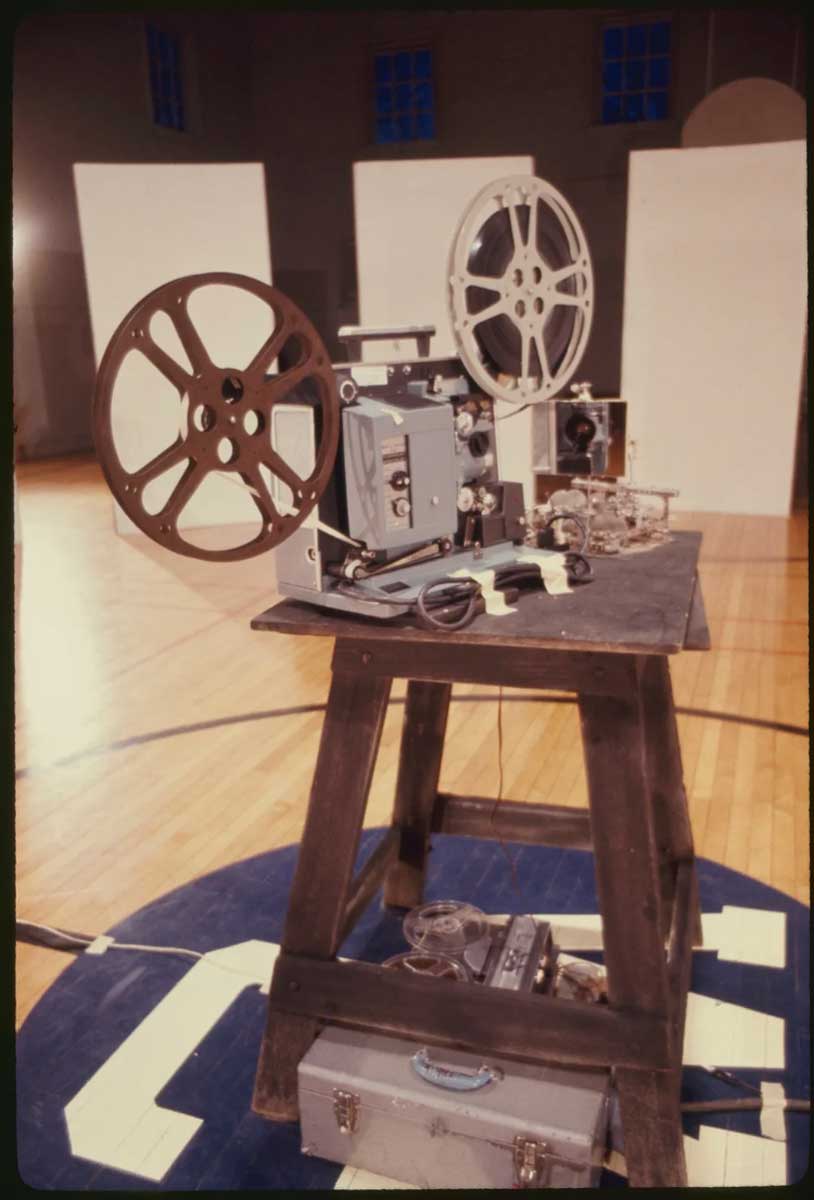 Pong Ping Pong is a film installation where Brand utilizes space and motion to reimagine the viewing experience. In traditional film, it is common to sit in front of a flat screen with only a single route of experience, omitting the disruption of audience members passing between you and the screen. However, the nature of Brand’s 40-foot installation is circular, occupying the space of an entire room. The 16-mm projector, placed on a custom-built turntable, displays the recording of a ping pong game onto 24 screens arranged in a circle. However, the screens are placed with gaps between them, causing the visibility to be disrupted when traveling in the void between surfaces. Additionally, the audience members are often a part of the viewing experience, as they are required to be inside the installation to view it. Rather than a disturbance, this is part of the installation. Pushing this concept further, Brand filmed the ping pong game on a bespoke mechanism that swings and spins as it rotates around the players, creating a dizzying effect. Brand’s use of cinema in this medium creates a groundbreaking viewing experience by activating the space it occupies.
 While it was first installed at Antioch College, Pong Ping Pong came to the Western College for Women gymnasium in 1972 by invitation, just two years before merging with Miami’s campus. Miami’s Western College became a site of experimental thinking, inviting innovative minds like Brand. Due to its installations at colleges, its primary audience has been college students. However, this precedent was broken when it was installed for the third and most recent time at the Microscope Gallery, NY, in 2019.
This coming April, Pong Ping Pong will return to its university setting, where it will be reunited with Miami’s Western Campus in Sawyer Hall by invitation from Associate Professor of Art History, Dr. Annie Dell’Aira. This work, “...was on the cutting edge of what we call ‘expanded cinema,’ a practice where film is transformed into a three-dimensional, sculptural, architectural, or interactive experience”, says Dell’Aria, who taught the art history capstone that curated the Rooted Here exhibition at The Richard and Carole Cocks Art Museum, which highlights Pong Ping Pong. This opportunity not only reflects Miami’s history of pushing artistic boundaries but also invites current students to reimagine what it means to experience film.
After its installation, it will travel to Columbus and Pittsburgh. Come see this one-of-a-kind film experience on April 7 at 5 PM in Sawyer Hall. A reception and artist’s talk will follow in Peabody 121 at 6pm. If you are unable to attend, the Rooted Here offers insight into Pong Ping Pong, including a recording of the film, exclusive notes from Brand, and a diorama capturing the physical nature of the work. Additionally, Brand’s talk will be available via livestream.
With this revival, Miami hopes to continue fostering valuable connections between students and influential artists, creating space for innovation in the arts.
This performance is arranged in conjunction with the exhibition Rooted Here: Networks of Modern and Contemporary Art and is generously supported by The Western Center for Social Impact and Innovation; The Department of Art; The Department of Media, Journalism, and Film; The Humanities Center; and The Richard and Carole Cocks Art Museum.
About the Author
 Anderson Knapp is a Senior in Emerging Technology in Business and Design with a co-major in Arts Management and Minors in Museums and Society and Leading Digital Innovation. He is currently a Student Assistant at the museum, Event Planner for the Art Museum Student Organization, and the Co-Chair for Sparkfest.