
Bridging Art and Literacy Through Community Partnership
Reflections on Spring 2026 Capstone With Critical Literacy Perspectives
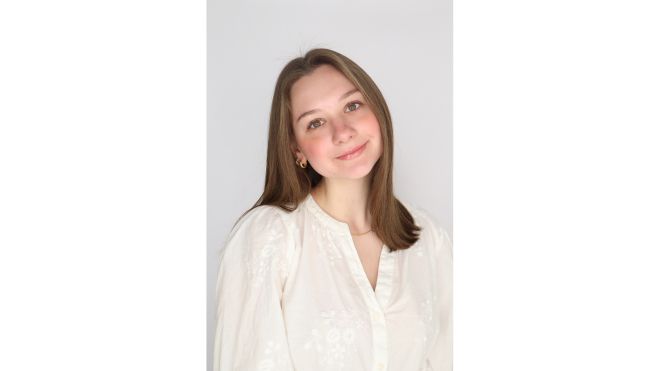
This spring, as part of the capstone course ART 493 Professional Partnerships, I had the opportunity to design and facilitate my own partnership project in the Oxford community and the greater Southwest Ohio area. The course was primarily composed of Art Education majors, but I found that it was a rich opportunity to expand my horizons outside of my own Primary Education cohort, and I wanted to bring art into my work as a passion area. I had a dual positionality that inspired my partnership focus, as I am a graduate student in the Literacy and Language Master’s of Education combined degree program. My graduate studies for the past couple of semesters have revolved around the idea of interdisciplinary learning, and I wanted to connect art and literacy through my partnership. Through this perspective, I designed a partnership project that explored visual art and storytelling as a means of creating community through collaborative expression.
 Before I made any decisions about the direction of my partnership, I decided that I wanted to incorporate picture books, because the early childhood educator in me knew that is where any good plan begins.
The heart behind my idea was to facilitate a collaborative picture book project between people in the Oxford community and young learners in a classroom setting. I already had an established connection with the teachers in the Head Start program at Hollingsworth East Elementary from my field placement in the fall, and I also reached out to the directors of the Oxford Senior Center, which was what shaped the direction of the project.
My partners were Connie Moore, the head preschool teacher of the Head Start program, as well as Emily Liechty, the director of the Oxford Seniors program, and Amanda Gorden, the Activities and Programming director. Together, we curated a shared vision and goals with the purpose of creating a generative opportunity for seniors and providing preschoolers with the opportunity to be illustrators.
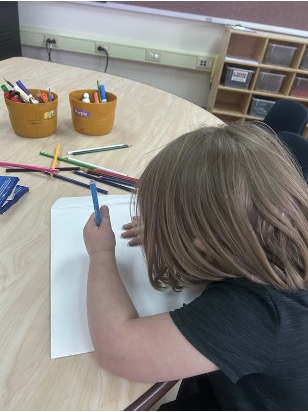
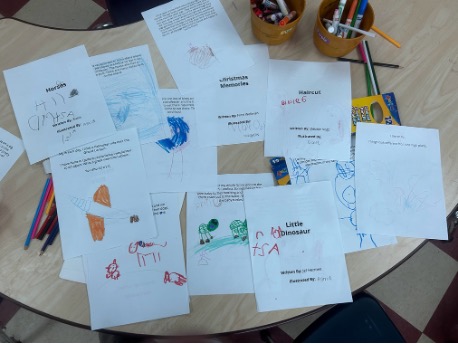
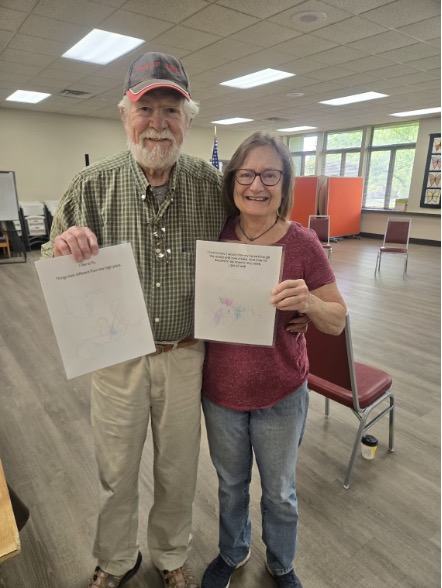 Participating seniors at Oxford Seniors wrote short stories of 4-6 sentences that could be true or fictional, which I typed and printed into a one-pager book. I then took the stories to Eaton, where the school was, and I read the preschoolers the stories and then let them draw and color illustrations for each of them. The final step was having the finished stories laminated and taken back to the senior center as gifts for the seniors so that they could see their stories illustrated.
While the project depended on visual artmaking, it was equally rooted in literacy practices. My project demonstrates that art is both a creative and a literacy process. This work was viewed through the frameworks of critical and multimodal literacies, which shaped how I understood children’s artmaking and the seniors’ storytelling as interconnected forms of meaning-making and communication. Arting and Writing to Transform Education: An Integrated Approach for Culturally and Ecologically Responsive Pedagogy was a resource recommended to me by graduate professor Dr. Rachael Banda Rothrock, and I found a meaningful connection in how authors Meyer, Maeshiro, and Sumida describe art and writing as “parallel creative-expressive processes”. This concept resonates with my partnership project because it demonstrates in a simple but concrete way how visual art and literacy are intertwined in the ways in which children communicate meaning. The preschoolers were read to, and then they made sense of what they were hearing with drawings- it became a way of comprehending, interpreting, and retelling. Their illustrations were not separate from literacy; they were literacy. This is especially meaningful because it allowed the preschoolers, who are not yet fluent readers or writers, to participate fully in meaning-making.
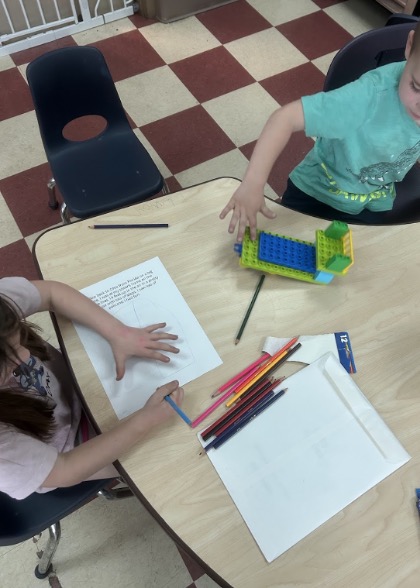 My favorite part about this partnership was that it was authentic and relational, and it moved outside of traditional classrooms and into other social settings. The project also revolved around two very distinct age groups, and that required a lot of modifications for the elderly participants, some with age-related disabilities, as well as for preschoolers, many of whom have limited home literacy environments, according to what I learned about the kids’ families and backgrounds when I was in the classroom for my field placement. The nature of working with 4- and 5-year-olds is that they have short attention spans, so I had to change the original design for the length of the picture books with that in mind. It was fulfilling to work with people in unique age demographics, as Dr. Banda Rothrock pointed out, it “creates an intergenerational space of reciprocal relationships through shared authorship that disrupts perpetuation of ageism and fosters mutual understanding across groups.” I got to see firsthand how seniors made connections to their lives by telling their stories and being creative. Some even shared with me how the opportunity was meaningful for them because of their own experiences with their children and grandchildren, and one woman told me how she had always wanted to work in education, but she didn’t get to go to college, and she felt empowered being able to say she was making a difference for preschoolers and their learning. I was encouraged to see this project through a new lens of sociocultural literacy, and how everyone makes meaning out of text in different ways based on their experiences.
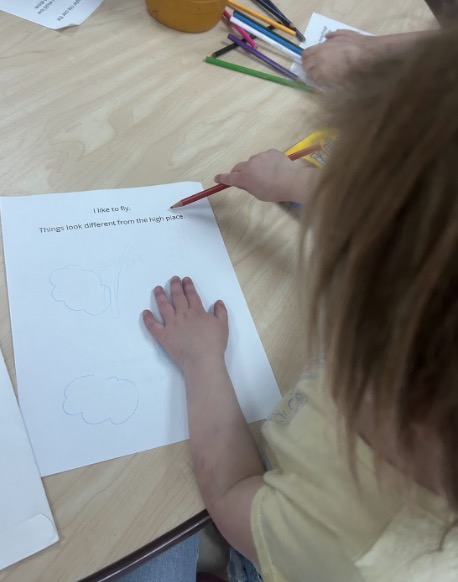 The elderly are often undervalued as authors, and preliterate children are also undervalued in their ability to take ownership of literacy experiences. However, critical literacy highlights how the way we engage with one another can dismantle existing power structures. Negotiating Critical Literacies with Young Children is another powerful text, and a major theme throughout the book is that children' s lived experiences matter. Vasquez proposes that student voice should be valued as legitimate knowledge, and in doing so, it challenges traditional classroom structures. I think this applies to both the preschoolers and the seniors in my partnership because their voices, whether that be personal storytelling or interpretation through visual artmaking, were valued and communicated as knowledge.
When I was first asked to write this article, I wasn’t certain that my project was rich enough to be impactful. After all, asking people to write a few sentences and draw colorful pictures is a straightforward task for an aspiring teacher. But then, as I began to reflect and see what the participants in my project got out of it, I began to uncover many layers of meaning and possibility embedded within what seemed simple to me.
 Through this partnership, I expanded both my personal and professional spheres. One of the most prevalent lessons I learned that will be important as a future educator is about flexibility. This was part of the process of creating a shared vision, that it wasn’t only my vision, but a combination of goals that were adjusted based on what was feasible for the participants, even if that meant conceding my own expectations. I only had a couple of months to see this project to completion, and I had to manage my time efficiently, while being respectful of the times that worked or didn’t work for my partners. Being in a classroom setting with the Head Start program, I was given a realistic model of how the teachers put the needs of their students first, and how they thought about how numbers of kids, behaviors, routines, and times of day all played in a role in the effectiveness and seamlessness of the illustration portion of the project.
This experience demonstrated how not only the layer of integrating art and literacy, but the layer of intergenerational collaboration serves as a meaningful space to connect people and give voice to their creativity.
About the Author
Ally Carpenter is a second-year Primary Education major from Loveland, Ohio. She is also pursuing her Master of Education as part of the Literacy and Language Program, along with a Reading Endorsement and will graduate in the spring of 2028. She hopes to one day teach kindergarten or first grade in the Cincinnati area.