
The Division of Student Life creates transformational opportunities, inclusive environments, and meaningful connections that maximize student growth, learning, and success.
Miami Central helps campus offices connect with students in new ways
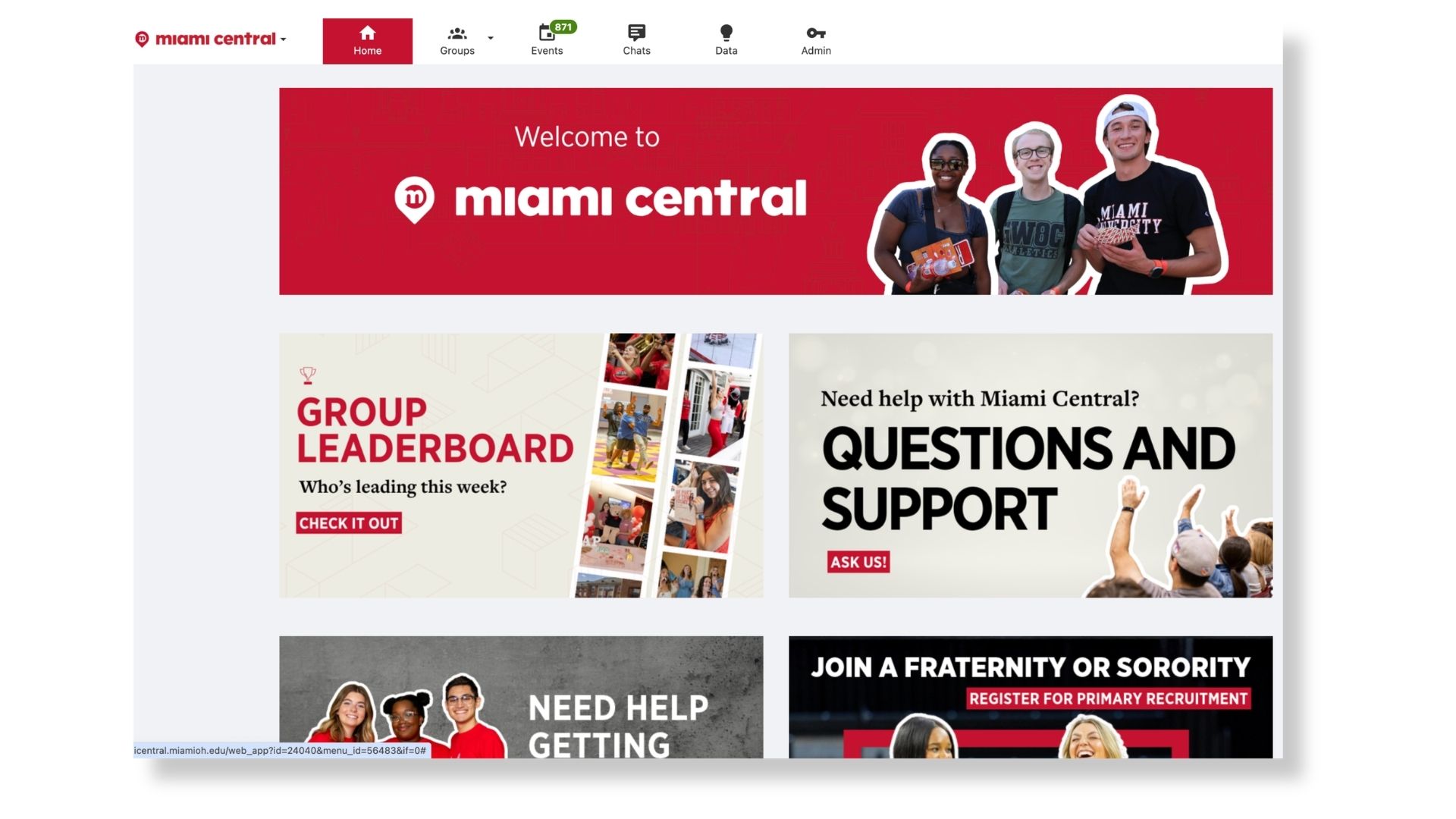
Launched in April 2026, Miami Central is giving departments across the university new tools to communicate with students, manage programs, and build community.
•
Published
•
Miami Central helps campus offices connect with students in new ways
Launched in April 2026, Miami Central is giving departments across the university new tools to communicate with students, manage programs, and build community.
•
Published
•
A senior preparing to graduate receives a different message in his Weekly 3 email than a first-year student who might be interested in studying abroad. A student employee in the Armstrong Student Center gets updates tailored to her role. A commuter student connects with other commuters sharing thrifted finds and fashion tips, even before visiting the Commuter Center in person. A student checks in to a social event and receives a follow-up message thanking him for coming, letting him know about future events, and asking him to complete a brief feedback form. He later notices he’s earned points and a badge on his Miami Central profile.
These are just a few examples of how Miami Central is creating new ways for Miami students to connect with campus, discover opportunities, and find information relevant to their own situation.
Launched in April 2026, Miami Central is giving departments across the university new tools to communicate with students, manage programs, and build community. As offices explore the platform’s capabilities, they are finding ways to make everyday processes more efficient while helping students navigate the experiences and opportunities that shape their time at Miami.
Personalized communication
For the division of student life, one of the biggest changes is the ability to tailor communications to different student audiences.
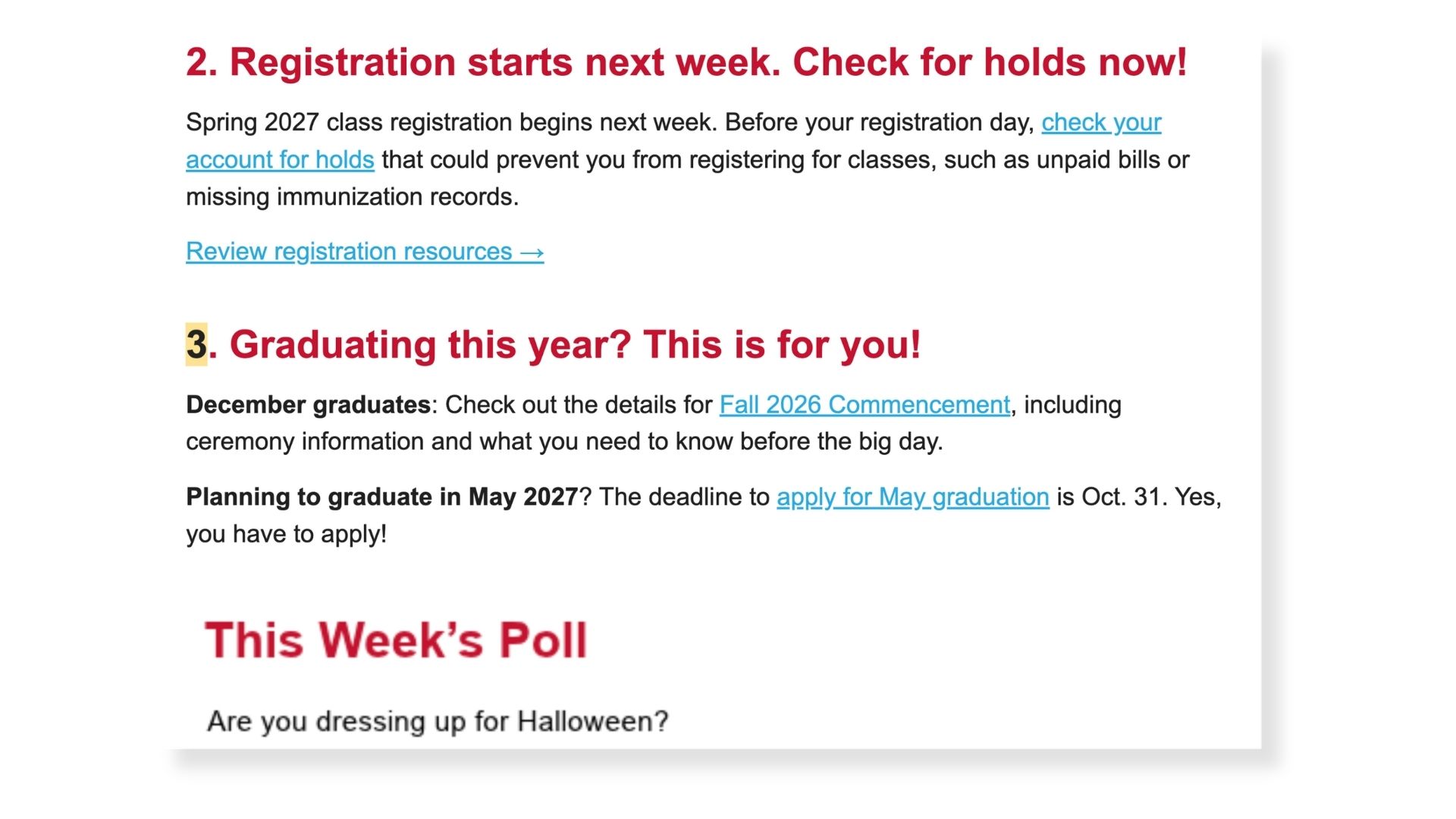 “Until this year, the Weekly 3 email to all Oxford students was the same for everyone, and it was sent in gmail,” said Jen O’Brien, director of communications for student life. “Now with Miami Central, we can send different messages to different audiences. In our first Weekly 3 this semester, first-year students got a version of the Weekly 3 that included a campus map and wayfinding information, while returning students received a version that included an article about what’s new on campus this year.”
“The communication tools are my favorite feature in Miami Central,” O’Brien added.
That same approach is helping Armstrong Student Center communicate with their student employees more effectively. Rather than sending every employee the same updates, staff can organize employees into subgroups based on their positions and teams.
“Not everyone on every team needs the same information,” said Chloe Miles, engagement coordinator for Armstrong. “So we can email based on subgroup and not bog them down with information they don’t need.”
The result is a more targeted approach to communication, helping students find the information they need without having to sort through messages that don't apply to them.
Managing engagement
Behind every campus event, student organization, and leadership opportunity is a network of people and processes working to make student engagement possible. Miami Central is helping offices bring more of that work together.
The office of student engagement and activities uses the platform to manage student organization registration, membership, events, and development resources. Students organizations can also schedule success meetings with peer mentors through Miami Central for timely, personalized guidance.
At Armstrong Student Center, event registration and QR-code check-in tools are opening new possibilities for understanding student participation. Staff can use the platform to register attendees, record check-ins and begin building a more complete picture of how students interact with programs throughout the year.
“It's always been a problem to track who is at events and getting those numbers,” said Hannah Muldoon-Davis, associate director of the Armstrong Student Center. “We’ll be able to show the touchpoints we’ve had with students all year in a way we've never been able to before.”
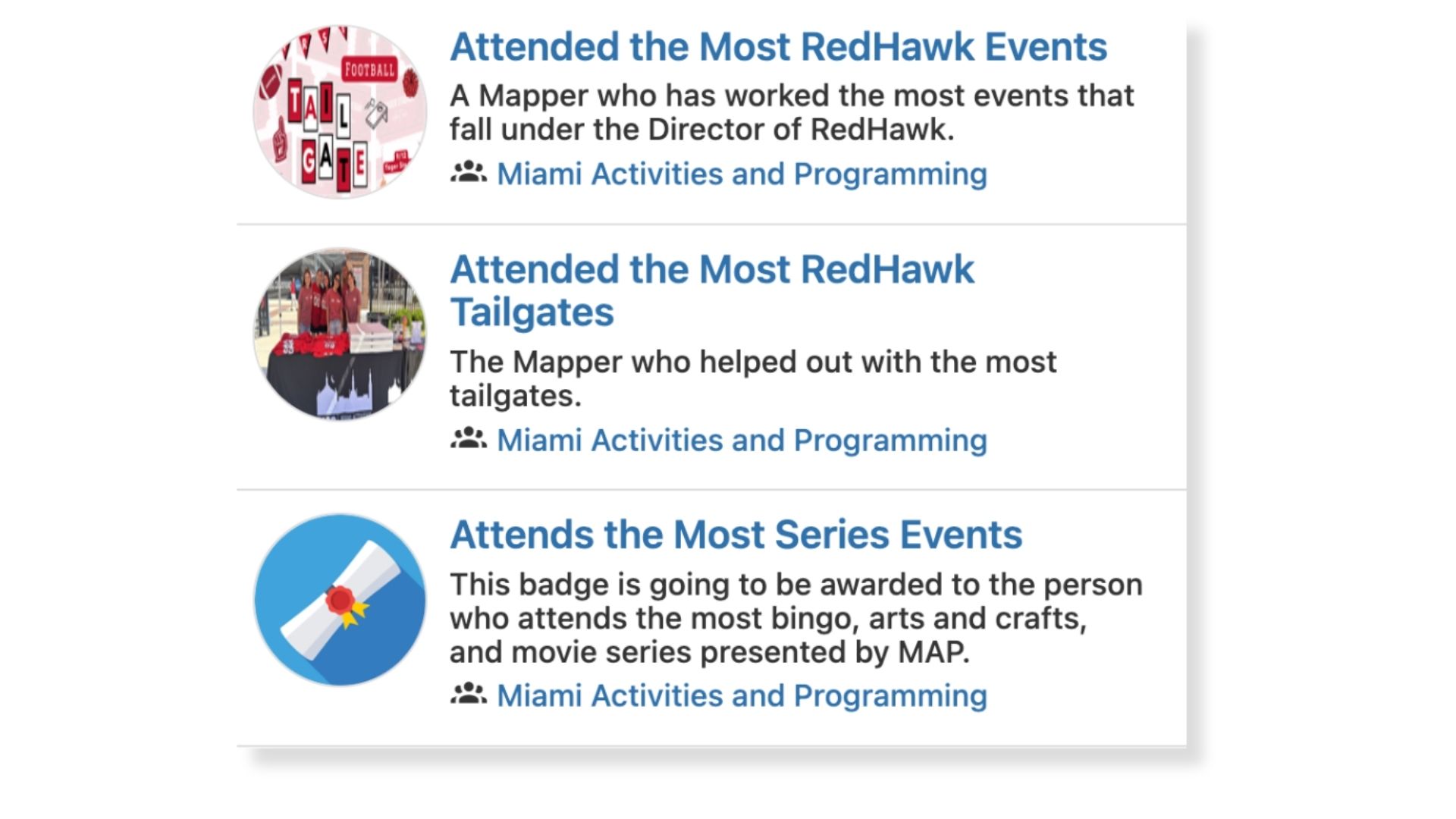 Beyond tracking involvement, Miami Central allows event organizers to easily check attendees into their events and send follow-up communications automatically. Students can also earn points and badges for their participation.
That information could help offices better understand which programs students are attending, identify opportunities to reach new audiences, and demonstrate the many ways students connect with campus beyond the classroom.
Finding community
Not every student finds community in the same way. Some connect through a student organization or campus event. Others begin with a shared interest or an online conversation.
For commuter students, Miami Central is creating another entry point.
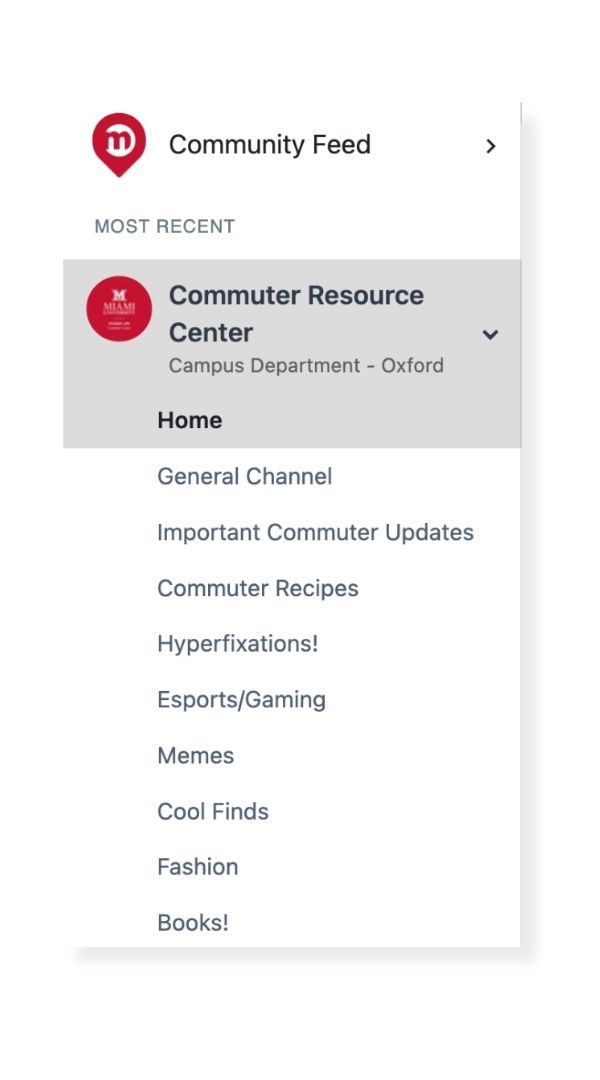 The Commuter Center, located in Armstrong Student Center, established feeds and channels within its Miami Central group where students can connect around shared interests, including fashion and thrifted finds. The conversations give students a place to exchange ideas and get to know one another, even when they aren't physically in the Commuter Center.
Staff are seeing new names join the online conversations, including students who haven't previously visited the space in person. Those digital interactions offer another way for commuters to begin building relationships and feel more connected to the Miami community.
The office of student engagement and activities is approaching community building from another angle: helping students discover opportunities they might not know exist. Staff can use participation data to identify students with no documented involvement and conduct targeted outreach, connecting them with opportunities that match their interests and help them take a first step toward engagement.
Both approaches reflect a shared goal: making it easier for students to find a place where they belong.
Helping students find their path
Miami Central is also helping offices guide students toward experiences that support their growth and development.
During orientation, the Career Center collects career cluster information through the platform, giving staff insight into students’ career interests and helping connect them with opportunities for exploration. The office is also assigning tracks and checklists that guide students through structured learning pathways.
For first-year students, the office of student engagement and activities has introduced a different kind of roadmap: a first-year bucket list. The 86-item checklist, assigned to all first-year students, highlights the range of ways to get involved at Miami. Students who complete a designated number of items can stop by the office to pick up prizes.
The checklist turns a broad invitation to get involved into a series of manageable steps, encouraging students to try new experiences and discover what interests them.
Looking forward
From a more relevant email to a new online community or a checklist that encourages students to try something different, the ways departments use Miami Central may look different. But the underlying purpose is the same: to help students connect with the people, resources and experiences that make their time at Miami meaningful.
As more offices explore the platform, they will have additional opportunities to connect their work, understand student engagement, and identify ways to reach students they might otherwise miss.


