Howe Center Celebrates Latest Cohort of AI-Informed Writing Pedagogy Certificate Graduates
New student AI modules also launched to support campus-wide writing instruction.
With 53 graduates across every division, the Howe Center’s AI-Informed Writing Pedagogy Certificate is transforming how Miami approaches writing instruction and the use of AI. Over the last four semesters, this program has helped faculty to redesign assignments and craft clear AI policies for their classroom. Read more about the latest cohort and get a first look at exciting new initiatives for Fall 2026.
Howe Center Celebrates Latest Cohort of AI-Informed Writing Pedagogy Certificate Graduates
With 53 graduates across every division, the Howe Center’s AI-Informed Writing Pedagogy Certificate is transforming how Miami approaches writing instruction and the use of AI. Over the last four semesters, this program has helped faculty to redesign assignments and craft clear AI policies for their classroom. Read more about the latest cohort and get a first look at exciting new initiatives for Fall 2026.
The rapid rise of generative AI has sparked a pivotal moment in higher education, with many faculty struggling to address AI use among students, and seeking to understand their own relationship to AI in the classroom or their work. For some there are practical anxieties around the ways that generative AI can bypass the use of writing to achieve course goals. For others, ethical issues dominate, with valid concerns about the environmental and moral implications of the technology, and a desire to engage students on these issues.
 Over the past four semesters, the Howe Center for Writing Excellence has offered the AI-Informed Writing Pedagogy Certificate to help instructors reevaluate the writing taught in their courses and better understand how to design assignments, create policies, and assess writing in an age of AI. The certificate program, co-created by Assistant Director for Writing Across the Curriculum Mandy Olejnik and Graduate Assistant Director Rena Perez, gives faculty the opportunity to work with colleagues across disciplines to learn more about and interrogate artificial intelligence tools and their impact on writing instruction.
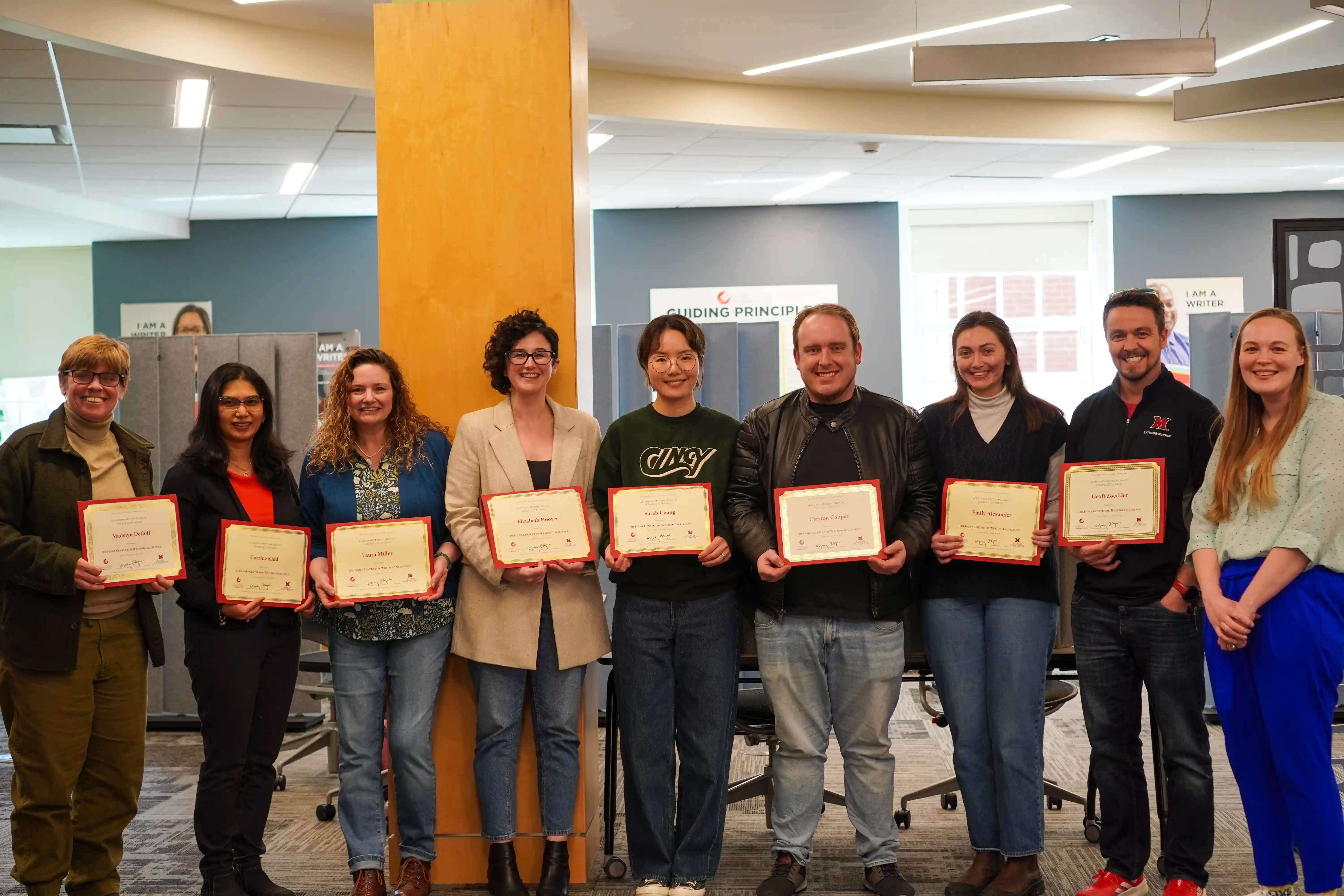
To date, 53 faculty, staff, and graduate students from every division have completed this program and have created innovative assignments and policies that address AI use in the classroom.
The program begins with a series of asynchronous modules completed over several weeks. Beginning with an exploration of writing tools, these modules provide an overview of the generative AI landscape, including the ethical implications for using AI when writing, teaching and learning. Once this groundwork has been laid, instructors begin the vital process of articulating personal and professional principles around AI and writing instruction.
In this phase, educators grapple with fundamental questions:
- What should students be ready to do?
- How should writing fit into our assignments?
- How do our assignments let students show what they know?
- How can we rethink or refresh the types of assignments we use?
After wrestling with these core questions, educators are ready to enact meaningful changes that support student learning.
“By defining my principles around AI use,” writes Laura Miller, a participant in the latest cohort, “I realized I had not been operating according to them. I was floundering…I wasn’t defining what acceptable and unacceptable AI use would actually look like, which muddies the waters and allows for more unacceptable and undocumented use of AI.”
Following the modules, the cohort moves into a collaborative phase through three in-person working labs.
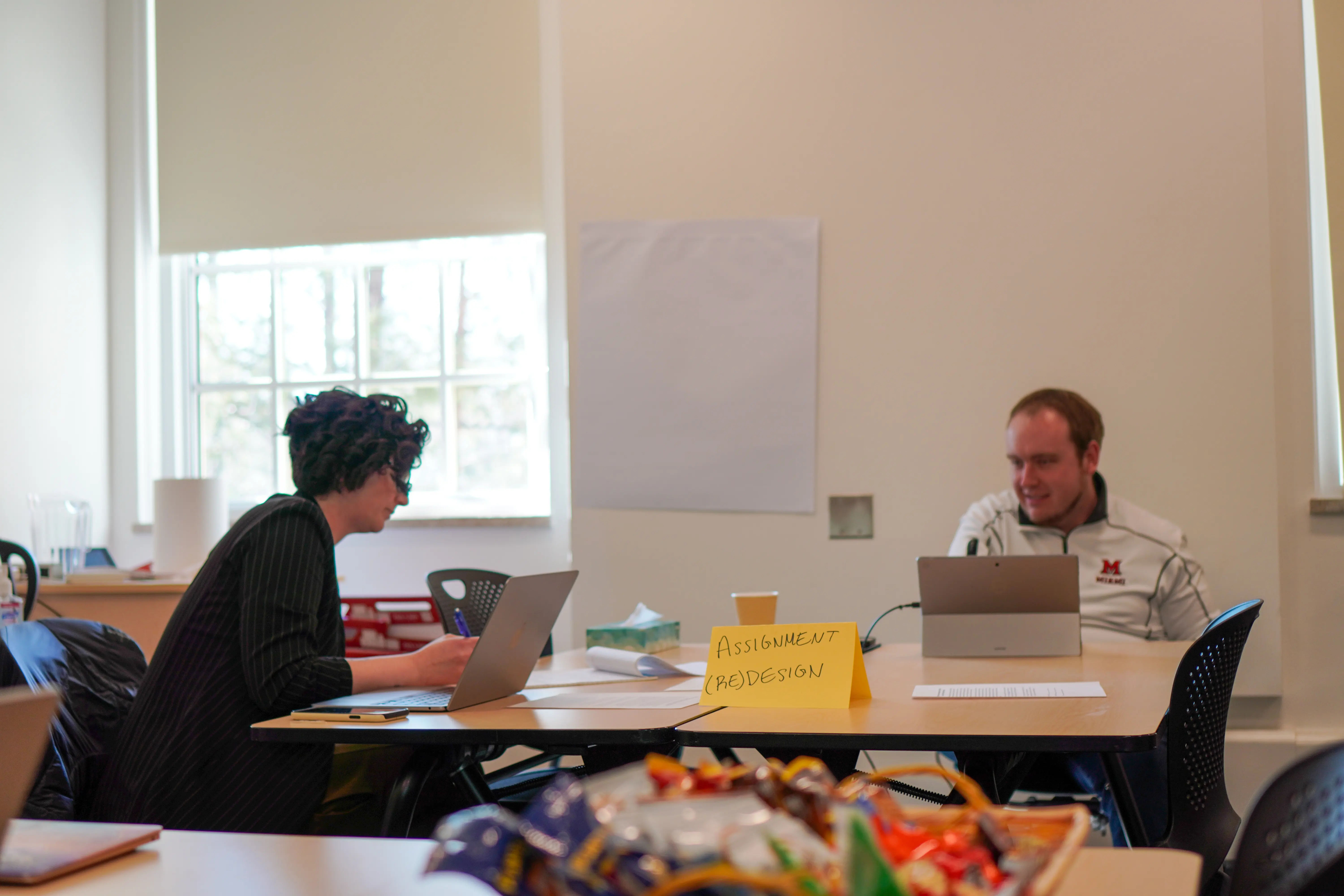
An in-person lab might consist of sharing useful resources around AI policy, work time around charting AI use, peer response and feedback, or general discussion with colleagues.
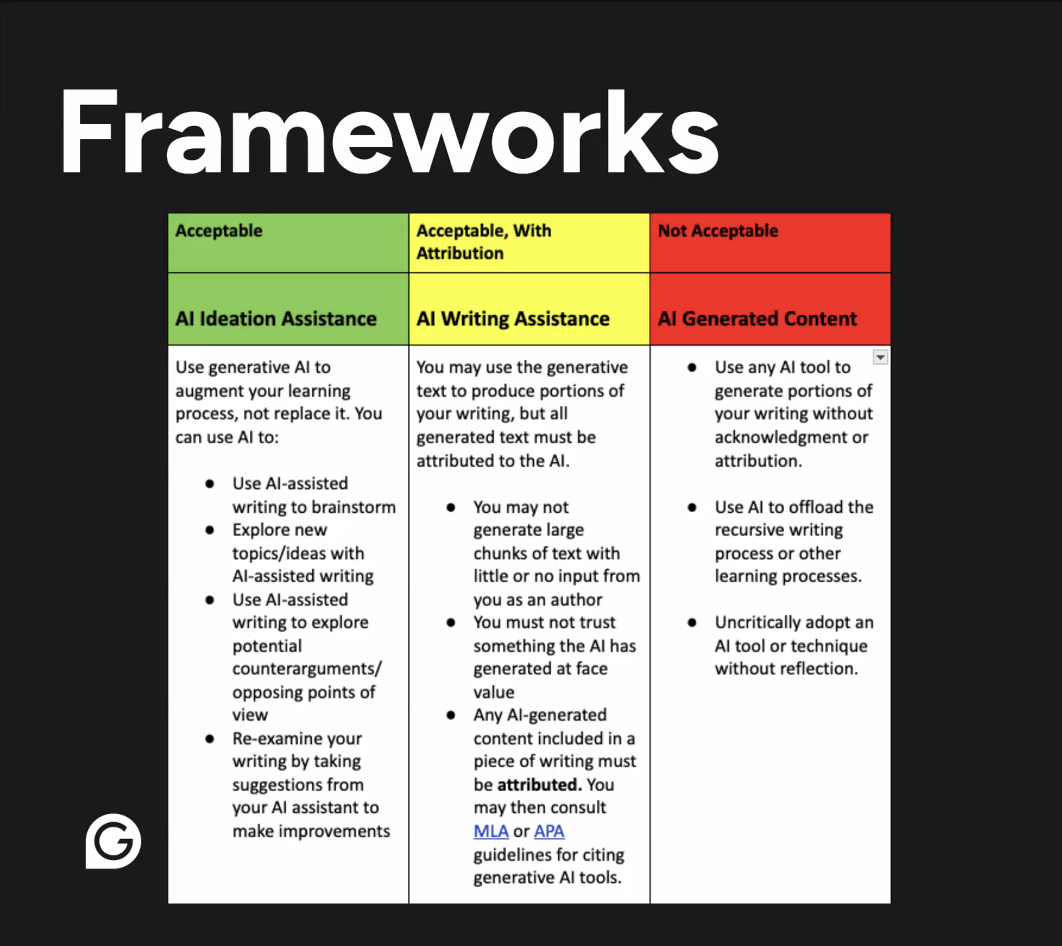 Time is set aside for assignment design, a crucial part of the process where participants create materials like AI cover sheets that students turn in before each assignment, new frameworks for AI assessment like “AI-enhanced,” traffic light charts of acceptable AI use that they include with every major assignment, and more.
These sessions also foster discussions regarding the ethical ramifications of AI. For many, this experience prompted a shift in perspective. As one participant noted, “I want students to be informed about the ethical concerns that surround AI use and determine for themselves if they are willing to use it.” Another shared that while they were initially "Team AI" for everything from brainstorming to feedback, the program sparked new caution: “I'm now wondering if there needs to be more guards around its use--especially for students with still developing brains. I don't want the AI to rob the students of the opportunity to use critical thinking skills and use their imagination.”
The certificate culminates with a set of deliverables and personalized feedback from Howe Center leaders.
“This program has truly been wonderful to facilitate," reflects Olejnik. “When we first sat down to create it, we started with the modules, since Rena and I had been going across campus talking about AI and wanted to distill all that we knew into something accessible. We initially imagined the modules as the only point of interaction, but after we piloted the live components with a stellar group of faculty, we realized that the in-person community and support was the heartbeat of the program. We’re all under so much pressure reacting to new tools and technologies, and coming together to talk about it is healing and reassuring for so many.”
After completing two rounds of these faculty modules, the Howe Center has expanded its reach to create student-facing AI-Informed Writing modules, created by Olejnik and Graduate Assistant Director Emma Boddy. This spring semester, 141 students across five different courses taught by AI-Informed alumni completed the modules as well as submitted a reflective worksheet. Olejnik and Boddy also conducted three student focus groups from these participants to learn more about what students really think about AI and how we as educators can support them.
Starting in the fall of 2026, all AI-Informed faculty alumni will be eligible to seamlessly insert these modules into their own Canvas courses, which is an extra benefit of participating in this certificate.
Building on the success of this initiative, the Howe Center will convene a symposium on Friday, September 25th, 2026, gathering the certificate alumni and the broader Miami community in an interactive, knowledge-sharing event that addresses AI and the teaching of writing. Faculty, staff, and graduate students are invited to navigate an "AI-informed" classroom that utilizes writing for learning and thinking.
Faculty interested in participating in the next cohort or implementing the student modules can email Mandy Olejnik at olejnimr@miamioh.edu for more information.