Howe Writing Center Alumni Spotlight: Madilyn Moeller ('20)
Interviewed by Reynie Zimmerman
Madilyn Moeller, a 2020 alumna who studied psychology, professional writing and neuroscience, spoke with writing center consultant Reynie Zimmerman about her time at the Howe Writing Center and how that experience has shaped her career.
Howe Writing Center Alumni Spotlight: Madilyn Moeller ('20)
Madilyn Moeller, a 2020 alumna who studied psychology, professional writing and neuroscience, spoke with writing center consultant Reynie Zimmerman about her time at the Howe Writing Center and how that experience has shaped her career.
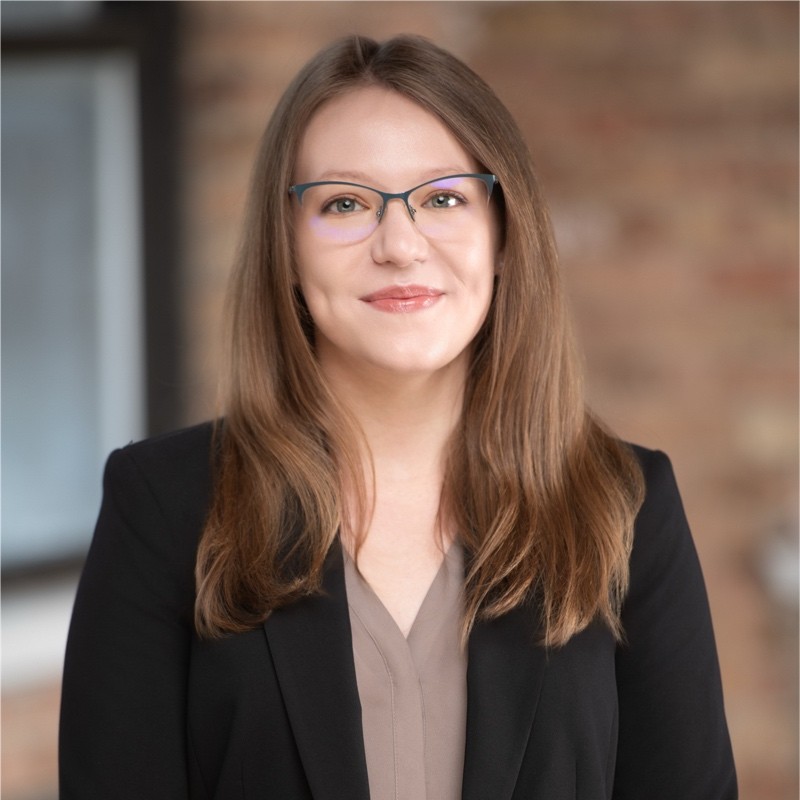
Madilyn Moeller joined the Howe Writing Center during her junior year at Miami University and continued as a consultant through her senior year. While at Miami, she studied psychology, professional writing, and neuroscience. After graduating, she pursued a career in marketing strategy and currently works as a marketing content coordinator in the medical spa space. Her work centers on conveying technical ideas to a broad audience across articles, podcasts, webinars, and conference programming.
Madilyn was interviewed by writing center consultant Reynie Zimmerman.
Reynie: Can you tell us something about your current life and career?
Madilyn: I graduated in 2020 and after that I started freelancing, writing blogs and articles. In April 2021 I started a job as an editorial assistant, and I've been with the same company ever since, moving into a content coordinator role and then shifting into a marketing content coordinator position.
R: Can you talk a bit more about that early role of editorial assistant?
M: I originally started out doing news and some pieces for our quarterly magazine. That involved interviewing industry experts in the medical spa space and working cross-functionally with the marketing and events departments. Subsequently in content coordination, I started taking on the podcast. I'd schedule our guests for the podcast and write up descriptions and interview questions. Recently we've added a lot more to the blog, so I've been taking a big role in that. We've definitely seen growth in this particular industry in the last four years, so it's been exciting. I’ve seen a lot of changes happening.
R: Tell us more about your work on the podcast.
M: I’ve been working on the podcast since August 2021. We pick a topic and write up a general idea of what we're going to cover, or script pretty specific discussion questions. We try to do more of a flexible conversation; that just works better with our hosts. It's interesting: we get to hear the stories of a diverse group of people, like practitioners, business owners, and industry experts. We've had people from HR, financial consultants, lawyers, a big mix.
R: Can you describe what you see as the most significant skills, values, or kinds of knowledge that you developed at the Howe Writing Center?
M: One of the things that I heard a lot when I was there was that I was the best listener. I even received that as an award at our graduating seniors banquet. I think that's definitely a skill that you learn in those one-on-one conversations. I use that now in developing interview questions. It comes up in other situations too, like reaching out about a topic for a blog. I ask myself, ‘I want to cover this thing, what do I need to think about?’ It’s a challenge to ask a question in a way that leans into the expertise of the person and also gets at what we're looking for on the podcast.
I’d say it was really valuable to develop my listening and curiosity skills. The writing center helped me become more comfortable doing that.
R: Yeah, the center definitely helps you work on your confidence.
M: For example we have a trade show and so we end up with maybe 125 speakers. I worked on the administrative side one year, coordinating presentations and bios with the speakers. If we needed to work on their topic a little bit, I was the one communicating with them. So a familiarity with the topic helps, but asking the right questions is so important.
R: What were the most significant experiences you had at the Writing Center, which you think helped you to develop these skills?
M: One time I was assigned to help with an economics class, we were working with a set of 30 people for three drafts. It was interesting and challenging to put myself as a resource for a specific set of people over a couple of months. It really showed me that you know more than you think you do. As long as you're confident in your skills and can ask the right questions, you can see what they're going for, and work out what style applies to the situation. You can always do the research, find a resource, and work with the person to figure it out.
R: What kind of writing do you do now in your career?
M: While I was freelancing, it was all informational. For example, what are the different types of Medicare and Medicare Advantage? I got used to that and it was pretty consistent. Then when I became an editorial assistant we would have a daily news piece, which involved looking at press releases and writing them up. Blogs can be pretty varied, sometimes it's taking technical information and translating it, sometimes it's more narrative. So yeah, it's fun to write in a lot of different ways. Oh, and then the podcast description is something else too. That's more SEO, but it's also a little bit stylized.
R: How has your life as a writer changed since you graduated?
M: I'm definitely writing a lot more publicly. It’s interesting because I'm writing for a business instead of just me. So I have to keep in mind company style and tone and their mission and values.
R: Have your ideas about writing or how you think about writing changed at all since graduating?
When I graduated I might have dismissed the genre of the listicle, but it's also an effective way to show up in search. If people want to find the answer to a question, you want to have it out there. And that's part of how you want to think about things too.
It’s been my motto since I graduated that I aim to write clearly, concisely, and accessibly, and I have not changed that. My capstone was on scientific writing and how to take the technical and make it easily readable by the general public. That's something I still try to do.
R: Based on your experiences at the Howe Writing Center, do you have any advice for current Howe Writing Center consultants as they begin to explore their career opportunities?
M: I'd say you gain a lot of skills as a consultant, both as a writer, but then also as a listener. You've got to be adaptable, you're thinking in the moment, that's all huge. You gain confidence, speaking with a voice of authority, but also in being a team player in that moment. That's something that people are always looking for when hiring.
Interviewer Reflection
I found Madilyn’s career trajectory from freelancing to becoming an editorial assistant fascinating. She’s working in a writing-based career, and her experience as a writing consultant was a big help on her resume when starting out.
She touched on the skills developed when working with different types of writing, but she also mentioned the skill of listening, which isn’t one I’ve heard alumni talk about as much. This is a crucial skill we develop as consultants; so much of the consultation relies on the consultant’s ability to listen to what the writer wants for their paper and adapt their feedback to those concerns.