
Madison Roberts ‘26
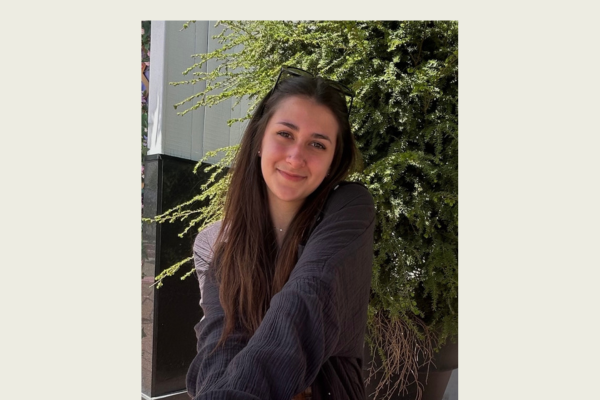
Madison Roberts ‘26
- Hometown: Centerville, OH
- High School: Centerville High School
- Class: 2026
- Major: Psychological Science

Why Miami University?
Of all the universities I considered, Miami stood out to me for its strong sense of community and the opportunities it offered for a more personalized, student-centered education. Miami also offers a wide range of opportunities to get involved beyond the classroom, which have helped me grow as a leader and gain hands-on experience that will benefit my future endeavors in psychology. Overall, Miami stood out to me not just for its academic programs but for the environment it creates that encourages growth and connection and fosters confidence to pursue my goals.
How did you choose your major?
My interest in psychology began during high school, so coming into college, I knew I wanted to pursue psychology and deepen my understanding of how people think, behave, and experience the world around them. Through my personal and academic experiences at Miami, this interest became more clearly defined, and I discovered a strong passion for understanding trauma and its impact on individuals and families across generations. I also became increasingly aware of the barrier many people face in accessing mental health care, especially within underserved and diverse communities. These experiences shaped my commitment to pursuing psychology not just as an academic interest but as a way to advocate for more accessible, trauma-informed, and culturally sensitive mental health care. My time at Miami has allowed me to grow that passion into a clear sense of purpose for my future career.
Please list the groups, clubs, jobs, etc. that you were/are involved with.
I’m in the Psychology Club, a Member of Psi Chi, and a member of the International Honor Society in Psychology.
As a Miami student, what are some of your awards and accomplishments?
As a Miami student, I have been actively involved in both leadership and service within the university community. I currently serve as the President of the Psychology Club, where I help create opportunities for students to engage with mental health and psychology. Through this role, I have worked to build a more inclusive and engaging environment, even in a virtual format. In recognition of these efforts, I was honored to receive the Excellence in Service Award in Spring 2025.
In addition to my leadership role, I am a member of the CLAAS Honors Program, where I have contributed to student outreach initiatives. In collaboration with Dr. Cinnamon, I assisted in efforts to connect with and support prospective and current students, helping to foster a sense of community within the program.
These experiences have allowed me to grow as a leader, strengthen my ability to connect with others, and further develop my commitment to service, advocacy, and creating supportive spaces within the Miami Community
Did you have any special experiential learning opportunities that have influenced you in a positive way?
Through my involvement in Adopt a Class with Dr. Cinnamon, I had the opportunity to teach fifth-grade students about basic psychological concepts and introduce them to the idea of college. This experience challenged me to break down complex ideas into engaging, accessible language, ultimately strengthening my communication skills and reinforcing the importance of meeting individuals where they are to make higher education material feel more attainable.
On the other hand, my work in the Brain Health and Cognitive Aging Lab with Dr. Jardin has provided me with valuable exposure to psychological research and the scientific process. Through this experience, I have gained a deeper understanding of cognitive functioning across the lifespan and the importance of evidence-based approaches in psychology. Working in a research setting has strengthened my critical thinking skills and shown me how research can directly inform clinical practice. It has also solidified my interest in pursuing a career that integrates both research and applied mental health work.
What are your plans after you graduate from Miami? What sort of career are you aiming for? What is your dream job?
After graduating from Miami in May, I plan to pursue graduate training at Wright State University, where I will work towards becoming a clinical psychologist who provides trauma-informed and culturally responsive care. I am especially passionate about advocating for equitable access to mental health services. I aspire to work with individuals facing the complex outcomes of trauma while also contributing to broader efforts that reduce barriers to care and promote effective mental health systems.
Advice to Prospective Students
If I had the opportunity to talk to a student considering Miami, I would emphasize the need to fully embrace change and take advantage of every opportunity that comes their way. Miami offers so many opportunities to get involved outside of the classroom through student organizations, research, or leadership roles. My most meaningful experiences come from saying yes to opportunities despite my initial hesitation. Allowing yourself to change and grow is crucial to discovering new passions, strengthening your interests, and building stronger connections that will shape your path in ways you do not expect. Ultimately, I would encourage new students to come in with an open mind and be willing to embrace experiences that will help them become who they are meant to be.
Has Miami provided you with opportunities to engage in research, partnerships, or experiences that shaped your way of thinking?
Yes! Miami has provided me with opportunities to engage in both research and community-based experiences that have significantly shaped the way I think about psychology and mental health care. Some of these experiences include being a research assistant in Dr. Jardins' Brain Health and Cognitive Aging Lab, participating in programs like Adopt a Class, and taking on roles such as a tutor for the research design and analysis course.
Have you used what you learned in different subjects to solve a problem or come up with a new idea?
My experiences at Miami have encouraged me to apply what I have learned across different areas of psychology. Through my coursework, I have learned about memory, learning processes, and behavior change. I've been able to directly apply these concepts in my role as a Registered Behavior Technician (RBT), where I work with children on the autism spectrum using evidence-based interventions. For example, I use principles such as reinforcement, shaping, and prompting to support skill development while adapting my approach to each child's individual needs and learning style. Understanding psychological concepts in greater depth through my coursework has enabled me to apply evidence-based strategies more intentionally and effectively in my role as an RBT.
Have your experiences at Miami helped you develop an entrepreneurial mindset?
My experiences within the Psychology Club, the Brain Health and Cognitive Aging lab, Peer Tutoring, and Adopt a Class have taught me to embrace uncertainty, take initiative, and view challenges as opportunities for growth. These are skills I will carry with me into my future academic and professional life.
Have you used your knowledge or skills from Miami to positively impact your community or the world around you?
Through my coursework and involvement in Miami's opportunities, I have developed a strong understanding of mental health, communication, and evidence-based approaches, which I have applied in my work with the National Alliance on Mental Illness (NAMI). I am a community representative and a NAMI Next Gen Advisor. In these roles, I help raise awareness of mental health and promote accessible mental health resources for individuals in Montgomery County. I have conversations about mental health with members of my community, and within these conversations and strides towards accessible mental health resources, I am consistently reinforced in the importance of communication skills as well as the importance of acquiring education around mental health and adequate approaches to individuals battling mental health.
Has Miami helped you build meaningful connections with people from diverse backgrounds or viewpoints?
Through my involvement in organizations like the Psychology Club and my work with NAMI, I have had the opportunity to engage with students and community members who bring different lived experiences, beliefs, and viewpoints. These interactions have broadened my perspective and reinforced my commitment to providing culturally responsive and inclusive mental health care in my future career.
Have you taken on leadership roles or responsibilities during your time at Miami?
I have taken on several leadership roles during my time at Miami across academics, student organizations, and community involvement. I currently serve as the President of the Psychology Club, where I organize and lead weekly meetings, coordinate events, and work to create an engaging and inclusive environment for students interested in psychology. In addition, I have taken on leadership responsibilities in academic settings, including serving as a teaching assistant for Cognitive Psychology and as a Peer Tutor for Research Design and Analysis. Beyond campus, my involvement with NAMI as a Community Representative and Next Gen Advisor has allowed me to take on leadership roles in mental health advocacy within my community. Lastly, I have taken on leadership roles through training in my Registered Behavior Technician role. All of these experiences have helped me grow into a more confident and intentional leader, committed to supporting others and creating meaningful impact both on campus and in the community.