
From high school to college degree at 19; New options elevate early college academy
Interest and enrollment growth continues as high school students discover new degree and career opportunities
From high school to college degree at 19; New options elevate early college academy
Interest and enrollment growth continues as high school students discover new degree and career opportunities
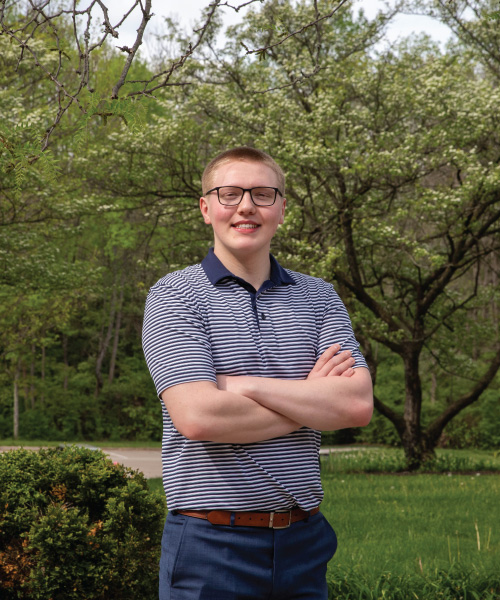
When Branson Gabbard started his Early College Academy (ECA) journey in 2022 as part of the program’s first cohort during his junior year at Hamilton High School, college hadn’t been on his radar. He was the first in his family to set a goal of achieving a college education. This spring, he will earn his bachelor’s degree in Criminal Justice at the age of 19, one of the program’s first graduates with a four-year degree from Miami University.
Like many ECA students, Gabbard saw only obstacles when he considered college in high school: lack of money, little support, and no real idea of how college worked or what type of degree he wanted.
“I didn’t know much about college at all,” he said. “And I thought it would be too hard for me.
“Now I have the opportunity to work in a field I never really even considered previously,” he said. “If I hadn’t done the ECA program, I probably wouldn’t have even gone to college. Now, I’ve had a great experience, and I feel like I have endless opportunities.”
Gabbard plans to attend Ohio State University for a master’s degree in Public Administration this fall, giving him the chance for a graduate-level education at an age when most college students are finishing their bachelor’s degree.
“This has opened so many doors for me,” he said. “My mom always wanted me to do better than she did. She is very impressed with my degree. I’m also very thankful that I was able to go to school for free. It’s very nice to know I don’t have loan payments.”
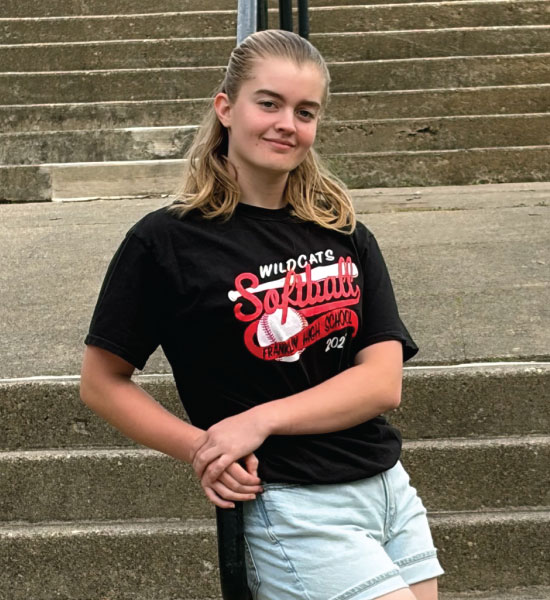
Students finding new confidence in their abilities through ECA opportunities
As Evelyn Ponder prepares to graduate in May with her high school diploma and an associate degree from Miami through ECA, she said she has never felt more optimistic about her future. She will be one of more than 60 graduates in the ECA program this spring, as interest continues to grow in this innovative pathway to a college education.
“I plan to go to the Oxford campus this fall and major in Biology,” said Ponder, who will also graduate with her diploma from Franklin High School this spring. “My goal is to eventually go to medical school and be an anesthesiologist. Before the (ECA program), I thought college was almost impossible. Now I know college is where I am meant to be.”
Ponder said Miami’s ECA program made the transition from high school to college feel more seamless and less intimidating. Worries about financing her education and going from high school to a large college campus had weighed on her before she enrolled in ECA.
But being a part of the supportive environment at Miami’s regional campuses and taking advantage of the academic coaching built into the ECA curriculum, Ponder said she felt a new self-assurance in her abilities and in her opportunities.
“The helpfulness and the motivation from the faculty helped me challenge myself in ways I never thought possible,” she said. “Because of this program I can now continue with my education confidently.”
ECA gives high school students the boost they need
Aimed at providing first-generation and underrepresented students with a leg up on their education, ECA has now helped hundreds of students from area high schools get a jump start on college. After May 2026, over 100 will have earned an associate degree Comment end at no cost before they leave high school.
Students take 15 credit hours each semester during their junior and senior year. Tuition and fees are covered by the program, and transportation and lunch are provided by their high school. After graduation, students can continue at Miami or take their credits to any public university in Ohio, or to most major universities across the country, to earn a bachelor’s degree. They can also choose to enter the workforce with their associate degree.
From the moment students join ECA, they are supported and coached so they can find their footing while they learn to navigate the unfamiliar environment of a college campus. Students meet regularly one-on-one with a success coach, who reviews their progress and offers advice and resources where needed. The goal is to prevent students from feeling overwhelmed and dropping out.
New associate degree in Engineering Technology
Coming soon, students can also earn an Associate of Applied Science in Engineering Technology on the Hamilton campus with a new three-year pathway for high school students interested in engineering. The first two years are at no cost as part of the ECA curriculum, and students can apply for scholarships to help with tuition during their third year, said Laurel Gilbert, director of Dual Credit Programs.
“This is very exciting for students interested in Engineering Technology,” Gilbert said. “They get a head start on their degree pathway, and the chance to learn about the field while they are still in high school.”
Once they graduate from high school, the students will also be able to participate in co-op and internship programs with local high-tech manufacturing firms established specifically for Miami Engineering Technology students, said Samy Broyles, director of Workforce, Partnerships, and Community Engagement.
“Our business partners love to work with our students because they have the chance to establish relationships with them when they are still in high school and deciding on their futures,” he said. “They know our students are well-prepared, and they want to get them involved in their manufacturing process early so they can form lasting relationships.”
More high schools participate as program grows in size and opportunities
Starting with just three high schools a few years ago, ECA now includes nearly a dozen area high schools. At least 100 students will start this fall as juniors in the program, the largest cohort so far.
In addition to the chance to earn college credits and gain access to campus extra-curricular activities, these students can take advantage of further opportunities to help plan their futures that aren’t normally available to high school students.
For example, ECA students can get expert advice on attaining four-year or graduate degrees in professional fields. Students who request to participate are partnered with advisors in one of their chosen career options, such as nursing, healthcare, law, engineering, or business.
“The students ask questions, explore what majors might lead to their chosen career paths, what post-bachelor's programs they might need, and how to make themselves an excellent candidate for the field of their dreams,” Gilbert said. “This allows them to figure out career options and provides a roadmap to get there at an earlier age than most students.”

ECA provides support to ensure students find success
Rebecca Kekeh’s parents immigrated to the U.S. from Togo but never had the chance to go to college here. Kekeh wanted to be the first in her family to achieve a college degree in her new country and dreamed of a career in healthcare. This spring, she will graduate as part of the ECA program with an associate degree and her high school diploma from Edgewood High School.
“I was excited to go to college, but also worried,” said Kekeh, who plans to start at Miami’s Department of Nursing on the Hamilton campus in the fall. “I didn’t know how I would pay for college, or if I could be successful.
“Before the Early College Academy, I thought that it'd be a long way for me to get where I want to be. And I also thought navigating college would be challenging as I would be the first in my family to go. Now I know that my college journey will be much easier as I will be completing two years of college early.
“Being part of Miami while still in high school has meant a lot to me,” Kekeh said. “It felt like being brought into another amazing community full of people who care about your success and peers who have your back. They've helped me so much to be where I am."