
Student research highlight: GLP-1s and physical activity
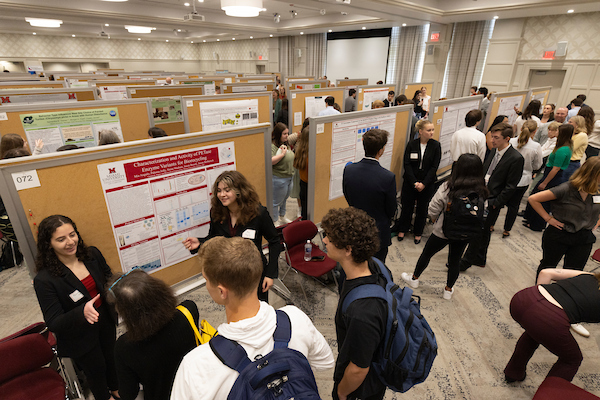
Undergraduate students have the opportunity to complete research for a topic of their choice to be displayed at the Undergraduate Research Forum.
Student research highlight: GLP-1s and physical activity
Undergraduate students have the opportunity to complete research for a topic of their choice to be displayed at the Undergraduate Research Forum.
The Undergraduate Research Forum is an opportunity for students to grow in their strategic research, communication and collaboration skills. Students work in collaboration with faculty, staff, and graduate students to complete their creative project. The final research is displayed at the URF including an in-person display of research posters and 10-minute talk sessions about their research throughout the day.
Alena Hagen, a junior kinesiology major with a minor in dance is one of the many students represented at URF this year. Hagen’s research is on the impact of GLP-1 medication on physical activity patterns.
She discovered this opportunity through her professor who encouraged his students to apply for the undergraduate research award, which funds research for students looking to start their own independent research. From there, she applied to present her research at the URF.
She answered a few questions regarding the URF and the impact it can have on the growth of students’ professional communication, research, and collaboration skills.
How did you decide on your research topic?
Alena Hagen: My professor, Dr. Jon Stavres, focuses on blood pressure response during exercise. Upon joining his research lab, he introduced the idea of incorporating GLP-1 medication research into his exercise lab. Through this suggestion, I began to look into the GLP-1 research and realized how many gaps there are for this new class of medication. I wanted to take on a research project that could be addressed through a survey, to make the study design clear and simple to analyze. Combining this with my interest in physical activity, my professor and I landed on studying physical activity patterns in people both using and not using GLP-1 medications. This allows us to determine whether these medications are impacting lifestyle choices.
What has the research process looked like for you?
Hagen: At this time, we are still working on obtaining IRB (Institutional Review Board) approval for the survey. Because of the simple design study, we have found the IRB to be fairly quick to respond. The bulk of the work comes from writing materials for submission to the review board. We were also sure to carefully review the survey questions being used, a process that also took considerable time.
What do you hope to get out of this opportunity?
Hagen: I have enjoyed the opportunity to create my own research project because it has allowed me to learn more about research methods, language, and analysis. This builds my skillset and displays my ability to be self-sufficient. I also would like to mention how helpful Dr. Stavres’ research lab has been when building skills for my future career. I am gaining clinical experience by administering tests, using equipment, and collecting data during trials. Getting involved in research is a great way for undergraduates to apply the information they learn from their classes and improve their understanding of class content.
What advice would you give to students wanting to participate in this research process?
Hagen: I would say start as early as possible. There is a lot of work to be done for IRB submission, and it is good to get on top of the work as early as possible. I would also recommend working closely with their professors and asking as many questions as possible. Do not be afraid to ask questions and clarify for all materials. This will also strengthen your ability to collaborate with others for research, a skill that is critical for graduate school and the general work force.
This look into Hagen’s experience highlights how this opportunity offers students across every major a meaningful chance to deepen their academic interests and strengthen essential professional skills.
By working with faculty and staff students build critical thinking and collaborative problem solving that can be directly translated into future academic and career pathways.
In the presentation of their research at the URF students can practice their professional and public speaking skills. It is an opportunity to apply classroom knowledge to real world questions. This serves as a transformative experience that empowers undergraduate students to see themselves as emerging scholars and confident contributors to their fields.