
IES welcomes forage agronomist for 18th edition of Willeke Lecture
Peter Ballerstedt discussed large-scale grasslands and implications for metabolic health of the human population.
IES welcomes forage agronomist for 18th edition of Willeke Lecture
Peter Ballerstedt discussed large-scale grasslands and implications for metabolic health of the human population.
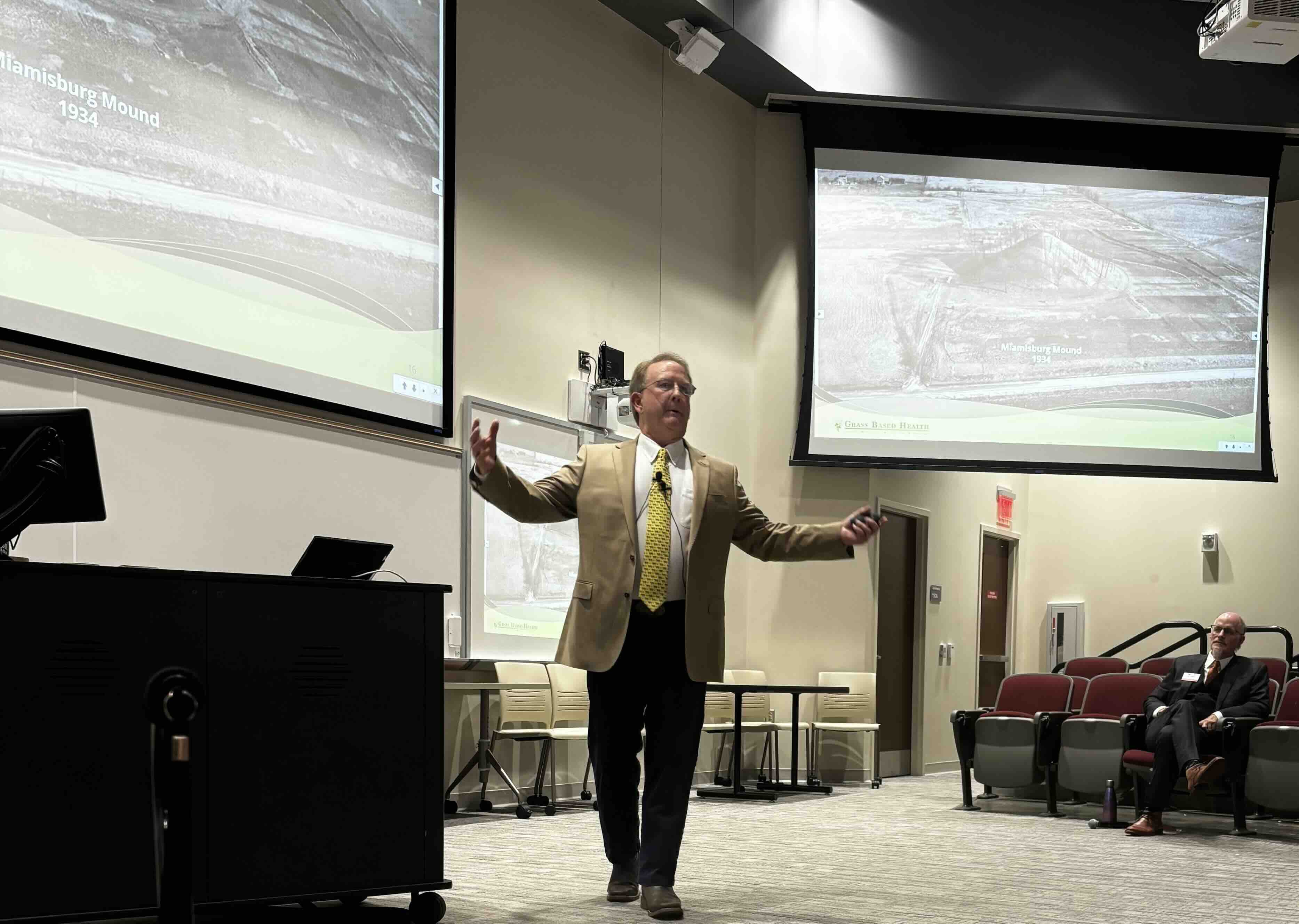
Peter Ballerstedt, a forage agronomist, international speaker and founder of Grass Based Health spoke in the 18th annual Willeke Environmental Science Distinguished Lecture on Thursday, Sept. 17 in Shideler Hall.
Ballerstedt’s lecture titled, “Following the Connections: From Punch Cards to AI and Grasslands to Public Health,” took the audience through the broad integrated thinking in forage and grasslands relating to metabolic health.
The transformation from punch cards to AI in storing data can help the audience understand the true connection between grasslands and public health in human nutrition. Ballerstedt explained the importance of no-till or reduced-till farming to promote healthy soil for livestock farming.
Livestock farming’s main goal is providing livestock with the nutrients to feed, clothe, power and employ civilians. Ballerstedt showed examples from Time Magazine over the years of misconceptions of the consumption of ruminants’ byproducts. These misconceptions include the perceived risks often associated with cholesterol and fat consumption in earlier eras of dietary advice.
“There is a difference between observation and interpretation,” said Ballerstedt. Though media coverage scared people from products like eggs and margarine in the 1980s and ‘90s, it is important to remember the uncertainty behind science in the face of policy. Health topics like insulin deficiencies due to lack of nutrition raises the question of preservation in cultivation.
Taking all into account, Ballerstedt shared informative insights on seeking the value of the native grasslands in the cultivation of livestock for nutrition. As the “sodfather,” he believes it is important to teach the history of agriculture and the steps we should take in the future to improve and influence the metabolic health of generations to come.