
Our Past Events

Discover the events from Miami University’s Center for Civics, Culture, and Society. Explore lectures, discussions, and programs that strengthen civic engagement, highlight cultural perspectives, and connect students, faculty, and community members through meaningful dialogue and learning. Join us in shaping informed, engaged citizenship.
Miami University’s Center for Civics, Culture and Society, in partnership with the Victims of Communism Memorial Foundation, presents this 2-day conference on the far-reaching impact of the Declaration of Independence. Presenters will discuss how the Declaration's principles of liberty, equality, and self-government shaped revolutionary movements, political thought, and literary traditions worldwide. It also explores how those ideas continue to influence struggles for freedom today. April 9 is open to Miami University students, staff, faculty, and the public. Registration is not required. April 10 is reserved for educators teaching grades 6-12. Registration is required for that day.
Public Panels and Keynote Address (all in Armstrong Pavilion A-B)
10:00am-11:30am: Panel One: Domestic Reverberations
“The Declaration of Independence as ‘An Expression of the American Mind’”
 Deborah A. O’Malley, Assistant Professor, Institute for Constitutional Thought and Leadership, University of Toledo
- Thomas Jefferson stated that the purpose of the Declaration was not to discover new principles or arguments, but to present mankind with the "common sense" principles and sentiments that justified our independence. This lecture will explore the principles that Jefferson describes in the Declaration as "self-evident" truths. Further, the lecture will articulate exactly how the Declaration's ideas justified our independence and what these principles still have to teach us today about the standards for just government.
“Lincoln’s Declaration and the Founding Promise”
 Allen C. Guelzo, Professor of Humanities, Hamilton School for Classical and Civic Education, University of Florida
- Abraham Lincoln once said that he “never had a feeling politically that did not spring from the sentiments embodied in the Declaration of Independence.” This lecture will explore how the Declaration guided Lincoln’s rhetoric throughout his political career and his statesmanship as President.
“The Declaration of Interdependence: Wisdom from Frederick Douglass & Martin Luther King, Jr.”
 Nicholas Buccola, Dr. Jules L. Whitehill Professor of Humanism and Ethics, Department of Government, Claremont McKenna College
- This lecture will draw on the political thought of Frederick Douglass and Martin Luther King Jr. to illuminate how the Declaration of Independence has been mobilized within the African American tradition. More specifically, it will explore how Douglass drew on the Declaration’s language of natural rights to make the case for a robust philosophy of social responsibility and how King connected the idea of the Declaration as a “promise made” to his idea that human beings are part of an “inescapable network of mutuality.”
1:00-2:30: Panel Two: International Reverberations
"Czechs, Slovaks, and Americans and the Making of a Republic"
 Matthew Slaboch, Assistant Professor, School of Civic Thought and Economic Thought and Leadership, Arizona State University
- In his memoirs of World War I, T.G. Masaryk (1850-1937), Czechoslovakia's first and longest-serving president, recalls that his country's declaration of independence from the Austro-Hungarian Empire was "cast in a form calculated to remind the Americans of their own Declaration of Independence." But Masaryk was no mere opportunist looking to exploit American leaders or their constituents for his own objectives: he was an earnest republican who looked to the United States as a model as he molded Czechoslovakia into interwar Central and Eastern Europe's only stable democracy. This talk will focus on Masaryk's reading of the Declaration of Independence, his work with Czech and Slovak emigre communities in the United States (including Ohio) to advance the cause of Czechoslovak independence, and his attempts to import "American" ideals and institutions into Czechoslovakia once it had achieved international recognition as an independent state.
“Two Rebels, One Cause: How Thomas Jefferson and Adamantios Korais Liberated a People”
 Kenlea Barnes, Research Associate, Center for Civics, Culture, and Society, Miami University
- Adamantios Korais is known throughout Greece as the architect of the ideological foundation of the 1821 Greek Revolution. Korais left for Paris in 1788 to pursue an advanced education, where he met Thomas Jefferson. Korais was deeply influenced by this encounter and credits Thomas Jefferson and other American revolutionaries for helping him begin the ‘fight with his pen’ to liberate the Greek people. Scholars describe Korais as the teacher of the Greek nation. This lecture will explore the correspondence between Jefferson and Korais in order to show that Korais’s pedagogy for a free government is rooted in Jeffersonian principles.
"Submitted to a Candid World": Crafting American Revolutionary Words and Deeds for a Global Audience
 Craig Bruce Smith, Professor of History, Joint Advanced Warfighting School, Joint Forces Staff College, National Defense University
- The American Revolution and American Independence was a radical moment, not just for the new nation, but for the world. From the start, American patriots carefully crafted their words and actions for an audience beyond their borders. From Gen. George Washington's vow to give up power in 1775 to the Declaration's appeals to a "Candid World" in 1776, this talk will discuss how Americans shaped their message to appeal to the international community.
"The Spirit of '76: A Latin American Revolutionary, the Founding Fathers, and Hemispheric Independence."
 Lindsay Schakenbach Regele, Director of Graduate Studies and Professor, Department of History, Miami University
- Venezuelan Francisco Miranda fought in the American Revolution and toured the new republican nation after the war. He befriended several members of the founding generation and, inspired by the ideals of the Declaration of Independence, worked to achieve liberation from Spain. In 1806, after meeting with the Jefferson administration, he outfitted an expedition in New York City with the goal of overthrowing tyranny in South America. Miranda's revolution failed, but it helped spark the Latin American independence movement and revolutionary collaboration throughout the Americas.
4:00-5:30pm: Keynote Address
“The Shot that Really Was Heard ‘Round the World: The Global Impact of the American Revolution”
Allen C. Guelzo, Professor of Humanities, Hamilton School for Classical and Civic Education, University of Florida
8:30 am-10:00 am, Session 1
The Unity and Logic of the Declaration of Independence
Deborah O’Malley, University of Toledo; Flagg Taylor, Miami University
Thomas Jefferson famously called the Declaration an expression of the American mind. This session will be devoted to a close reading of that document to uncover the meaning of its animating principles and inner logic. We will pay particularly close attention to the five self-evident truths of the Declaration. For example, what is the nature of human equality according to the document? Why include the phrase “the pursuit of happiness” among the rights of life and liberty? The Declaration speaks of the power of the people to alter and abolish governments, yet it also invokes a standard of “prudence.” What is that standard exactly, and why is it important? We will also pay close attention to the oft-overlooked list of grievances against the King. Are there unifying themes among these particulars? And how do these grievances cohere with the principles articulated in the second paragraph?
10:15 am-11:30 am, Session 2
The Declaration and its Global Influence
David Armitage, Harvard University (via Zoom)
This session will explore the Declaration’s influence on different movements for freedom around the world. We will consider what, in particular, has been the most important legacy of the Declaration and its influence: the very idea of independence or sovereignty. The session will take an analytical and comparative approach to the themes of the Declaration. Documents discussed will include the Haitian Declaration of Independence (1 January 1804), the Venezuelan Declaration of Independence (5 July 1811), the Declaration of Independence of the Czechoslovak Nation (18 October 1918), the Declaration of the Establishment of the State of Israel (14 May 1948).
LUNCH 11:45 am-12:30
12:30 pm-2:30 pm, Session 3
The Declaration of Independence and The Communist Manifesto - includes a visit to the Miami Libraries Special Collections.
Matthew Slaboch, Arizona State University; Flagg Taylor, Miami University
In collaboration with Miami University’s Special Collections and University Archives, this hands-on session in two parts will be devoted to comparing and contrasting these two documents as important primary sources in the classroom, each of which articulated the foundational principles of two very different understandings of the nature and purposes of political life. In part one, scholars of political philosophy will introduce educators to how each document shaped and did not shape the behavior of political actors who claimed to act in accordance with the principles enunciated in each document. Whereas the Declaration holds individuals to be the central political actors, the Manifesto indicates “classes” are the central actors. What is a “class” according to the Manifesto, and how does such a group have agency? According to the Manifesto, History has a certain logic that guides how and why things unfold the way they do. What is that logic? How is this logic different from the Declaration’s claim that human events have a “course?” If the Declaration appeals to natural rights and consent as the foundation of all legitimate government, to what does the Manifesto appeal?
In the second part of the session, educators will learn foundational primary source literacy skills and how to incorporate these materials into their lesson plans. Teachers will have the opportunity to engage with historical sources from special collections and bring these rare materials to life, usually only accessible to scholars and researchers. Guided by special collections librarians experienced in curriculum design, teachers will select curated documents related to the Declaration of Independence and Communist Manifesto to create a basic lesson plan that they can bring back to their classrooms. Examples of primary source documents that teachers will encounter include Jefferson’s original draft of the Declaration and Soviet propaganda posters illustrating the realization of the Russian Revolution’s promises. All materials used in the sessions will be digitized and made available to participants as primary source sets for future use. Together these sessions will show in a very powerful and visceral way how these ideas and the documents that reflect them can lead to consequences for good or ill.
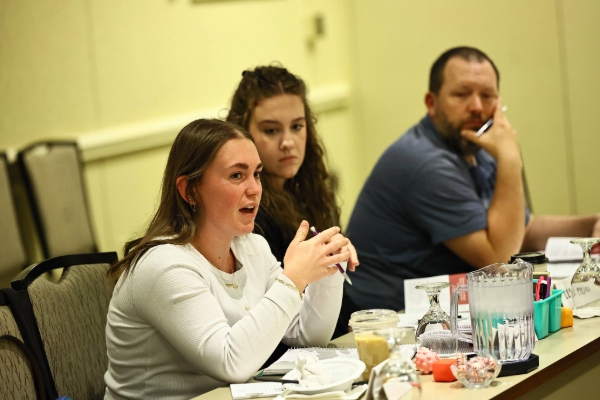
Teachers from Fairfield High School joined in the conversation during the teacher workshop portion on April 10.
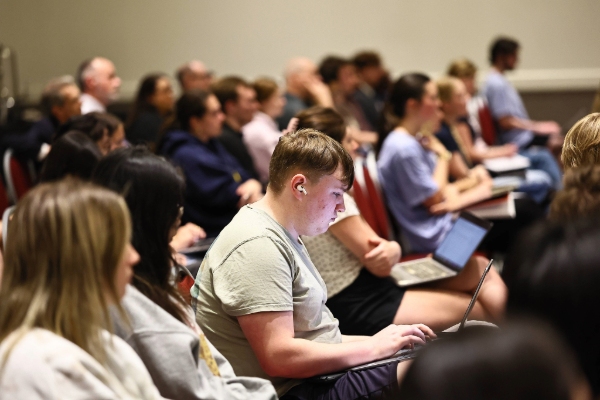
The audience inside Fritz Pavilion at Armstrong Student Center included Miami students and educators.
Teachers explored the Special Collections which featured a replica of the first draft of the Declaration of Independence.
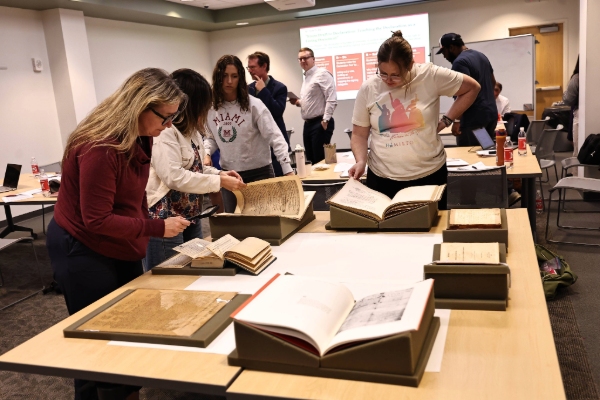
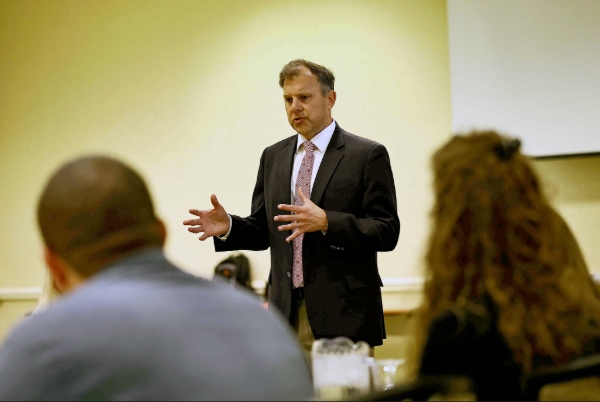
Center Executive Director Flagg Taylor compares and contrasts the Declaration of Independence with the Communist Manifesto during the teacher workshop.
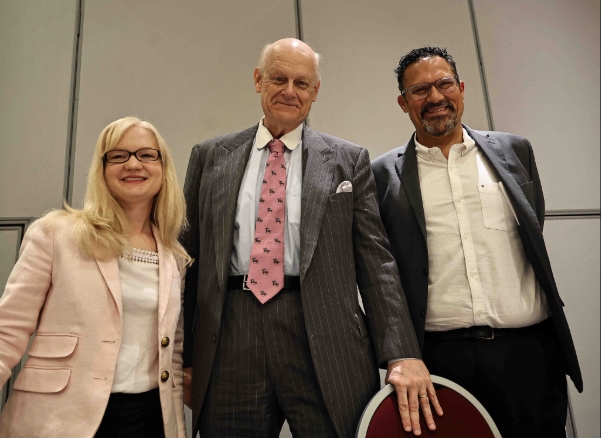
Three of the panelists who presented during Liberty's Echoes conference: Deborah O'Malley, University of Toledo, Allen Guelzo, University of Florida, and Nicholas Buccola, Claremont McKenna College.
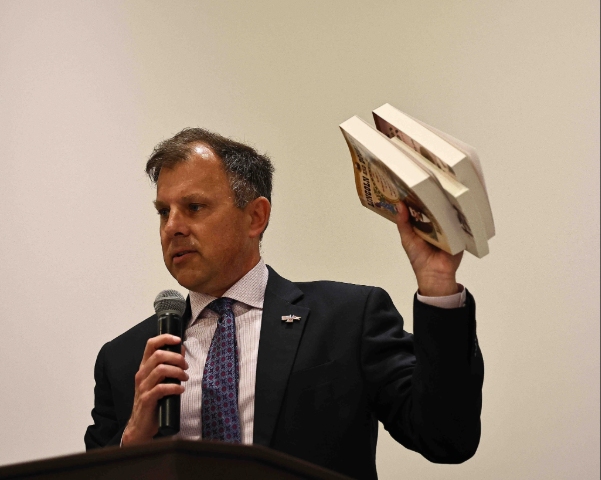
Center Executive Director Flagg Taylor gave away several signed copies of Allen Guelzo's latest book about Abraham Lincoln.
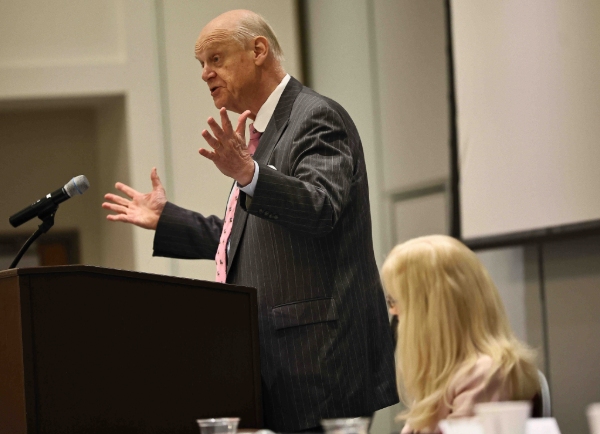
Allen Guelzo delivered a compelling keynote address about the global impact of the American Revolution.
Literature and Leadership Symposium
Great works of literature are sources of wisdom to address both the shape and proper cultivation of good leadership. Renowned scholars and teachers will come together to conduct public lectures and conversations and lead seminars for students.
Tuesday, Nov. 18
Plutarch and Shakespeare as Teachers of Leadership
“Plutarch’s Education for Leadership,” presented by Hugh Liebert
“Weaving Tales of Leadership and Civilization: What Shakespeare Learned from Plutarch,” presented by Rebecca Burgess
4:00–5:30 PM, Armstrong Pavilion A - 3056A
Wednesday, Nov. 19, Keynote
“What Shakespeare Can Teach Us About Leadership”
Keynote Address: Eliot Cohen
5:00–6:30 PM, Shriver Center (JDOL-B)
Thursday, Nov. 20
Franklin and Twain as Teachers of Leadership
“Human Greatness Amidst Democratic Equality: Mark Twain and Pudd'nhead Wilson,” presented by B.J. Dobski
“Benjamin Franklin’s Lessons on Leadership and Citizenship: For the 18th Century and Today,” presented by Kimberly Hamlin
4:00–5:30 PM, Armstrong Joslin Senate Chambers - 1062
is Senior Fellow at the Yorktown Institute and acting director of the Classics in Strategy and Diplomacy project, and an SME consultant for the George W. Bush Institute’s Veterans and Military Families program. She has two-plus decades of combined public policy, administrative, and academic experience, holding the position most recently as a research fellow both in Foreign and Defense Policy and Social, Cultural, and Constitutional Studies at the American Enterprise Institute. Her work has been solicited for congressional testimonies, and featured in the Wall Street Journal, The New York Times, The Economist, Military Times, Newsweek, and The American Interest, among others.
is the Arleigh A. Burke Chair in Strategy at the Center for Strategic and International Studies and professor emeritus at Johns Hopkins School of Advanced International Studies (SAIS), where he has taught since 1990. His books include, most recently, The Hollow Crown: Shakespeare on How Leaders Rise, Rule, and Fall (Basic Books, 2023), as well as The Big Stick: The Limits of Soft Power and the Necessity of Military Force (Basic Books, 2017). He was a director in the Defense Department’s policy planning staff and from 2007 to 2009 he was counselor of the Department of State, serving as Secretary Condoleezza Rice’s senior adviser, focusing chiefly on issues of war and peace, including Iraq and Afghanistan. He is a contributing writer at The Atlantic, and his commentary has also appeared in the Washington Post, The Wall Street Journal, The New York Times, and on major television networks.
is a Professor of Politics at Assumption University in Worcester, MA where he teaches classes on politics and literature, political philosophy, and international relations. Dobski's scholarship focuses on the political wisdom of Thucydides, Shakespeare, and Mark Twain. His first book, Mark Twain's Joan of Arc: Political Wisdom, Divine Justice, and the Origins of Modernity, was published in 2024 by Palgrave Macmillan. He is currently a Visiting Professor at Arizona State University's SCETL program where he is working on his second book on Twain's democratic fiction.
is the Chamberlin Family Professor and Chair of the History Department at Miami University. She has published two books and several articles on the history of women and women's rights in the United States, and she teaches classes on the history of women, medical history, and other topics including voting rights and the American Dream.
is Professor of Political Science, Director of the Dawkins Scholars Program, and the founding Co-Director of the American Foundations minor at the United States Military Academy. Dr. Liebert is the author or editor of seven books, including Plutarch’s Politics (2016), and Gibbon’s Christianity (2022). A specialist on the history of political thought, he has also written widely on American politics and foreign policy. His articles and essays have appeared in the Wall Street Journal, Texas National Security Review, The Point, Claremont Review of Books, and First Things. Dr. Liebert is currently working on a book manuscript on localism in American political thought.
Tuesday, November 18, 2025, 11:30 a m - 12:25 p m
In Herman Melville’s “Benito Cereno,” an American captain named Amasa Delano suggests that because “the past is past,” it is pointless to “moralize upon it.” Instead of endorsing Delano’s unreflective approach to life, Melville prompts us to wonder if American leaders and citizens actually must at times criticallyexamine – or “moralize upon” – the past and the present, in order tomore fully realize America’s democratic ideals.
Wednesday, November 19, 2025, 10:05 am - 11:00 am
What kind of literature forms leaders? Plutarch’s Parallel Lives—one of history’s most enduring studies of leadership—suggests that we learn to lead through the attentive study of character. In this seminar, we turn to Plutarch’s portraits of Greek and Roman statesmen to ask how examples of excellence shape the soul. We will consider how Plutarch invites readers not only to admire but to inquire and, ultimately, to imitate. Participants will leave with a richer sense of how biography can serve civic education by cultivating informed admiration.
Wednesday, November 19, 2025, 11:30 am - 12:25 pm
Achilles’ “cataclysmic wrath,” sparked by Agamemnon’s dismissal of the warrior code, takes center stage. Their quarrel raises a central Homeric question: what truly legitimizes power and rule? The two leaders’ scepters symbolize competing claims—hereditary authority, battlefield prowess, wisdom, and divine will. We’ll explore how Homer weaves these forces into a geopolitical struggle between Greeks and Trojans, two distinct peoples and ways of life.
Wednesday, November 19, 2025, 1:30 pm - 2:25 pm
What sort of wartime leader was Abraham Lincoln? How did he choose to exercise authority over subordinates who were often unruly and sometimes failed to act in a decisive manner? Participants will examine Lincoln’s leadership through a reading of some of his more important dispatches during the Civil War.
Thursday, November 20, 2025, 10:05 am - 11:00 am
In his Autobiography, Benjamin Franklin lays out the preconditions for democracy and he also outlines what is required of citizens in a democracy, especially in the section on Thirteen Virtues which we will read and discuss. What kind of citizens and leaders did Franklin imagine and try to prepare? What kind of leader was he himself? And which of his virtues and lessons seem most in need today?
Thursday, November 20, 2025, 1:15 pm - 2:10 pm
Mark Twain, often hailed as America’s greatest author, is celebrated not only for his humor and satire but also for his keen political insight. His “Jumping Frog” story, published just after the Civil War, invites readers to consider how rhetoric might reunite a nation dedicated to equality and individual flourishing. How does this seemingly simple tale model a democratic community that values both commonality and genuine differences in talent—and why does Twain use a children’s story to convey such a lesson?
Melville Seminar with Brian Danoff, Ph.D
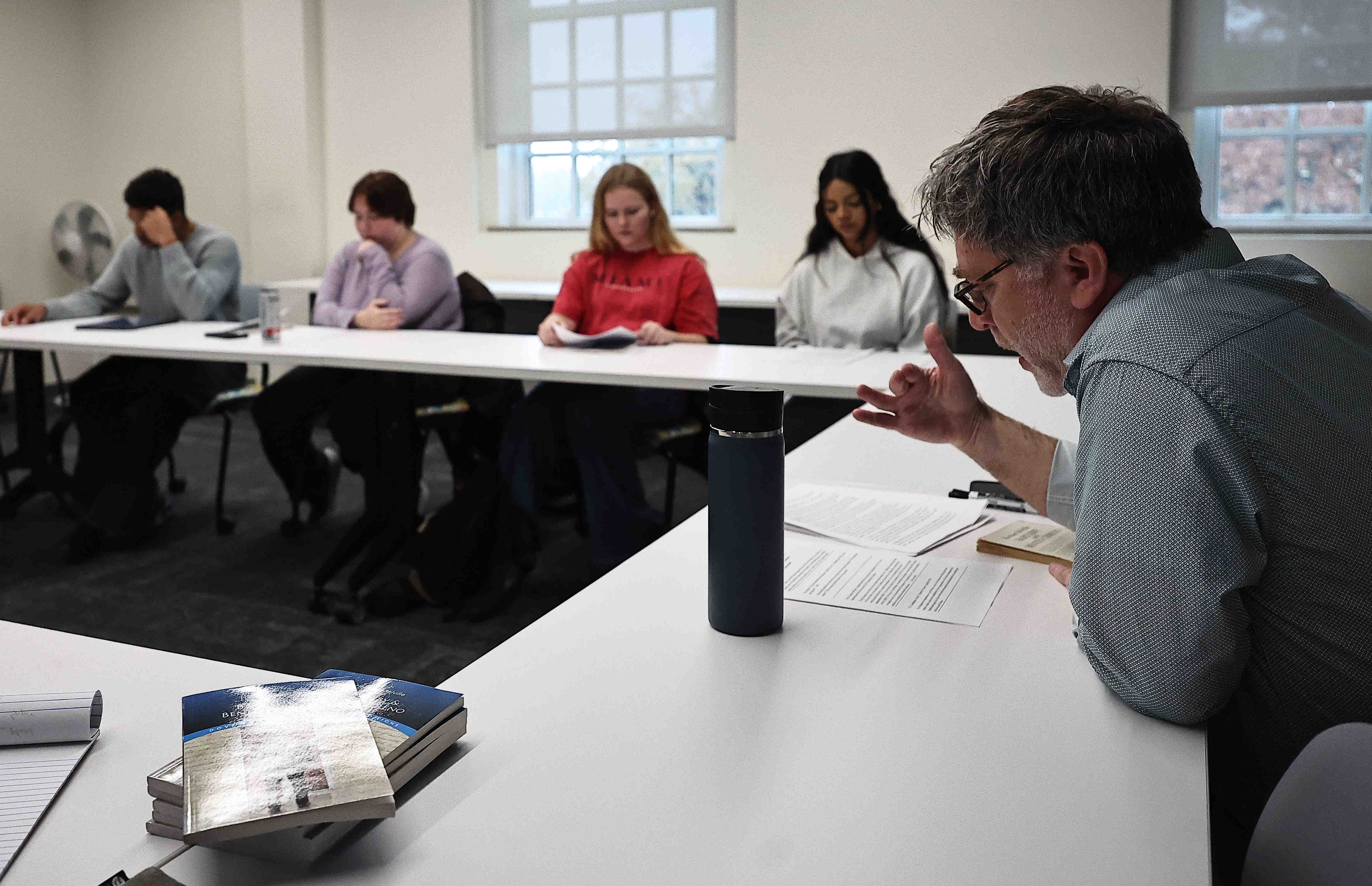
Twain Seminar with Bernard J. Dobski, Ph.D.


Franklin Seminar with Kimberly Hamlin, Ph.D.
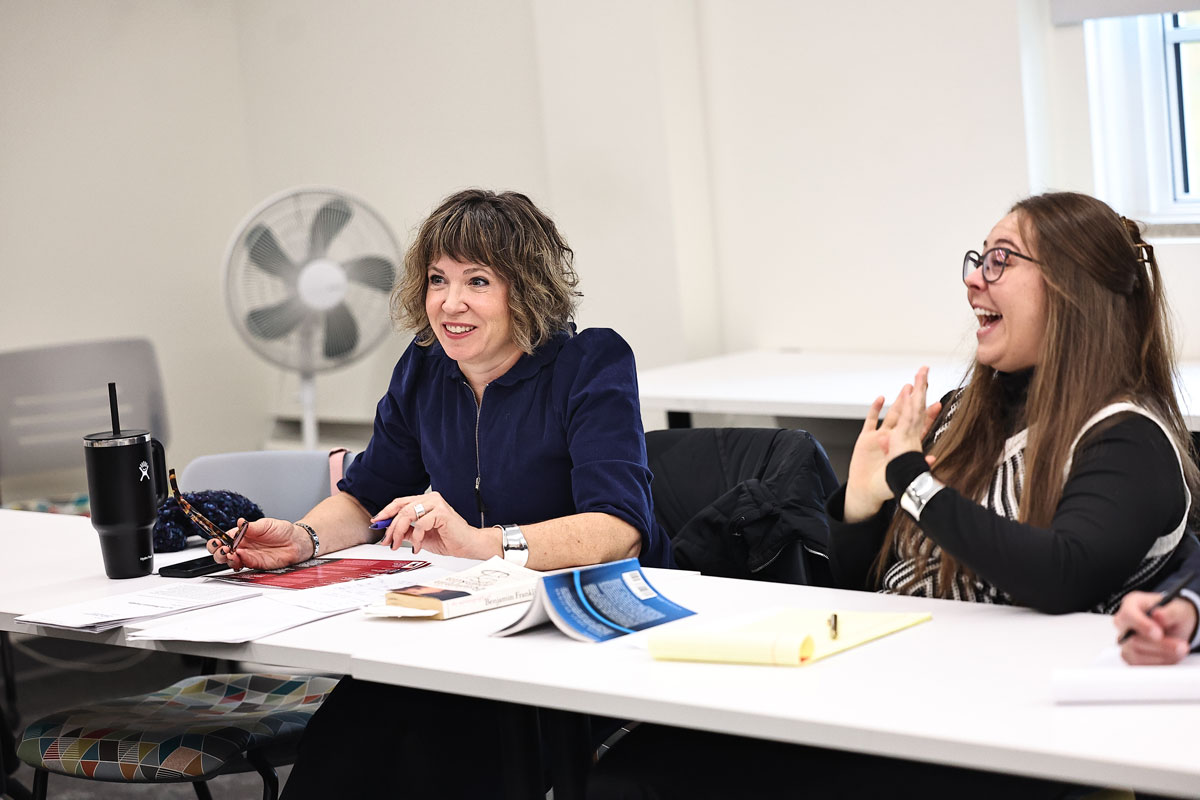

Lincoln's Letters with Eliot Cohen, Ph.D
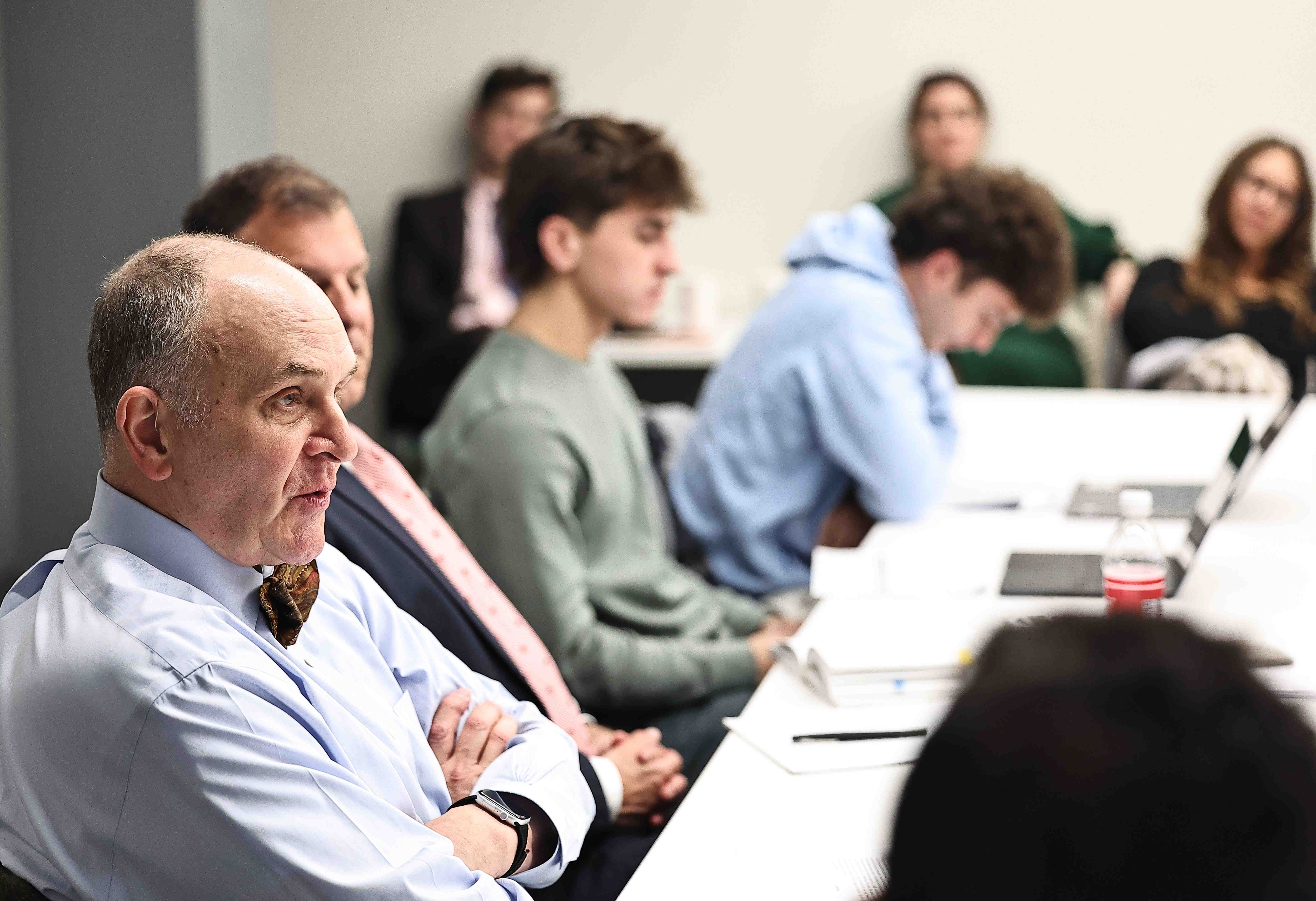
Plutarch’s Parallel Lives Seminar with Hugh Liebert, Ph.D.
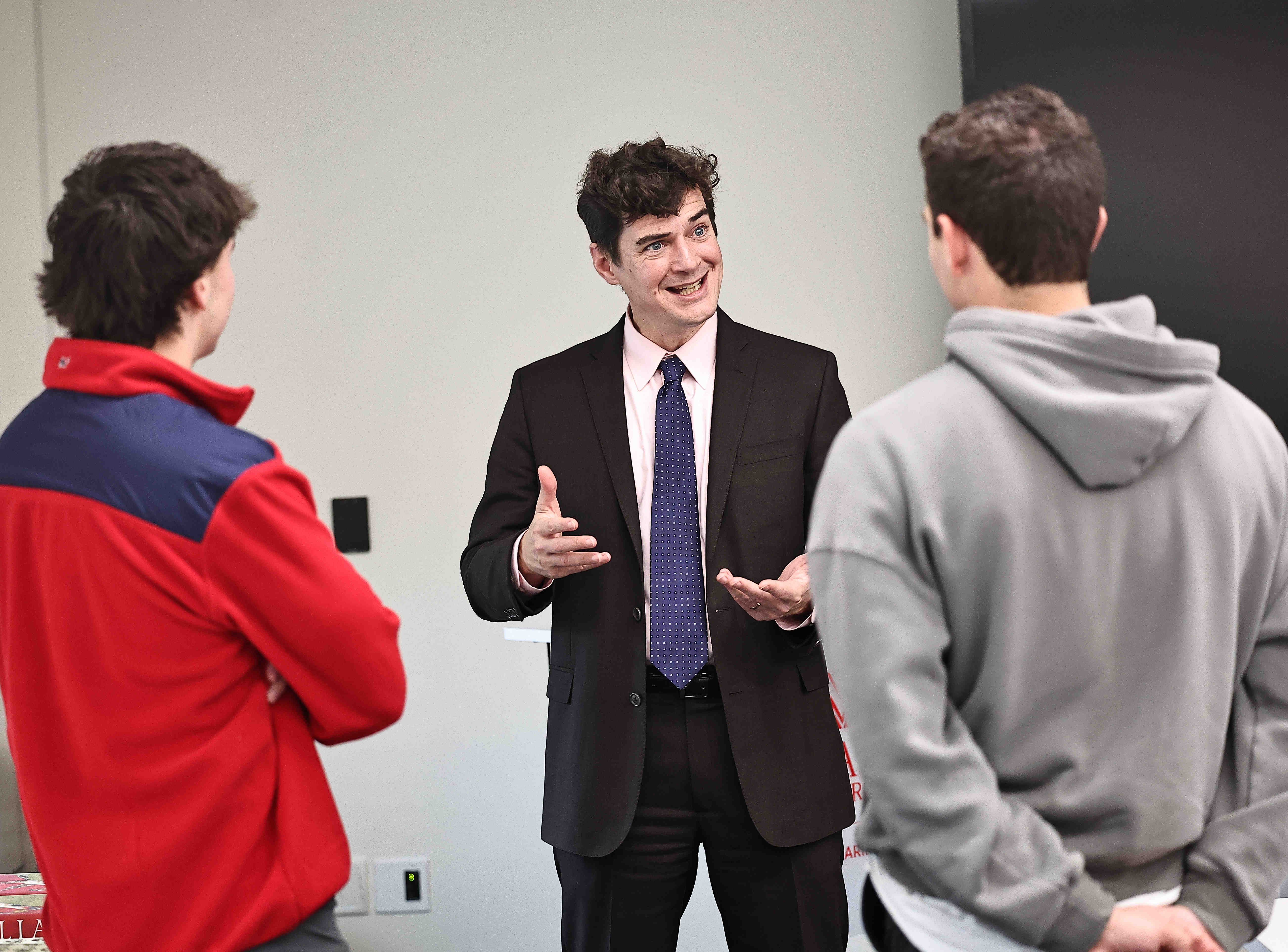
Illiad Seminar with Rebecca Burgess, Ph.D.


Constitution Day Lecture
“The Rise of Executive Power and the Decline of Everything Else”
Adam White, Laurence Silberman Chair in Constitutional Governance at the American Enterprise Institute
September 15, 2025
5pm, 128 Pearson Hall