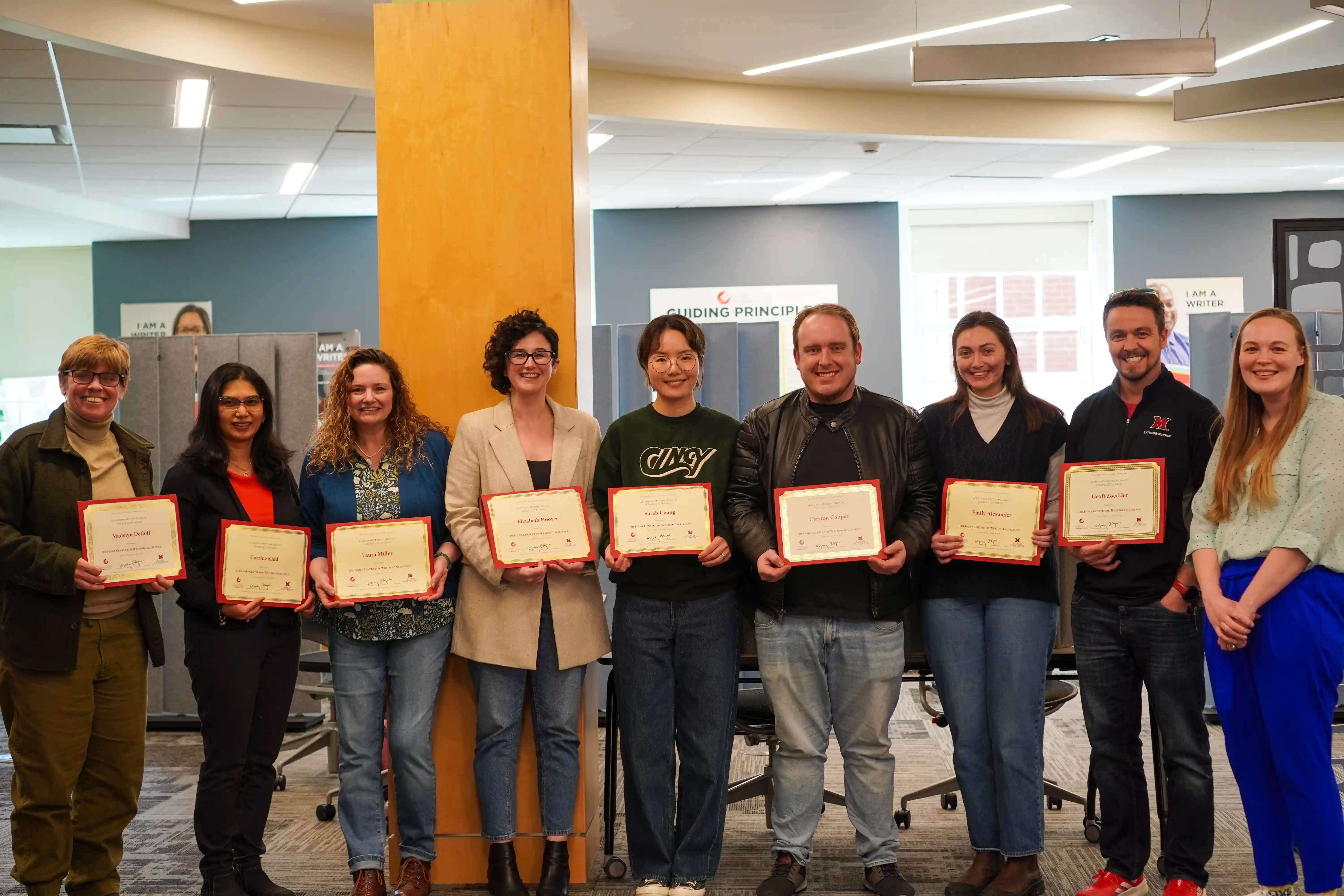
From AI to Artistry: How the Spring 2026 Howe Faculty Fellows are Reshaping Student Learning
The Howe Center for Writing Excellence and the Howe Writing Across the Curriculum (HWAC) program welcomed 12 new Miami University faculty members as alumni of the Faculty Writing Fellows Program. This spring, four teams reexamined their curricula to leverage writing in support of "threshold concepts," core, transformative ideas critical to understanding a specific discipline.
From AI to Artistry: How the Spring 2026 Howe Faculty Fellows are Reshaping Student Learning
The Howe Center for Writing Excellence and the Howe Writing Across the Curriculum (HWAC) program welcomed 12 new Miami University faculty members as alumni of the Faculty Writing Fellows Program. This spring, four teams reexamined their curricula to leverage writing in support of "threshold concepts," core, transformative ideas critical to understanding a specific discipline.
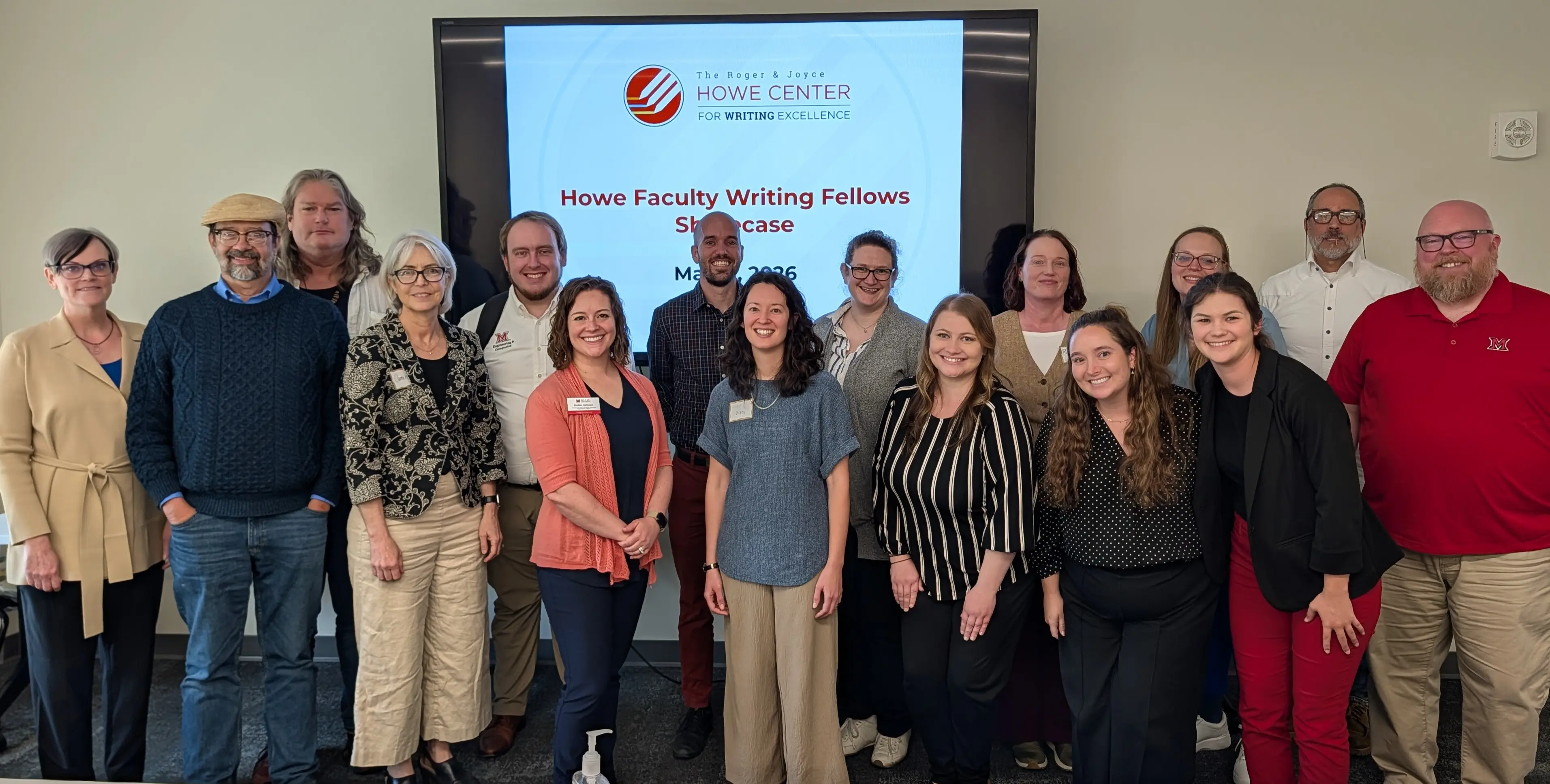
On Monday, May 11th 2026, the Howe Center for Writing Excellence and Howe Writing Across the Curriculum (HWAC) program were pleased to welcome 12 new Miami faculty members as Faculty Writing Fellows Program alumni.
Four groups of faculty from Anthropology, Entrepreneurship, Mechanical and Manufacturing Engineering, and Music Education took the opportunity to reexamine how writing can support the teaching of disciplinary threshold concepts within their programs.
The semester-long master class culminated with a faculty sharecase, where teams presented the fruits of their collaboration and looked towards implementing their ideas in their teaching and curriculum.
Teams sought to develop and adopt an advanced writing track, design AI-integrated assignments, help students become more self-aware of their growth through reflection, and update their curriculum through the development of threshold concepts in their discipline.
To learn more about what is possible through the Faculty Writing Fellows program, we encourage you to read more about each team’s project below. You can also read more about past team projects on HWAC’s website.
Faculty interested in reexamining the way in which they teach writing on both the course level and departmental level can apply to join the Spring 2027 Faculty Fellows Program. More information on the Faculty Writing Fellows program can be found on the HWAC website.
Anthropology
Cameron Hay-Rollins, Mark Peterson and Leighton Peterson
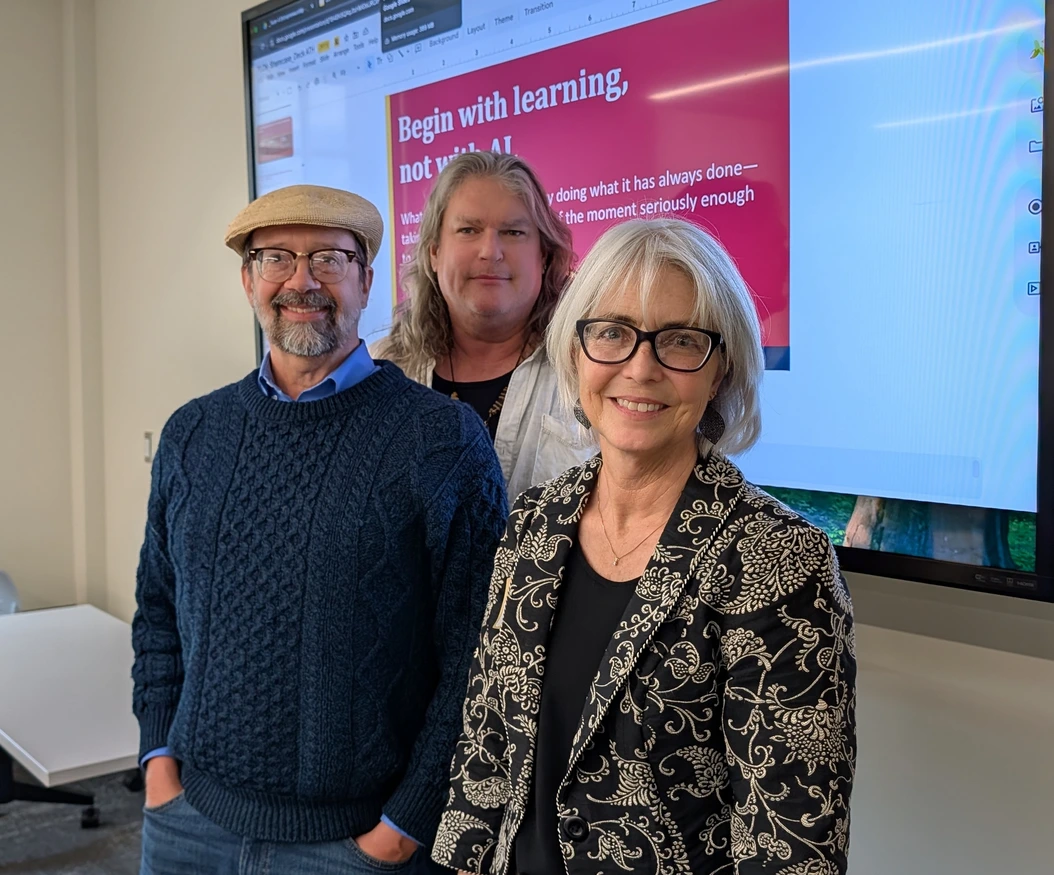 The Anthropology team addressed the challenge of how to design AI-integrated assignments that teach students to use AI without abandoning core values. Over the course of the Fellows program, the team developed a discipline-grounded answer: a new Program Learning Outcome (PLO 6: Knowledge Systems) supported by an AI specific seven-competency framework, a four-dimension assessment rubric, and purpose-built assignments embedded in the four required courses every Anthropology major takes.
The team converged on a core principle: the best time to use AI is when you are already an expert. Expertise is what provides the context AI needs, evaluates the output AI produces, identifies the errors AI introduces, and revises what AI generates into something that meets disciplinary standards. For them, AI competency cannot be separated from disciplinary competency — and why the department's approach embeds AI instruction in discipline-specific courses, not in a separate "AI skills" module.
Entrepreneurship
Michael Conger, Greg Dern, Sid Vedula
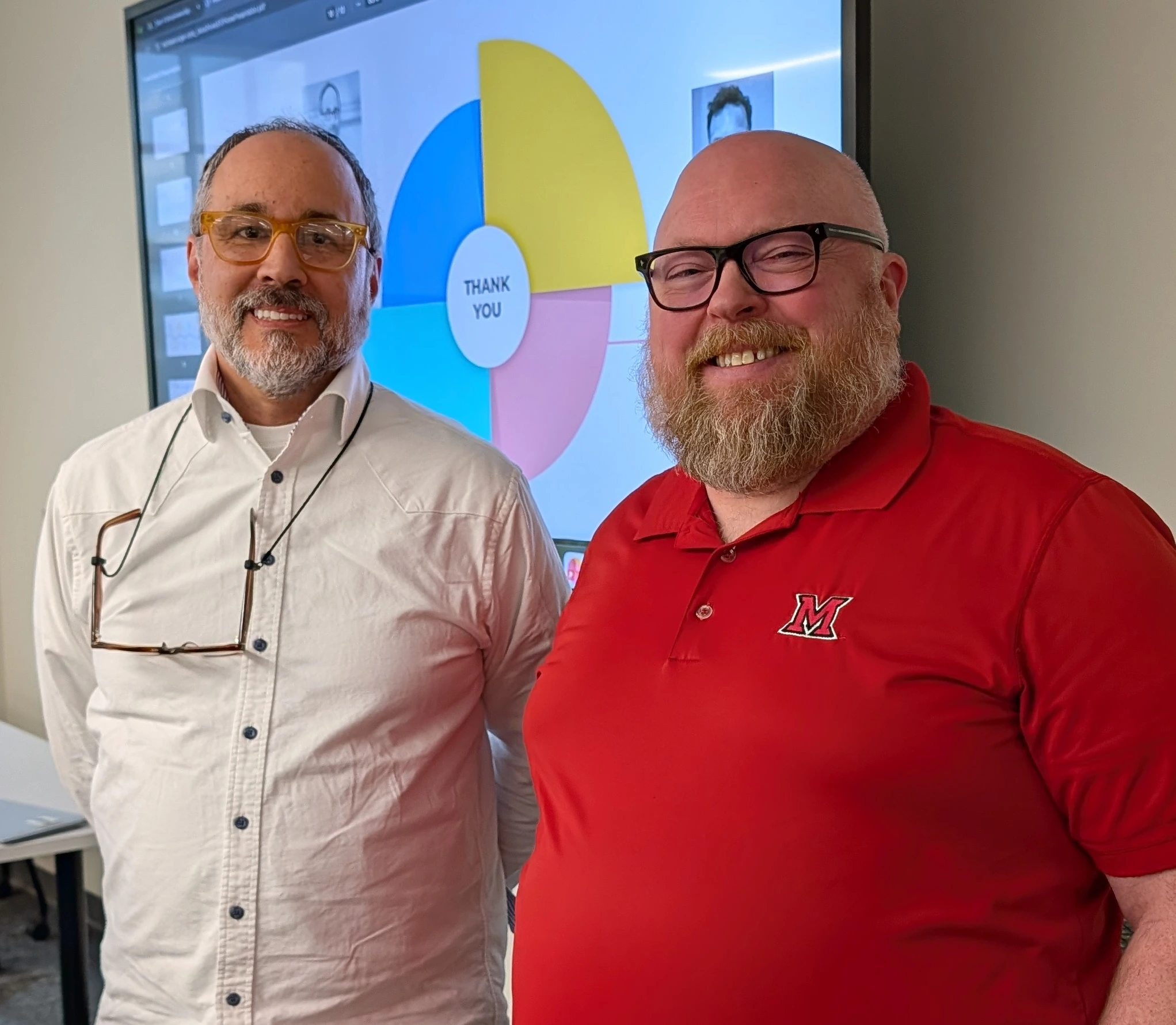 The Entrepreneurship team sought to establish a new set of threshold concepts to serve as the conceptual framework for updating its curriculum and programming. Moving away from the myth of the "lightbulb moment," the team’s new understanding emphasizes that entrepreneurship is a rigorous process of developing opportunities rather than just generating ideas. They want their students to understand that while a creative idea is a starting point, it only becomes a true opportunity when it is discovered and shaped through purposeful action.
While this work was focused at the department level, future work will include mapping these concepts to their curriculum, and communicating them to various stakeholders.
Mechanical and Manufacturing Engineering
Clayton Cooper, Kathy Ehlert, Mark Sidebottom
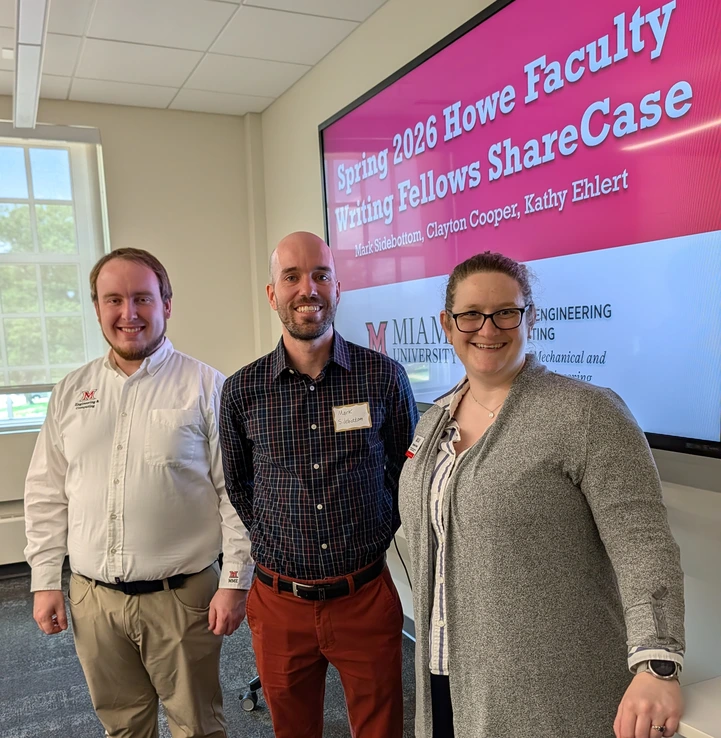 The MME team entered Fellows with the initial goal of replacing a general English course with an advanced writing track, a move driven by desired department outcomes. To begin, the team defined shared threshold concepts regarding writing in their discipline, allowing them to identify the specific needs, gaps, and solutions required to improve outcomes for MME students.
Ultimately, the team aims to graduate engineers who are adept at documenting and communicating their decision-making processes and technical choices. Having identified these critical communication skills, the team is now embedding advanced writing assignments and assessments throughout the curriculum. Once the track is fully adopted, future efforts will focus on assessing its long-term impact on student success.
Music Education
Reina Dickey, Robin Heinsen, Beth Reed
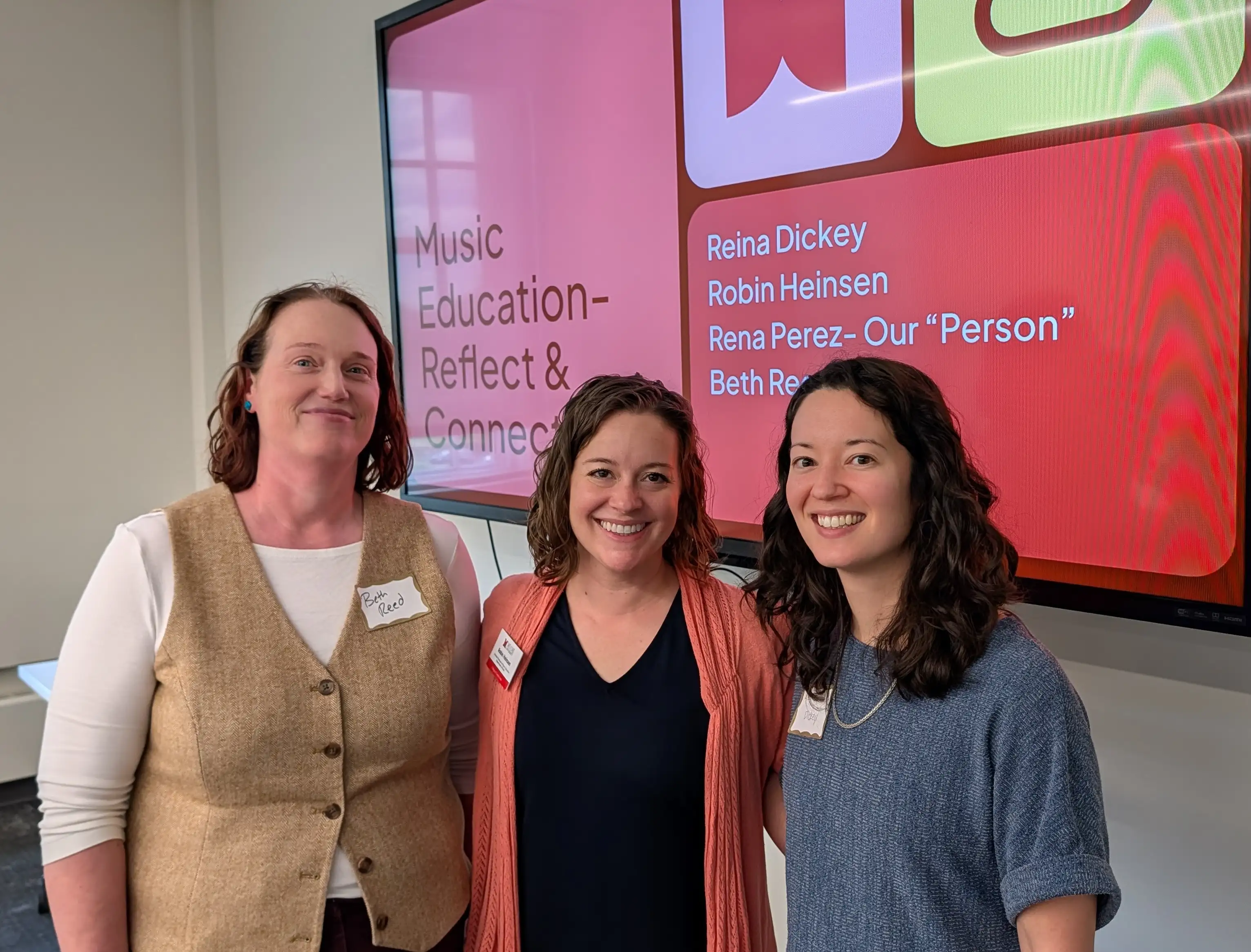 The Music Education team tackled a problem unique to their discipline: helping students who have been trained as performers to make the transition into effective educators. Recognizing that music teaching should include expressive rather than purely technical goals, the team arrived on the threshold concept that instructing music is not a performative act, but a dynamic, real-time response to a student's momentary musical performance. Further, teaching is a skill that develops with reflective practice and error correction.
To address this they are developing a comprehensive bank of reflective questions covering everything from lesson preparation to the formulation of a distinct music teacher identity. This practice of reflection is designed to cultivate the critical self-assessment skills necessary to sustain a lifelong professional growth. Their intention is to implement these questions throughout their curriculum sequence, and engage in their own reflective practice by revisiting and reevaluating them each year.