
The evolution of mental health support at Miami University
From crisis support to digital tools and wellness spaces, the university has built a coordinated network of care to meet students where they are.
The evolution of mental health support at Miami University
From crisis support to digital tools and wellness spaces, the university has built a coordinated network of care to meet students where they are.
College students balance more than coursework. They navigate jobs, relationships, deadlines, financial pressures, and daily stress. As those demands have changed over time, so has Miami’s approach to student mental health and well-being.
Over the past 20 years, mental health and wellness resources at Miami have evolved to meet students where they are. What began as expanded crisis support and an increased number of therapists has grown into a coordinated network of digital tools, wellness spaces, prevention efforts, and personalized care options designed to support students in every stage of their college experience.
This progress reflects a broader commitment to accessible, student-centered care.
2007: Dog therapy
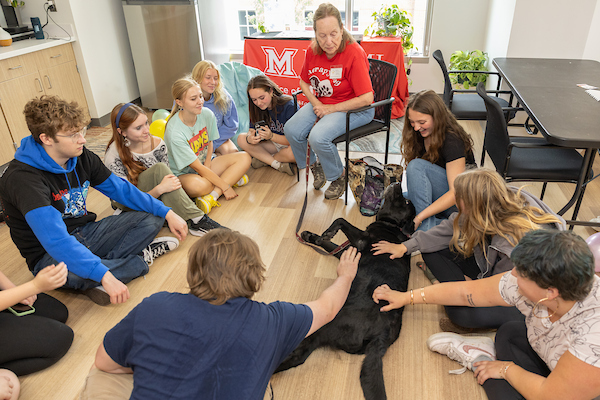
Miami was an early adopter of dog therapy, with a dog therapy program being approved in 2007 and weekly dog therapy starting in 2009. Since then, the outreach program has expanded to include three sessions each week, with larger programs around midterms and finals weeks.
2011: Just In Case app (discontinued in 2018)
While the suicide prevention app Just in Case app was short-lived, the app represented a shift toward digital support and prevention for Miami students.
2014: Growing investment in counseling staff
In December 2014, the (now retired) director of the Student Counseling Service (SCS) presented to the Board of Trustees for the first time. After learning that the staff of nine counselors had 5,699 individual counseling sessions that year, but they were still running a 22 day waitlist, the board endorsed investing to increase the staff in SCS, adding four counselors in the next two years.
2015: H.O.P.E. Line
In 2015, Miami piloted 24/7 counseling support over the phone, with a limited number of appointments marketed through resident assistants. In January 2020, the H.O.P.E. Line was expanded for any Miami student to access anytime, made possible by the Joseph and Laura Klunk Family Foundation. This service connects students with a trained mental health professional for immediate support, crisis assistance, or stabilization. Students can also call between counseling appointments, in addition to after-hours consultations.
2019: Campus Care (mostly discontinued in 2020)
The Campus Care program launched in 2019, placing therapists in locations around campus (e.g. King Library, Farmer School of Business) during designated hours. Students could consult with a trained mental health professional in a less formal and more convenient setting than an individual counseling appointment. The program served a distinct need during a time of long waitlists, but was discontinued during the COVID-19 pandemic as staffing increased and waitlists declined. Student Counseling Service revives the initiative occasionally as needed during high-stress times.
2020: Telebehavioral health
In 2020, Miami adapted services to address the changing needs of students during the pandemic.
Student Counseling Service and Student Health Services added telebehavioral options. These virtual services increased flexibility and access for students and continue to be offered today.
2022: Mental health fee
Miami implemented a $50 per semester student mental health fee in fall 2022 to strategically broaden treatment, response, and prevention efforts around mental health. In its first year, the funds supported the hiring of two additional counseling staff as well as a case manager in the Office of the Dean of Students to strengthen prevention and education efforts. The funding also added a disability accommodations coordinator in the Miller Center for Student Disability Services and a coordinator of student health and wellness communications (hired in 2025).
2022: Stepped Care Model
The Division of Student Life adopted a “stepped care” framework to organize Miami’s approach to student mental health care. This framework is an evidenced-based, multi-staged approach to organizing the delivery of mental health care and aims to capture and promote the full range of mental health services offered. The division has continued to fine-tune the model as resources and needs evolves.
2022-23: The Mental Health Task Force
During the 2022-23 academic year, the Institutional Task Force on Student, Faculty, and Staff Mental Health and Well-being reviewed Miami’s mental health services and campus culture. The group identified strengths and opportunities and proposed recommendations to support a more coordinated, holistic approach to wellness.
Informed by workgroups, campus listening sessions, research, and national data, the task force outlined priorities across four areas: systems, communication, education, and culture. This work marked an important step in advancing mental health and well-being across Miami’s campuses, and it continues today through a standing institutional committee.
2022: Wellness Navigator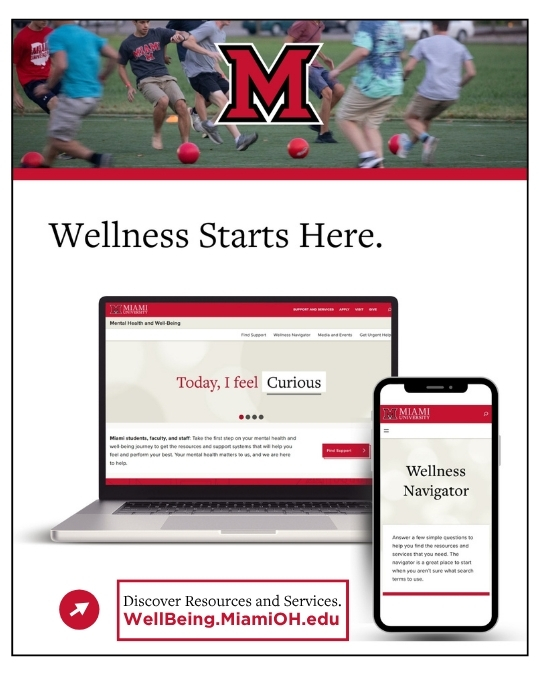
In 2021, Miami recognized a key barrier to student well-being. While many resources existed, students often didn’t know where to start or how to find support. To better support students’ development of self-advocacy and help-seeking skills, a Student Life team created the Wellness Navigator, a web-based tool launched in 2022 that allows students to easily explore and connect with wellness-related services, programs, and opportunities anytime.
2022: Wellness rooms
With virtual and crisis support in place, 2022 brought a focus on calm, inclusive spaces for students.
In what is now the Student Engagement and Activities area, a wellness room was added to provide a calm, low-stimulation environment. The room features stress-reducing gadgets and activities, aromatherapy, a sound machine, and beanbag chairs. Since then, several additional wellness-focused spaces have been added to campus.
2023: Clinical Health Sciences and Wellness Studio
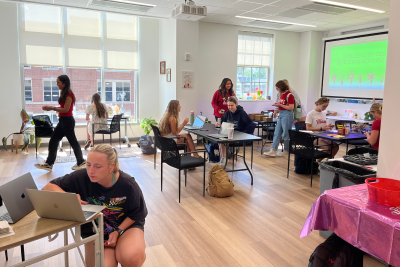
In 2023, the Clinical Health Sciences and Wellness facility opened on campus, ushering in a new era for mental health and well-being on campus. Within the building, Miami added hands-on opportunities for students to practice self-care through the Wellness Studio. The studio offers art supplies, puzzles, affirmation cards, and other stress-relief materials, in addition to scheduled events.
2024: Centralized resources
Thanks to a grant from the Ohio Department of Higher Education, Miami made major progress on building our network of care in 2024-2025. Building on the success of the Wellness Navigator, the Mental Health and Well-Being website launched as a central hub for resources, news, and events in 2024. Together, these tools make it easier for students, faculty, and staff to find the right support at the right time.
2024: Crisis Text Line
Miami strengthened crisis response through a partnership with the Crisis Text Line in 2024. Students can text MUHOPE to 741741 for free, 24/7 mental health support. This option supports students who may not feel comfortable seeking help face-to-face, by video, or over the phone.
2024: Virtual reality therapy
Student Counseling Service began offering virtual reality therapy for specific phobias, such as spiders, snakes, needles, or flying as a specialized care option.
Treatment often includes exposure therapy, which helps retrain the brain’s response to fear, allowing students to move through exposure gradually and in a supportive environment.
2024: Be Well and Welltrack Boost
Miami began offering free digital tools that allow students to access support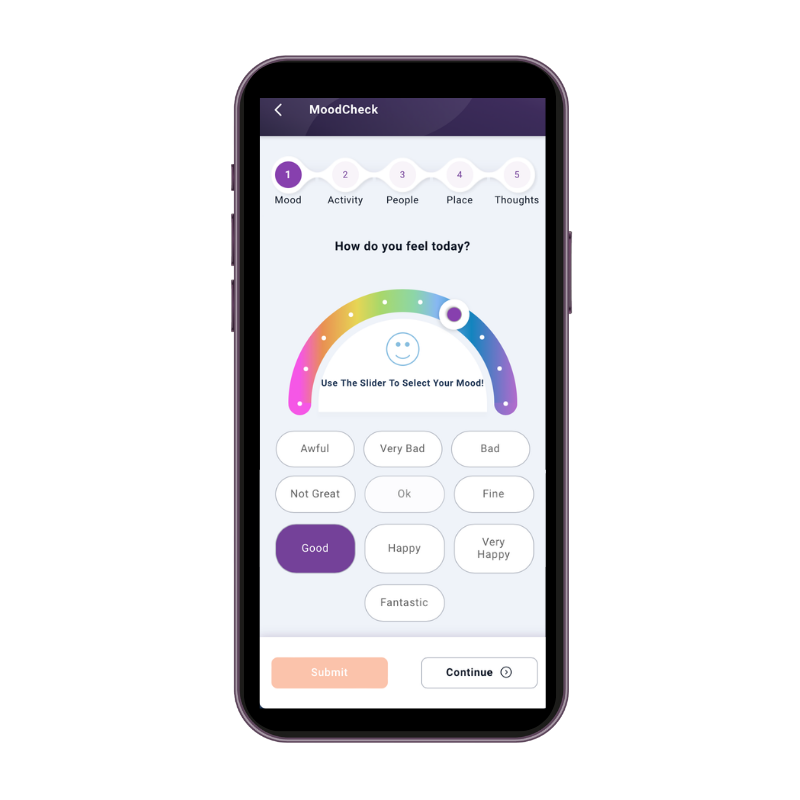 on their own schedule. The Welltrack Boost app helps students build resilience, track moods, reinforce healthy habits, and challenge negative thoughts.
The university also launched the BeWell MiamiOH website, a digital resource that offers more than 1,200 articles and 250 videos covering mental health and wellness topics. The site is free to all Miami community members and requires no login.
2025: Equine-assisted psychotherapy and horse therapy
Alongside these digital expansions, the student counseling service, expanded services to include equine-assisted psychotherapy and horse therapy through a partnership with the Equestrian Center and with donor support. In these sessions, students work with a therapist while grooming and caring for horses. No riding experience is required.
2026: Excellence in Mental Health and Well-Being Award
Reflecting the work done related to campus mental health over the last decade, Miami was recognized with the Excellence in Mental Health and Well-Being Award from Insight into Academia. Since that initial Board of Trustees presentation in 2014, by 2025 we doubled the number of both counselors and individual appointments in Student Counseling Service, and reduced the waitlist from 22 days for an initial appointment, to one to two days for an initial intake followed by four days for a second appointment. The award recognizes Miami’s network of care, including investments in prevention, education, treatment, and follow up care.
2026: I'm Listening (coming soon!)
In 2026, Miami is building a stronger culture of care through connection, conversation, and everyday interactions.
This spring, Miami’s Student Wellness Advisory Group (SWAG) is launching I’m Listening, an initiative rooted in a simple idea: listening matters. Inspired by Arizona State University’s I’m All Ears program, the group developed a Miami-specific approach with support from Steve Large, assistant vice president for student life. The initiative emphasizes that well-being is built not only through services, but through everyday interactions.
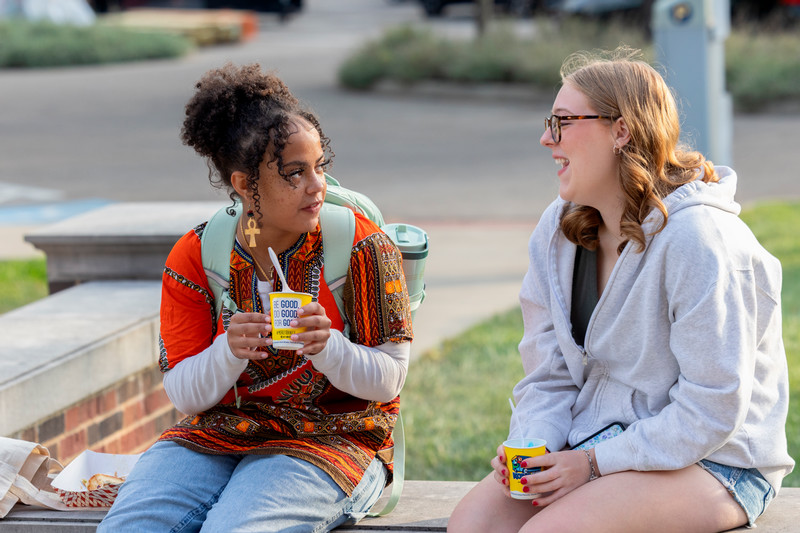 This initiative represents the next step in Miami’s ongoing evolution of student support. Since expanding 24/7 crisis services in 2020, the university has steadily broadened access to care through the work of the Institutional Task Force on Student, Faculty, and Staff Mental Health and Well-being, as well as through digital tools, wellness spaces, and more personalized therapy options.
Today, that work continues to take shape through a growing culture of care. By expanding access, improving visibility, and reducing barriers, Miami is helping to ensure students feel connected, supported, and prepared to succeed.