Skip to Main Content

Engineering and Engineering Technology: 10 key differences (and similarities)


If you're researching majors, you’ve probably asked yourself:

What's the difference between Engineering and Engineering Technology?

They sound similar, and they are related. Both pathways lead to strong careers solving real-world problems. The difference is mainly about emphasis, learning style, and career direction.

At Miami University, you can explore both options through ABET-accredited programs, including:

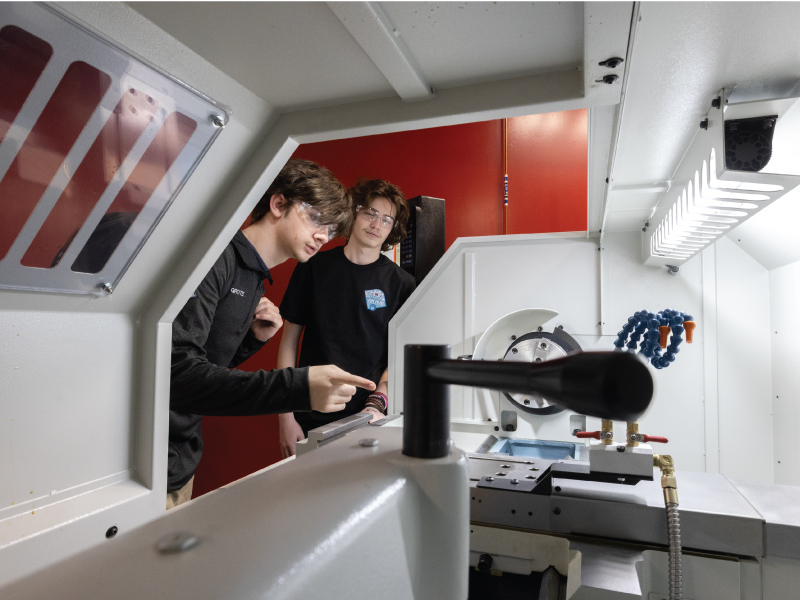
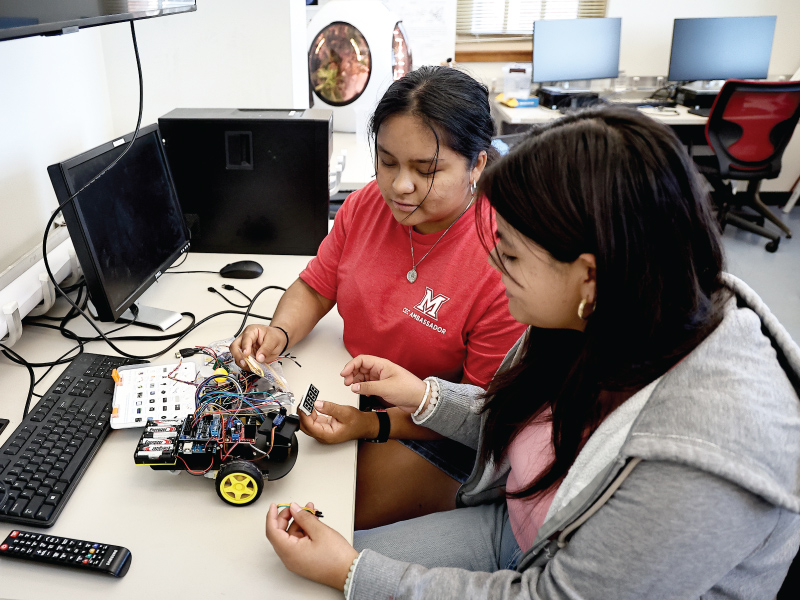
2 engineering students working on a electrical project.

Engineering majors in the College of Engineering and Computing (CEC) on the Oxford campus

These include Bachelor of Science degrees in Biomedical Engineering, Chemical Engineering, Software Engineering, Computer Engineering, Electrical Engineering, Robotics Engineering, Smart Manufacturing Engineering, and Mechanical Engineering.
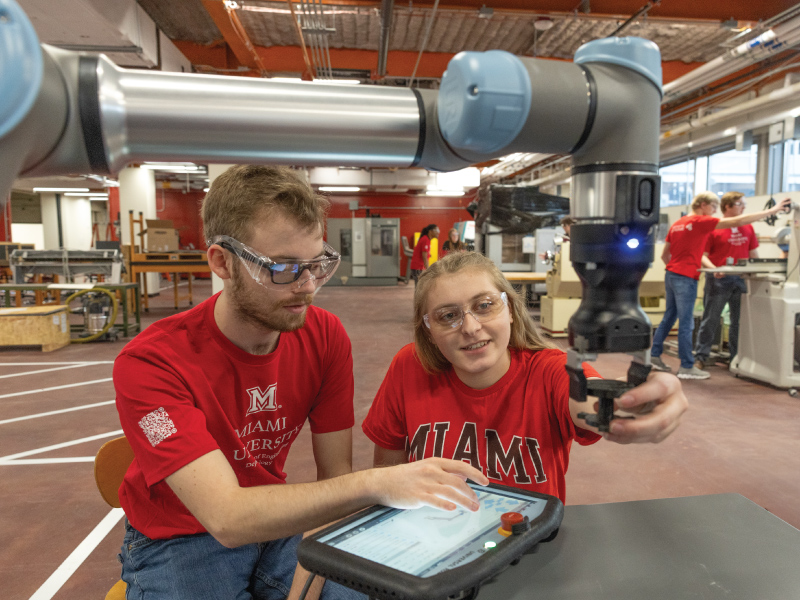
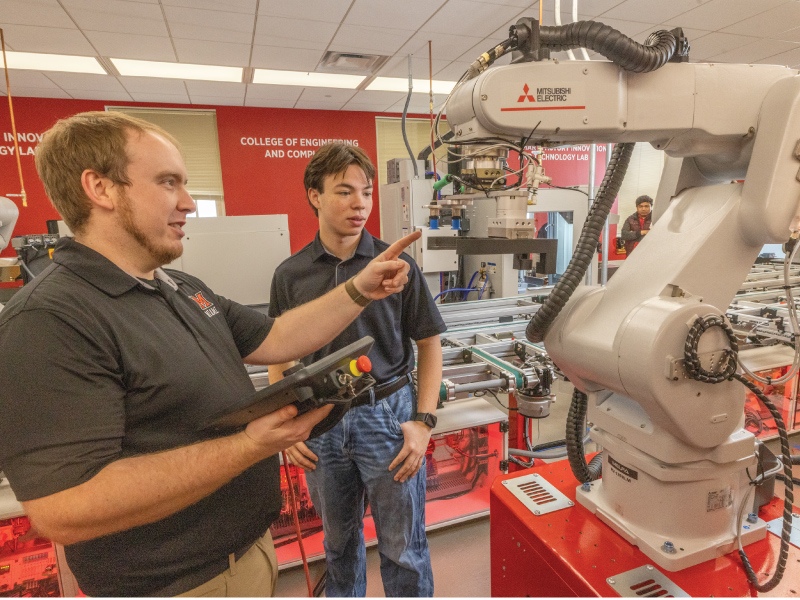
2 Engineering Technology students using a tablet to control a robot arm.

Engineering Technology (ENT) majors through Miami University Regionals

These include the Bachelor of Science in Applied Science in Electrical and Computer Engineering Technology, Electro-Mechanical Engineering Technology, Mechanical Engineering Technology, and Robotics Engineering Technology. Students can also pursue an Associate in Applied Science in Electrical and Computer Engineering Technology or Mechanical Engineering Technology.

Here are 10 key differences and similarities to help you decide which path fits you best.

1) Both pathways solve real problems (that’s the point!).

Let’s start with what’s true for both.

Engineering and Engineering Technology students both learn to:

  • solve technical problems
  • work in teams
  • communicate ideas clearly
  • use modern tools and technology
  • build systems that improve how we live and work

Both paths are great! They’re simply different ways to prepare for a career in engineering-related fields.

2) The biggest difference is the emphasis.

A helpful way to understand the difference is:

  • Engineering: emphasizes design, analysis, and communication.
  • Engineering Technology: emphasizes design, building, testing, operating, and troubleshooting.

Both paths involve design and hands-on work — but the balance between theory and application differs.

3) Engineering connects theory, application, and design to create new solutions.

Engineering programs typically spend more time on:

  • advanced math and physics
  • project-based learning
  • modeling and simulation
  • analyzing complex systems
  • designing solutions from the ground up

Engineering students often enjoy learning the “why” behind how things work — and using that understanding to create new solutions.

4) Engineering Technology is built around applied learning from day one.

Engineering Technology is strongly hands-on and application-focused.

ENT students often spend more time:

  • in labs
  • working directly with equipment
  • integrating systems (mechanical/electrical/automation)
  • troubleshooting and improving performance
  • completing industry-style projects

Faculty emphasize that ENT is a practice-driven program, centered on taking engineering ideas and making them work in real environments.

5) Math matters in both — but the depth is different

This is one of the clearest differences.

  • Engineering: Calculus-based math is central, and students use advanced math reasoning often.
  • Engineering Technology: Calculus-based math is used more in practical applications , focusing on systems using algebra, trigonometry, and applied calculus.

It’s about what type of math you want to work with and how often.

6) Both programs include labs and hands-on work.

Engineering combines theory with significant hands-on lab experiences across the curriculum, giving students the opportunity to learn how theory is applied.

Engineering Technology programs are designed to be lab-intensive throughout the curriculum, with many courses integrating laboratory work and applied projects.

7) Capstone projects are a major highlight in both programs.

Students in both programs complete major design experiences. These experiences include:

  • corporate-sponsored projects requiring real solutions to industry-based problems
  • faculty research-based projects
  • industry projects directly connected to students’ workplaces
  • national competition teams (such as Society of Automotive Engineers, American Society of Mechanical Engineers, Institute of Electrical and Electronics Engineers, and robotics competitions)

Check out the Engineering Senior Design Expo and the Engineering Technology Senior Design Day.

Both are impressive — they just reflect different student settings and career goals.

8) Employers overlap more than you might expect

Another important similarity: many of the same companies hire both engineering and engineering technology graduates.

Graduates go on to work for employers such as:

  • Procter & Gamble (P&G)
  • General Electric
  • Eli Lilly
  • Nestlé
  • Merck

In many workplaces, Engineering and Engineering Technology graduates collaborate — often on the same teams.

9) Graduate school options are typically broader with Engineering

Both pathways can lead to advanced study, but the typical route differs.

  • Engineering often aligns more directly with thesis-based master’s programs, PhDs, and research-based graduate study.
  • Engineering Technology can also lead to graduate study, often in applied programs which may require additional prerequisites.

If graduate school is a major goal right now, engineering may be the smoother path. If your goal is applied industry work and advancement, ENT may be the more direct fit.

10) Professional Engineer Licensure (PE) can vary by state — and by field

Both engineering and engineering technology majors are accredited by ABET. However, the traditional engineering degree is a faster path to Professional Engineer Licensure in Ohio. 

  • ABET accreditation matters for both programs.
  • PE licensure matters more in certain fields.

In some fields, PE licensure is not required — but it’s important to understand early.

Quick decision guide: which sounds more like you?

You might prefer Engineering if you want to:

  • Dive deeper into calculus-based math and theory.
  • focus on design, modeling, and analysis.
  • keep graduate school options wide open.
  • build a broad foundation for a long-term engineering career horizon.

You might prefer Engineering Technology (ENT) if you want to:

  • Learn in labs and hands-on environments more often.
  • focus on applying engineering ideas in real systems.
  • build, test, troubleshoot, and improve technology.
  • prepare to contribute quickly in industry settings.

Miami advantages: Hands-on labs and equipment

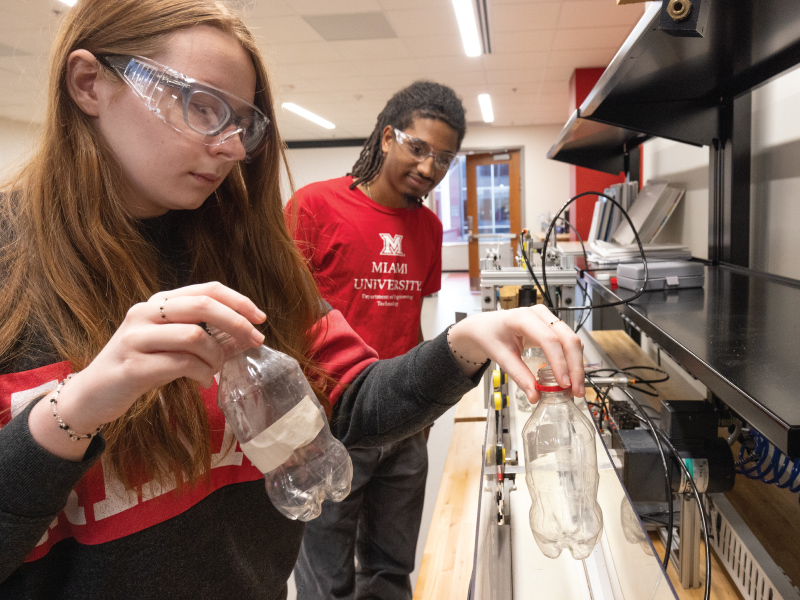
2 students using a empty bottle and a piece of equipment at the Advanced Manufacturing Workforce and Innovation Hub.

Miami’s Advanced Manufacturing Workforce and Innovation Hub (AM Hub), located on the Hamilton, Ohio campus, will support current and future initiatives by providing access to advanced tools and technologies, including:

  • additive manufacturing
  • robotics and automation
  • digital integration systems
  • industry-standard equipment

The AM Hub represents a 375,000-square-foot collaborative investment by Miami University, Butler Tech, OhioMeansJobs, Butler County, and local partners to establish a national model for workforce readiness and advanced manufacturing education. It creates seamless pathways that allow learners to begin technical training and progress through associate and bachelor’s degrees in Engineering Technology and beyond, reflecting a real-world, career-focused approach to education.

The AM Hub will create an environment for:

  • applied training and certifications
  • high-level experimentation and testing
  • interdisciplinary collaboration and industry-connected projects
  • workforce career preparation and transition support through co-located services such as OhioMeansJobs resources
Engineering students using a robot in the Industrial Robotics Laboratory

Engineering majors on the Oxford, OH campus have access to lab environments tailored to their field of study. These include:

Engineering and Engineering Technology are closely related — and both lead to meaningful careers.

The best choice depends on:
  • how you like to learn
  • how you want to use math and science
  • the kind of work you want to do day to day
  • your long-term career goals
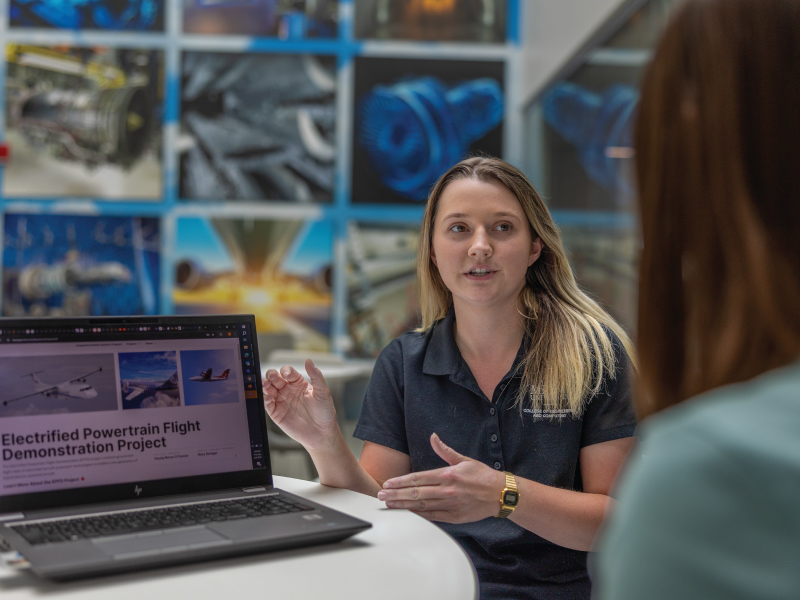
Sarah Freeman, Manufacturing Engineering and Mechanical Engineering major who interned at the NASA Glenn Research Center in Cleveland.

Contact Us

If you’re not sure which pathway fits you best, Miami University’s faculty and staff can help you explore both options and find your best match.