
Backpacking in Europe: A Reflection
MUDEC student Ethan Kopp reflects upon his travel in Europe and the world of youth hostels described in books such as 'Backpack Ambassadors'.
Backpacking in Europe: A Reflection
MUDEC student Ethan Kopp reflects upon his travel in Europe and the world of youth hostels described in books such as 'Backpack Ambassadors'.
This weekend was the first time I got the backpacking experience. In truth, I did not live out of my backpack for more than one night, and my group and I ended up staying in a very nice Airbnb in the evening. However, whether it was from carrying the weight of the backpack itself or my enormous European traveling expectations from sources like family and Backpack Ambassadors, the collective physical and metaphorical mass forced me to consider my role as a European traveler.
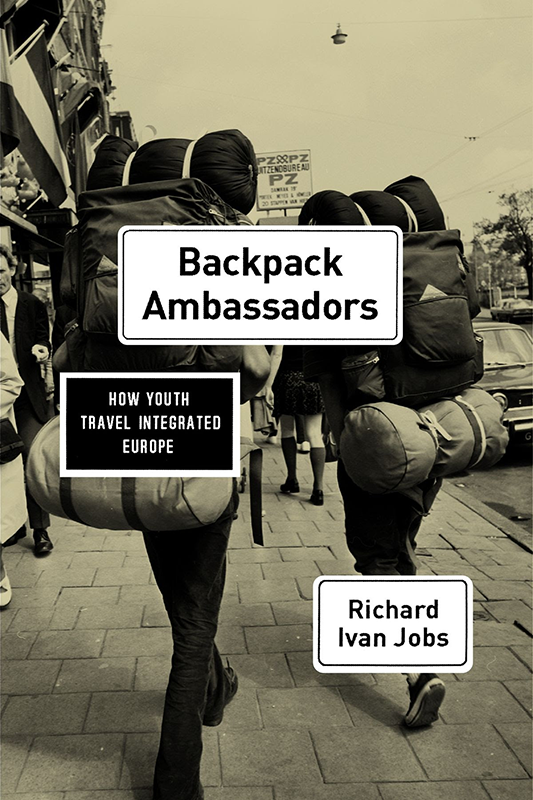 For those who had come before me, such as those mentioned in Backpack Ambassadors, a book about youth travel in post-World War II Europe, their travel was purposeful. The book says that as the young traveled following the war, their valuable intercultural experiences helped them heal old wounds and form new bonds of camaraderie, resulting in a new pan-European identity.
As an American, especially one from a mostly homogeneous suburb and university, these cross-cultural experiences were exactly what I was looking for when I came to Europe. The book describes hostels as a den of these exchanges. The text enumerates how hostels became a host to “‘young people of limited means, who want to meet foreign people” (Jobs, Chapter 1).
While Airbnbs and hotel rooms might be comfortable, the opportunity for intercultural interaction is checked at the door. In the world of COVID restrictions, it is significantly more challenging for one to have valuable cross-cultural connections. However, while hostels may be closed, for now, other sources of intercultural connections touched on by Backpack Ambassadors have certainly been visible in this past weekend’s travels.
The main area that I noticed to be a good place for social interaction is on public transportation. Luxembourg has free public transport, and I have taken advantage of that fact, using it to move across the country. However, likely a result of that nonexistent cost and the COVID pandemic, there is certainly no direct route to most of the places we have traveled.
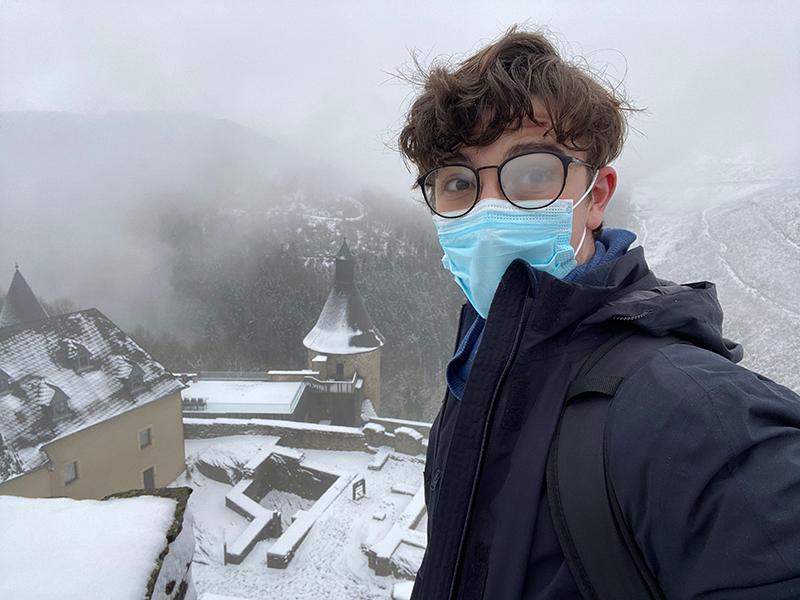 However, the lack of this direct route is perhaps what makes me the most optimistic for unique cross-cultural experiences. Much like the varied transportation methods the backpackers were forced to take immediately after the war, such as hitchhiking, the constant exchanging of buses and trains provides a unique opportunity of proximity that is almost unrecognizable in the COVID era. As commuters, tourists, and others jam into public trains, buses, and trams, a unique opportunity is provided for intercultural socialization.
The shared proximity of hostels might not be available in today’s world, yet it can still be found in Luxembourg. I noticed this proximity this past weekend when I felt more comfortable practicing my non-existent French language skills with a commuter. Though our conversation was short and switched to English because of my poor language skills, I still valued it as a unique experience I would otherwise not have had in Oxford, OH.
Despite this optimism, one issue I see today is the divisiveness of the world around me. In Backpack Ambassadors, travel was encouraged by France and West Germany's governments to create cross-cultural connections. This encouragement was in response to the hostility bred by centuries of Franco-German aggression. Therefore, the two governments needed a way to create longstanding peace. Through thoughtful discussions and youth camps, bonds were formed, and two countries who were bitter enemies became close partners in the pursuit of pan-Europeanism.
While we have technologies today that help bring us closer despite the distance, like social media, it also increases divisiveness. Everywhere I have traveled, I have noticed every tourist using their phone constantly. I am not guilt-free of this, knowing that I use it for comfort from the knowledge that home is just a text away. Yet, I believe that to have authentic and valuable cross-cultural connections, that comfort must go.
Finally, another division I have noticed is with COVID restrictions closing borders and pitting countries against each other to contain cases. These measures are valuable and necessary in fighting the pandemic yet have created a system of rigid borders entirely alien for the Schengen zone. This circumstance is undoubtedly a cause of anxiety for me that the pandemic’s response will have long-lasting ramifications for European unity.