
11th Access for All event shines light on accessibility as human connection
The 11th annual Access for All: Accessibility Symposium was a day full of learning, new experiences, and human connection.
11th Access for All event shines light on accessibility as human connection
The 11th annual Access for All: Accessibility Symposium was a day full of learning, new experiences, and human connection.
The 11th annual Access for All: Accessibility Symposium was a day full of learning, new experiences, and camaraderie. Almost 140 people attended to learn about the intersection of accessibility and technology – focusing on not just how important it is to provide access to everyone, but also how to do it effectively.
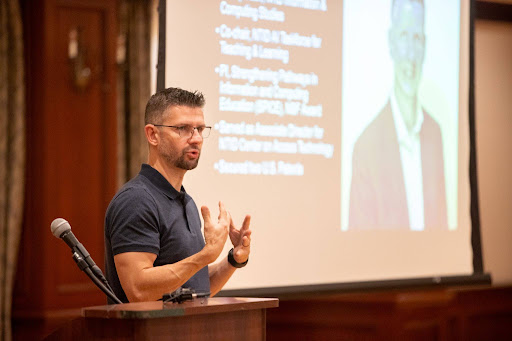
The day began with a keynote address by Brian Trager, the chair of the Information and Computing Studies Department of the National Technical Institute for the Deaf at the Rochester Institute of Technology. Brian was born deaf, and through his interpreters, he told the room full of educators, administrators, and students about how technology and accessibility shaped his life, education, and career.
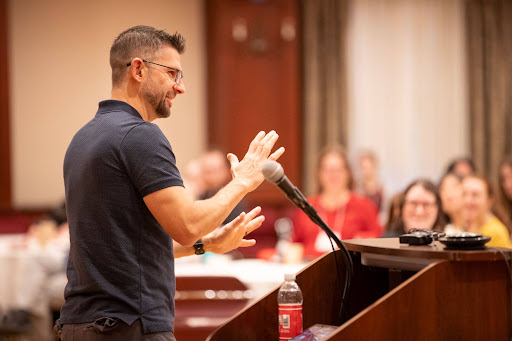 His presentation was titled “Access to Human Connection: Technology, Accessibility, and the Journey Ahead.” Through the lens of his own journey through the education system and his young life as a deaf person, he highlighted how important it was for him to have access to tools and systems that helped him connect with others.
What’s more, Trager focused on how human connection was a key factor in his life, especially after challenges with language deprivation in childhood.
“Accessibility creates an opportunity for human connection,” Trager said. “Access is something we can create together.”
Accessibility through intentional action
 The rest of the day was filled with impactful sessions focused on taking high-level concepts (like “make your website accessible”) and distilling them into actionable steps to actually fulfill those kinds of tasks.
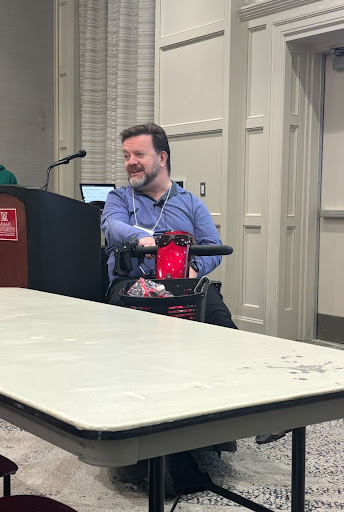
One such session, given by Tom Webb, the associate vice president of accessibility at Wright State University, detailed how accessibility shapes study abroad experiences. Instead of reactive accommodation, Webb stressed, it’s important to go into course design with intentional inclusivity in mind – in other words, inclusive design. The session description said it best:
“The goal is simple: stop treating disabled students as exceptions to study abroad and start designing programs that expected them all along.”
Afternoon workshops also provided opportunities to learn skills and tools for the Miami community to create accessible content for courses, websites, and more.
Mark your calendars for next year’s twelfth annual Access for All: Accessibility Symposium: Friday, October 22, 2027.