
Cyberchat with Helen Patton: NCSAM 2026 focuses on rearchitecting the basics
Cyberchat with Helen Patton: NCSAM 2026 focuses on rearchitecting the basics
For this National Cybersecurity Awareness Month (NCSAM), the Information Security Office once again welcomed Helen Patton, Cybersecurity Executive Advisor at Cisco Systems, to be our guest speaker for our third annual NCSAM Fireside Cyberchat webinar series.
As always, Patton deserves huge thanks for being available (and willing) to come chat with Miami faculty, students, and staff about current cybersecurity topics. Her talk focused on some nuances with artificial intelligence - and how we need to go back to basics in thinking about cybersecurity, technology, and more.
Where we are now?
Patton began her talk with a high-level overview of the landscape when it comes to AI. On one side, there is the policy around AI and how federal, state, and local governments are treating the issues differently. At the federal level, Patton said, they’ve adopted a “move-fast-and-break-things” approach - they’re asking folks to use AI and find the advantages and flaws so they can use the tools themselves. State governments, on the other hand, have been a little more reticent in terms of adoption.
On the other side, Patton said, there is the market around AI and all the money that is attached to these projects. The companies have incentive to make money, so they’re pushing the products, of course. The policy aspect and the market aspect are in opposition, and we (the consumers and technologists who are using AI) are stuck in the middle.
Five areas to focus on
The bulk of Patton’s talk focused on five separate practices: asset management, change management, identity management, governance, and vulnerability management. These five practices, which are all deeply involved in how we do work (especially in IT), are all going to change thanks to the emergence of AI, especially as the role of AI changes in the workplace.
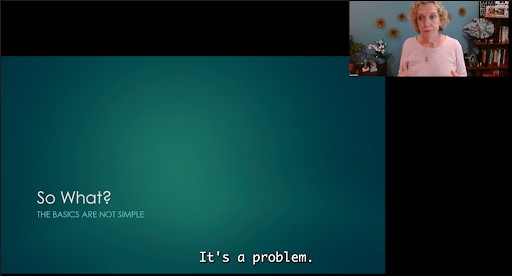
“Here's the problem,” she said. “AI in any form amplifies dysfunction at scale. So if you've got bad process, if you've got bad tech, if you've got bad governance, if you've got old stuff . . . It's a problem. And so from a security perspective [...], we might have to address a little bit of everything, everywhere, all at once.”
Quick tips: Segment networks, manage vulnerabilities, and change how you do work
Here are a few quick to-do items from the webinar that readers can take away:
- Segment your networks. Put your children’s devices on a separate home network from the network you use to do your banking.
- If someone asks you for personal information, even if it’s someone you think you know, do not give it to them without first vetting their identity.
- And, finally, use passkeys! (Here’s a useful article about passkeys from Microsoft.)
For the rest of her tips, including some about how to use AI, you’ll have to watch the video!