
CEC helps K-12 students see themselves in engineering and computing
Gold Purposeful Partner Award recognizes the college’s growing network of hands-on STEM experiences across the region
CEC helps K-12 students see themselves in engineering and computing
Gold Purposeful Partner Award recognizes the college’s growing network of hands-on STEM experiences across the region
For many elementary, middle, and even high school students, engineering and computing can feel abstract and unfamiliar. But when they have the chance to experience them firsthand, that changes.
It’s for this reason that Miami University’s College of Engineering and Computing (CEC) has been working intentionally to connect students across the region with hands-on STEM experiences, campus visits, field trips, guest speakers, summer camps, and other opportunities that help them imagine new possibilities for their futures.
“Students cannot become something they don’t know exists,” said Allison Sommers, assistant director of K-12 outreach for CEC.
This spring, Sommers’ growing outreach effort earned regional recognition. CEC received the Gold Purposeful Partner Award through LinkedUp Connect, an initiative connected to the Greater Cincinnati and Hamilton County Business Advisory Council. The award recognizes partners that provide work-based learning experiences for students.
CEC was the only organization recognized at the gold level, which required at least 15 experienceships. The college offered 17.
For Sommers, the award was meaningful not only because it recognized CEC’s growing list of opportunities, but because it helped introduce the college to more students, educators, counselors, and school partners across the region.
“Just by receiving that award in front of so many people, it also worked as a great networking opportunity,” Sommers said. “It was a way to get CEC’s name out in front of other people as an organization they wanted to contact and collaborate with for their students.”
 LinkedUp Connect allows school districts, teachers, and students to explore opportunities offered by industry and community partners in one centralized platform. Sommers has used it to share CEC programs and experiences including Summer Scholars, future student visits, guest speaker opportunities, field trips, Senior Design Expo, Engineering and Computing tours, and online sessions connected to areas such as artificial intelligence, quantum computing, and advanced technology.
When students or teachers express interest, Sommers can follow up directly and begin building connections with schools. Those connections have helped more students discover what CEC has to offer, such as through a field trip to Miami’s Oxford campus to explore College of Engineering and Computing learning spaces.
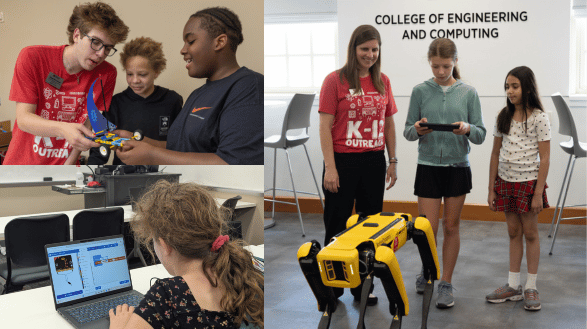
For visiting students, the experience is designed to be active and accessible. Students may try on the role of an electrical engineer, biomedical engineer, or other STEM professional through hands-on activities. They also tour engineering labs, learn about CEC majors, and hear about the college admissions process.
For some students, especially those who would be first-generation college students, a visit to campus can help make college feel more attainable.
“Coming on campus, they’re able to see themselves, that they fit in here, and that college is an opportunity for them,” Sommers said.
Sommers said moments from these campus visits often stay with her. She recalled one student who came to campus thinking he wanted to become a chef. After participating in engineering activities, he was surprised to find himself considering that engineering might be the right path for him. Another student walked into a robotics experience and immediately said it was what she wanted to do with her life.
For Sommers, these moments show why early outreach matters.
Research shows that students often begin making decisions about their academic interests and future careers before they enter high school, she said. Introducing students to STEM earlier can help build confidence, challenge stereotypes, and encourage them to continue exploring engineering and computing through school electives, camps, and future campus experiences.
CEC’s K-12 outreach now reaches students through both on-campus university visits and programs delivered at K-12 schools. During the 2025-26 academic year, Sommers said CEC has served more than 4,500 K-12 students through outreach programming. The college is also working with more than 75 schools and community partners across Southwest Ohio, Greater Cincinnati, Greater Dayton, and parts of Indiana.
This summer, CEC expects to serve about 200 students through eight summer camps, including programs with Cincinnati Public Schools and SparkForce. One pilot program will bring a group of Cincinnati Public Schools middle school students to Oxford for a free overnight camp experience. The grant-funded program will include transportation, housing in residence halls, meals, STEM activities, and opportunities to experience campus life (like ice skating at Goggin Ice Center.) Sommers said the program helps remove barriers related to cost and transportation while giving students a fuller picture of what college can be.
Whether through a field trip, summer camp, guest speaker, or online experience, Sommers’ goal is to create meaningful touchpoints that help students build confidence and curiosity over time. Through her leadership, CEC is helping students across the region imagine themselves in STEM fields they may not have considered before.