

Skip to Main Content

Miami University’s Polytechnic Initiative

Career ready, day one.

Higher education is changing, and it’s changing fast. New technology, demographic shifts, and conversations around the role of higher education have led universities to adapt in new ways. At Miami University, we are not just responding; we are forging a bold new path with intent and purpose. The polytechnic initiative, part of Miami’s strategic plan MiamiTHRIVE, reimagines higher education through hands-on, industry-informed programs that empower students to build in-demand skills, solve real-world challenges, and launch high-demand careers.

ohio outline with miami logo inside

polytechnic (poly·​tech·​nic):
combines employer-informed programs with applied learning to prepare you for career success from day one.

Reimagining Polytechnic

The polytechnic model serves as a talent development initiative, preparing students with in-demand technical and applied skills. Polytechnic — whether educating, reskilling, or upskilling — focuses on strong industry collaboration to ensure programs align with employment needs and real-world applications. This initiative expands on Miami’s long-lasting partnership with the business community by:

  • Integrating technical skills, applied hands-on and work-based learning, and career readiness.
  • Remaining grounded in Miami's strengths: communication, leadership, and critical thinking.
  • Directly addressing the region and state’s workforce needs and economic shifts.
  • Launching an only-of-its-kind “industry-first” initiative in Ohio.
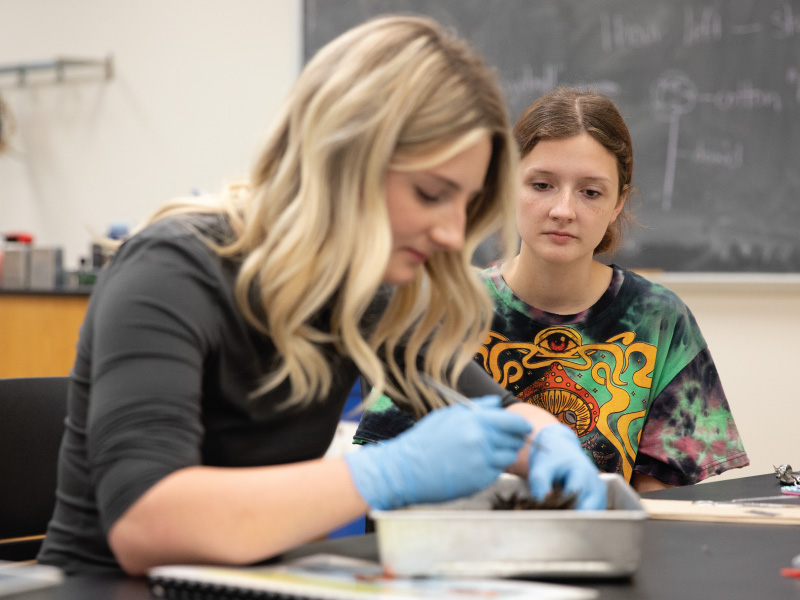
An Applied Biology student looking through a microscope with her professor looking over her shoulder.

“Today’s learners want more than degrees — they want career pathways. And today’s employers are looking for more, too: workers who are prepared to hit the ground running.”

What is Career Ready, Day One?

Career ready, day one means our graduates leave Miami University with more than a degree. They leave prepared to make an immediate impact. From their first day on the job, they have the skills, knowledge, and hands-on experience that employers need. This isn’t just about theory or classroom learning. It’s about real-world projects, industry-shaped coursework, and applied learning that reflects the challenges and tools professionals use every day. With input from our industry partners, we’re making sure students aren’t just ready for a job — they’re ready to contribute on day one.

Career Ready, Day One Means:

  • Students working on real business challenges as part of their coursework, using actual tools and data from industry partners. 
  • Internships, co-ops, and micro-projects built into programs so students graduate with professional experience, not just classroom knowledge.
  • Curriculum shaped by industry input, so what students learn reflects the skills, technologies, and practices employers use today — not what was needed five years ago.
  • Opportunities to earn Microcredentials and certifications alongside their degree, so students have proof of their skills before they even apply for a job. 
  • Soft skills and career coaching, like teamwork, communication, problem-solving, and adaptability, are woven into programs so students are ready to succeed in the workplace.

Our Priorities Align

At Miami University, we know what matters to Ohio: creating good jobs, growing the local economy, and building a strong workforce that keeps our communities thriving. That’s exactly what our polytechnic education model is designed to do.

Partners Leading The Way

With current partners in industries like manufacturing, technology, healthcare, economic development, and more, we are poised and ready to collaborate with you on innovative and future-ready new ideas. Early partners include:

  • Butler Tech
  • Butler County
  • REDI Cincinnati
  • City of Hamilton
  • City of Middletown
  • TechSolve
  • OhioMeansJobs

Why Polytechnic? Why Now?

With 97% of our bachelor’s degree graduates finding jobs or continuing school six months after graduation, we’re here to boost student success and the economy in Ohio. Students will earn a Miami University degree, and can also expect:

  • Industry-focused, hands-on learning. Gain practical experience earlier in all programs.
  • Clear job pathways. Build job-ready skills aligned with employers’ needs.
  • Increased internship and co-op opportunities. Forge new business partnerships that lead to more local and regional company exposure.
  • Focused career prep. Foster analytical and problem-solving skills through an interdisciplinary approach.
  • Additional financial assistance for education. Create more programs like Work+ to reduce student debt.
Student working in an office checking someone in at a front desk.

Frequently Asked Questions

What is Miami University’s polytechnic model?

Miami’s polytechnic model blends applied learning, technical education, and industry collaboration with durable skills in communication, critical thinking, and the ability to work in teams.

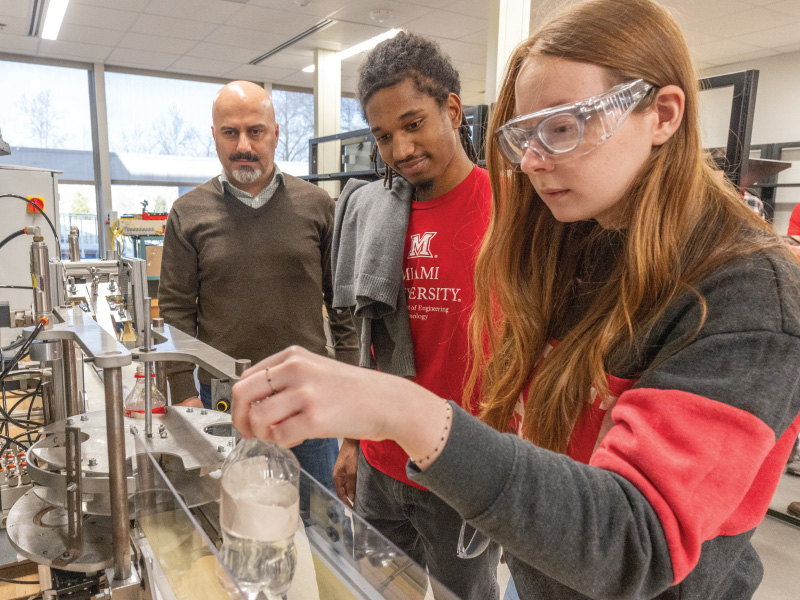
For example, in Miami’s polytechnic education model, an Engineering Technology student might use their lab time to test a device that helps reduce energy use at a local library.

Why this, why now?

Higher education is facing some challenges right now, including a diminished perception of the ROI of a college degree and a decrease in the population of high school graduates. With the polytechnic shift, we are getting ahead of these challenges by differentiating ourselves as an innovative, forward-thinking, career-focused educational pathway. By working directly with employers and industry leaders, we will give our graduates better experience and more career opportunities.

The polytechnic model will:

  • Prepare students to solve current and emerging challenges by combining critical thinking, creativity, and collaboration with early, hands-on experience and career-focused applied learning.
  • Address today’s workforce needs.
  • Helping more students earn a degree, advance their careers, and increase their earning potential.

How will Miami secure a return on our investment?

Significant change requires significant investment, and funding MiamiTHRIVE initiatives is a top priority for Miami University. The polytechnic model will allow Miami to secure a return on that significant investment by:

  • Working directly with employers and industry leaders to make data-based determinations about programming to help ensure that these programs are in demand.
  • Differentiating Miami University in a crowded marketplace.
  • Opening up opportunities for a wider range of funding sources, including grants, partnerships, and government dollars.

Will the degree still say Miami University?

The degree students earn will still say Miami University, like Regionals students get now.

What will tuition rates look like?

Our current tuition rate is one of our key differentiators. Though it’s too early to determine exact numbers, we anticipate that this model will allow us to open up doors to future revenue models and sources besides net tuition revenue, minimizing costs to students while maximizing their outcomes and career potential.

What will happen to the liberal arts programs under the polytechnic model?

Our liberal arts foundation is one of our greatest strengths at Miami University, and we will continue to help students build the essential, durable career readiness competencies that employers value, such as critical thinking, communication, leadership, teamwork and professionalism through this unique liberal arts-grounded polytechnic education model. Throughout this transition we are going to evaluate all of our programs to make sure we have academic offerings that are based on student and industry demand and support a sustainable financial model.

Where did this idea come from?

Ten committees made up of Miami faculty and staff met to address opportunity areas identified in the MiamiTHRIVE strategic planning process. A committee, which included several Regionals faculty and staff members, researched and proposed the polytechnic model as a way to meet the goals of MiamiTHRIVE. It was approved by Miami University leadership, and now we are continuing the initial planning stage of this project.

What is Applied Learning/ Work-Based Learning?

In this model it is real-world learning connected directly to industry needs and outcomes. Students apply their knowledge by doing meaningful work in professional or realistic workplace settings such as co-ops, internships, client-sponsored projects, field experiences, or industry labs. The focus is on producing results, using professional tools and standards, and gaining career-relevant experience.

How are you communicating this to students, prospective students, and other stakeholders?

First, we wanted to bring staff and faculty into the fold to make sure that they have an opportunity to give feedback during the early planning stages. Now, we are expanding these communications with students, stakeholders, and the larger community. This process will involve a continuous feedback loop with our campus community. If you have feedback you’d like to share, please email polytechnic@MiamiOH.edu.

Where will polytechnic programs be located?

This initiative is still in the planning stages, but in-person courses will be held at our Advanced Manufacturing Workforce and Innovation Hub and on the Hamilton campus. Our partnerships will start in Butler County but could very well expand to other regions. The Middletown campus’ repositioning efforts will continue, and the details of that effort are still being worked out.

Will this initiative open up opportunities to shift away from traditional curriculum models, like semesters and limited start times?

Yes! With this polytechnic model and other MiamiTHRIVE initiatives, we aim to enhance our catalog of degree program alternatives, including certificates, Microcredentials, and professional education, as well as explore our curriculum timelines, modality, and structures.

How will student life be impacted by this shift? Will co-curricular planning be integrated alongside classroom learning?

We are committed to providing a vibrant student life for our students while prioritizing their success. This is also an opportunity to reimagine what student life can be and plan new and innovative ways to incorporate co-curricular experiences in the lives of our students.

How will this initiative impact international and military students?

Though we do not anticipate any reduction in the opportunities available to any of our students due to this shift, it’s imperative that these populations do not experience any unforeseen lapses in their educational pathways. We will continue to offer the excellent student support services that we offer now and work closely with appropriate campus partners to ensure their continued success.

How will Miami Online fit into this model?

We will continue to offer and grow our online offerings, and we see online learning as an opportunity to pursue untapped audiences that can benefit from this career-focused educational model.

It seems like there are a lot of moving parts here. How will the details of this shift be determined?

We are going to engage stakeholders across the university to implement this shift, and through collaboration and feedback, work out the details of this effort.

What is Miami’s Polytechnic?

Anchored by the Advanced Manufacturing Workforce and Innovation Hub — a cutting-edge partnership with Butler Tech to develop an educated workforce and serve as a catalyst for community economic growth — the polytechnic initiative partners with business, government, and education in alignment with Ohio’s workforce priorities.
  • Retaining local talent.
  • Attracting and engaging companies.
  • Graduating Ohioans who are career-ready on day one.
Student handing someone paper work after checking in at a front desk

Contact Miami Polytechnic

1601 University Blvd.
Hamilton, OH 45011