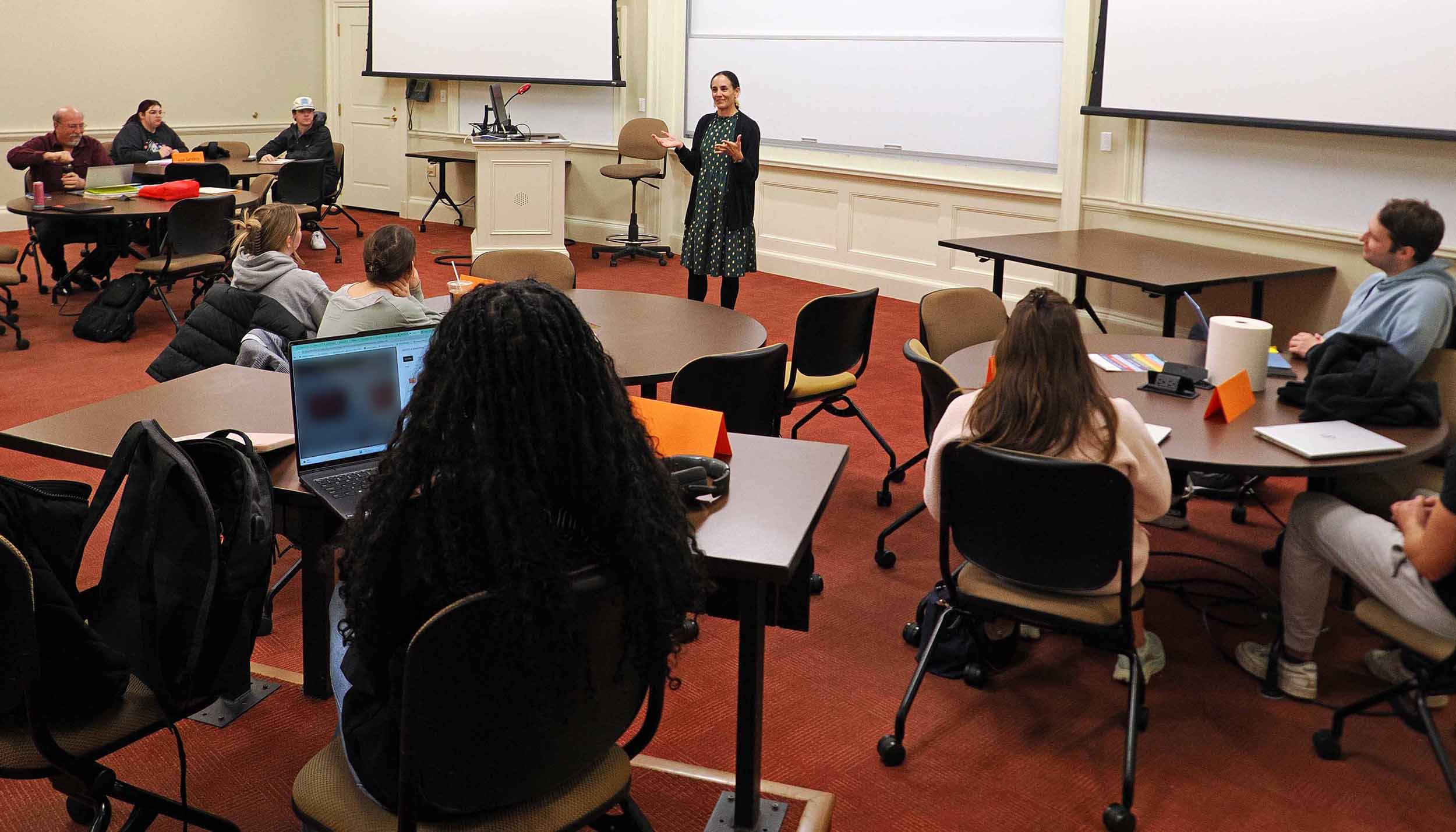
Miami's first Chief Human Resource Officer shares her experiences with FSB students
Palatka tells students about needed skills for future human resources workers
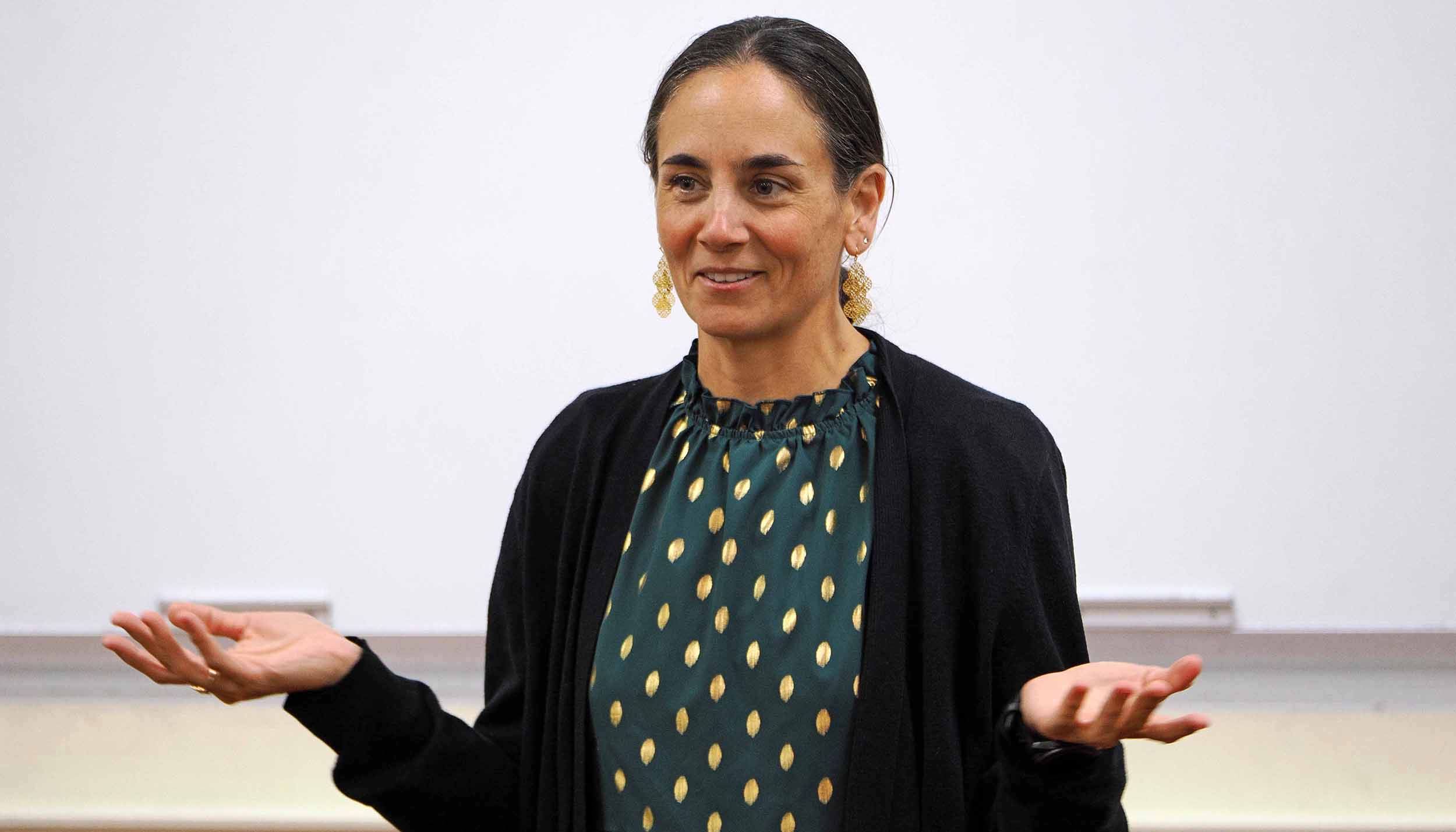
Miami's first Chief Human Resource Officer shares her experiences with FSB students
Palatka tells students about needed skills for future human resources workers
Industry leaders who visit the Farmer School of Business come from far and wide. But when Jessica Palatka visited Tom Mobley’s MGT 303 Human Capital Management class, she only had to walk over from Roudebush Hall.
Palatka is Miami University’s first Chief Human Resource Officer. She came to Oxford over the summer from a similar role at the U.S. Department of Commerce, where she had responsibility for more than 55,000 employees.
“I am a learning person. I like to try new things. I like to be inventive. I like to be creative. I like to push boundaries. So, the idea of coming to an organization that had never done this work, that welcomed this work, that was looking to expand the work done in human capital, I would love to step up and try that,” she said.
On this day, her role was to give students knowledge and information that she’s gleaned during her 20+ years in human resources.
“I feel like this should be a part of any of our leadership’s examples for what we're doing, and there's quite a few of us who do reach out to the students to give them real-life examples,” Palatka said. “We’re creating a human capital strategic plan. I've drafted it for the University. I sent it to Tom and said, ‘Hey, get this to your senior-level students. It’s their university. What do they think of this?’”
“If someone had done that for me, I think that would have been huge, to get that relationship and to see the possibilities and how it's working in my own organization,” she said. “I don't think you can pay for that. I think that's just an amazing opportunity, both for me and for them.”
Palatka noted that human resources needs people with a wide range of abilities, from management to analytics to computer science. “I think people think of HR and think ‘Oh, that’s where I submit my forms, that's where I go to get my benefits stuff done.’ I would hope that they see the art of the possible with HR, and how many different possibilities there are,” she said.
A student approached Palatka after class and said that until her talk, he hadn’t really thought about doing human resources in government. “If you ever are interested in applying for any of those positions, a resumé for a government job looks a lot different than a regular resumé you would do,” she responded. “You let me know and I’ll get you what a government resumé would look like.”
Palatka said that students who want to work in human resources should pick up a couple of important skills, in and out of the classroom.
“If it's a competency, I would say learning how to use data, only because it's the most overlooked aspect in HR. We focus a lot on labor and employment and planning and recruitment, and so often data gets glossed over or it's an afterthought,” she said. “If it's a personality trait, I would say the ability to be agile, to pivot, to turn, not just in your work, but in yourself and what you see yourself doing, what you're capable of doing, because HR evolves so much, so often, and the needs change. Go learn this. Go learn that. Go take that class. How do I need to change? What do I need to do to grow?”