Skip to Main Content

ENT Senior Design Day 2026

Student teams conduct major open-ended research and design projects. Elements of the design process including establishment of objectives, synthesis, analysis, and evaluation are integral parts of the capstone. Real-world constraints such as economical and societal factors, marketability, ergonomics, safety, aesthetics, and ethics are also integral parts of the capstone. ENT 497: feasibility studies performed; ENT 498: implementation, testing, and production of design.

Senior Design Day 2026 | Friday, April 24

RSVP to attend, volunteer as a judge, or attend the luncheon on Friday, April 24 from 8 a.m.-2 p.m. at Miami University Hamilton's Advanced Manufacturing Workforce and Innovation Hub. 

2026 Projects

AI Position Feedback to Robot*
Students: Dawson Clevenger, Garret Donahue, Hadyn Brown
Advisor: Dr. Reza Abrisham Baf

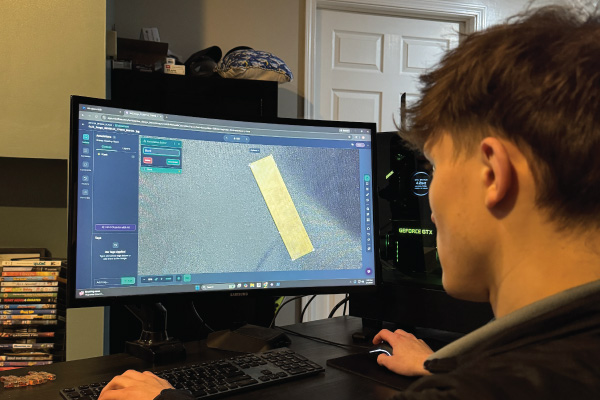
The primary objective of this project is to create a system that can identify a bearing blank’s location and orientation within a designated work envelope, convert this information into usable robot coordinates, and command the UR5 robot to retrieve the blank with high accuracy. The system includes an OAK-4 S smart camera capable of onboard inference, a YOLOv11 machine-learning model trained using images labeled in Roboflow, and a pneumatic magnetic-cylinder gripper system controlled by the robot’s I/O.

*Sponsor: Miba Bearings US, LLC


Autonomous Mobile Service Robot
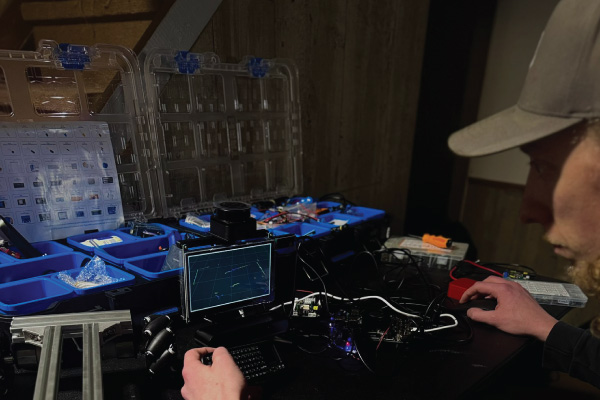
Students: Jeff Selvey, Elijah Wolf, and John Shininger
Advisor: Dr. Reza Abrisham Baf

The goal of this project is to design, build, and program an autonomous mobile service robot capable of reliable indoor navigation and user interaction. The robot integrates mechanical, electrical, and software subsystems into a unified platform using holonomic mecanum-wheel motion, LIDAR-based SLAM, and AI-enhanced perception. Key objectives include achieving accurate indoor mapping and obstacle avoidance, implementing object-aware behaviors through AI-powered vision, and enabling verbal command processing for intuitive human–robot interaction. Upon completion, the system will demonstrate autonomous navigation, environment awareness, and interactive task execution in indoor environments.


Autonomous Omni-Directional AGV (Automated Guided Vehicle)*
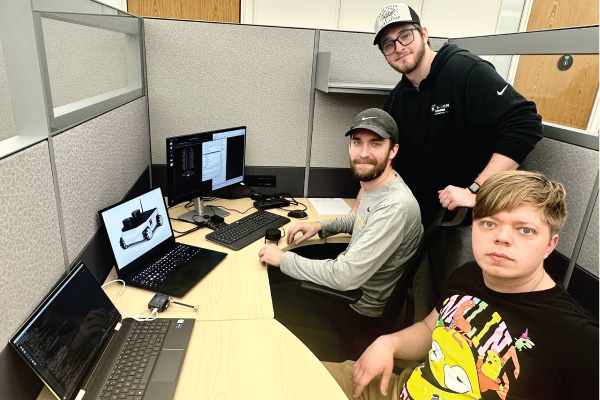
Students: Seth Burghard, Nick Delaet, Mason Powers
Advisor: Dr. Mahdi Yazdanpour

The objective of this project is to design, prototype, and demonstrate an autonomous omni-directional Automated Guided Vehicle (AGV) capable of navigating both indoor and controlled outdoor environments on a single-floor surface. The AGV will utilize a holonomic drive system using Mecanum wheels, a LiDAR sensor for Simultaneous Localization and Mapping (SLAM), and an NVIDIA Jetson Nano running the Robot Operating System (ROS) for localization, path planning, and obstacle avoidance.

*Sponsor: Armin J Fleck Fund


Bridge Crusher *
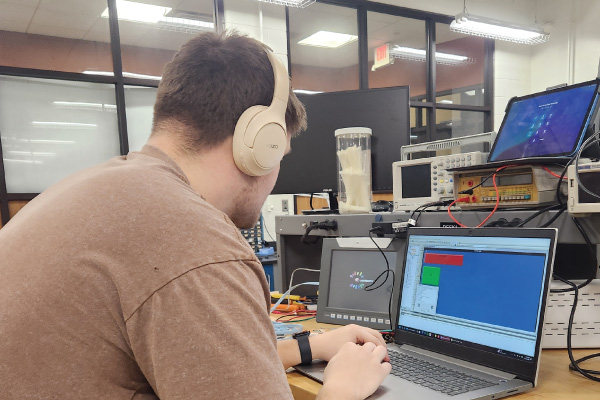
Students: Jason Jordan, Michael Romine, Caleb Shenkel
Advisor: Dr. Reza Abrisham Baf

The purpose of this project is to design and build a linear-actuated bridge crusher with accurate force, positional feedback, and sound design to teach the next generation of STEM students. This project will include advanced electrical controls, safety, and a fully functional Human-Machine Interface (HMI) for intuitive, safe device operation. Upgraded Motors and custom-machined parts will be installed along with a fully built control panel equipped with a Programmable Logic Controller (PLC). This project will be owned and utilized by Northwest State’s Engineering Department with the purpose of testing the final project for the Strengths and Materials class. This project involves students designing a popsicle stick bridge with the goal of withstanding 200lbs of controlled applied force, which our project will apply.

*Sponsor: Northwest State Community College


Electric Go-Kart*
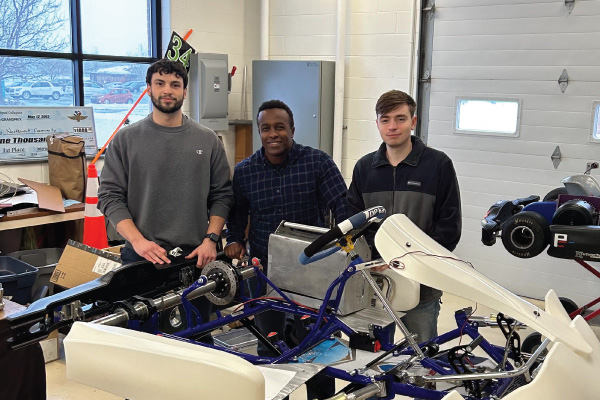
Students: Ash Walz, Jacob Romine, Joseph Kelly
Advisor: Dr. Reza Abrisham Baf

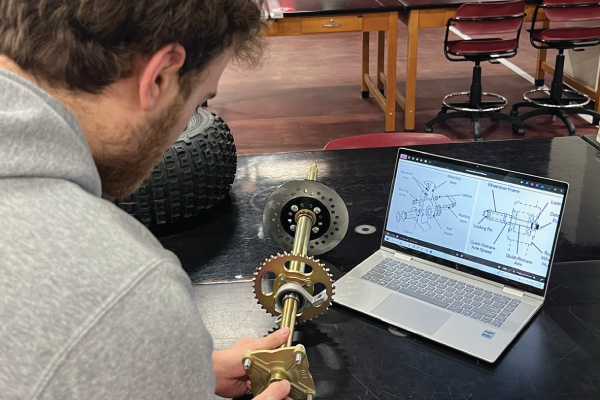
The objective of this project is to design, develop, and construct a fully electric go-kart. We are doing a split axle design with dual torque-limiting AC motors. The go-kart will be fitted with two custom battery cells to accommodate the two motors. These battery cells will be designed to conform to the standards of Purdue University’s Electric Vehicle (EV) Grand Prix competition. Our design features a split axle design, allowing each motor to operate at varying speeds. By doing so, we will gain the ability to control turning performance, as the inside motor will slow or maintain speed, while the outside motor increases speed based on the turn radius. Our goal is to enhance traction and maneuverability compared to traditional single-motor go-karts.

*Sponsor: Northwest State Community College


Hexagonal Plant Growth Pod
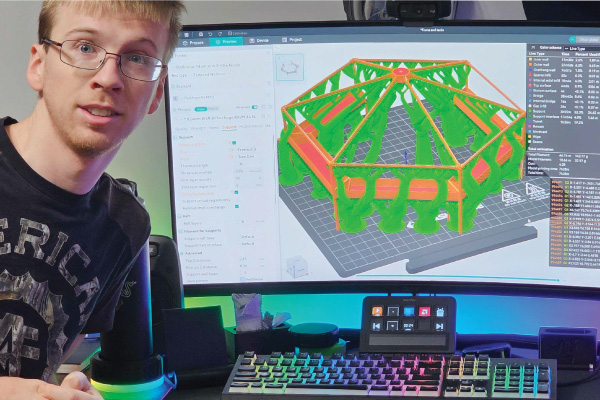
Students: Shawn Carpenter, Dean Moran, and Henley Sagle
Advisor: Dr. Reza Abrisham Baf

The objective of this project is to create a 3D printed model of an innovative hexagonal plant growth pod. Because creating this product at a life size scale would go far beyond cost and time, we have decided to demonstrate the pod in miniature form. Along with this 3D printed model, we will have scaled up calculations for the projects design providing support to the claim that all component selections made are appropriate for the system. These pod components would include a growing light, water pump, solar panel, temperature control, water level control, and humidity control.


Houseplant Growing System
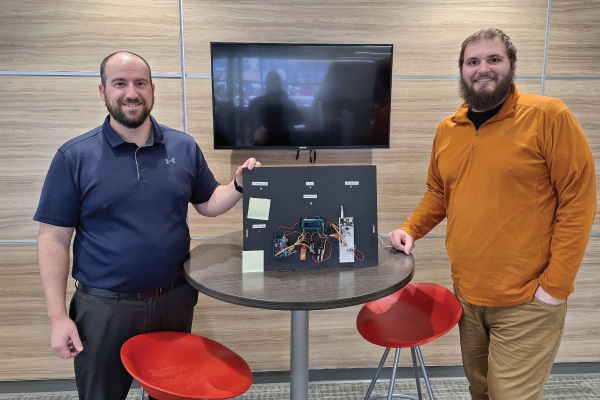
Students: Christopher Larry, Scott Zimmer
Advisor: Dr. Reza Abrisham Baf

The objective of this project is to create a self-monitoring plant system that will be a cost-effective way for any person to enjoy the benefits of houseplants no matter their level of horticultural knowledge. The project requires the application of programming, structural design, and electrical distribution for a product that is not only size-conscious but also requires very little user input. Solar power and AI integration for future iterations was also considered in the design.


Automated Conveyor and Vacuum Clean-Off System *
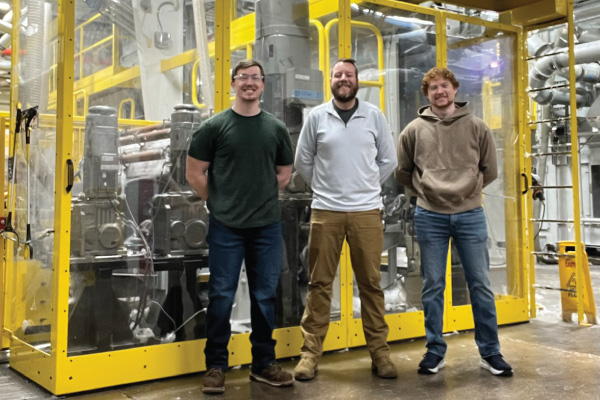
Students: Adam Nalley, Brayden Wiggins, and Jonathon Nelson
Advisor: Prof. Rob Speckert

This project encompasses the design and implementation of an automated conveyor and vacuum clean-off system. The system will be installed beneath a carding line to continuously capture and remove nonwoven lint, fly, and trim. By automating debris removal, the system reduces manual housekeeping requirements, enhances workplace safety by mitigating combustible dust accumulation, and minimizes production downtime while supporting consistent product quality. Project management has been led by Brayden Wiggins, who has ensured milestones and deadlines are met. Jon Nelson is responsible for system design using AutoCAD Inventor, while Adam Nalley has overseen the procurement and staging of all required components in preparation for installation.

*Sponsor: Edgewell Personal Care


Automotive Braking Simulator*
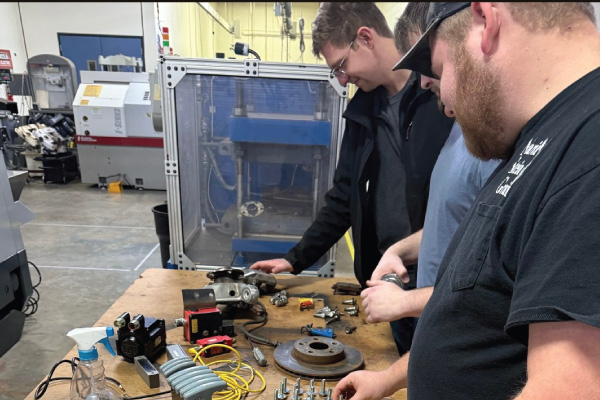
Students: Brad Schmiesing, Jared Shellabarger, Philip Blaess
Advisor: Prof. Rob Speckert

This project involves the design and development of an automotive braking simulator that replicates key functional characteristics of a vehicle braking system. It measures and records braking parameters to enable direct comparison of different brake pad materials under consistent, controlled operating conditions. By isolating variables such as applied pressure, torque, and rotational speed, the system provides a clear, repeatable method for evaluating braking performance. A primary objective of the project is educational use. The braking simulator is intended as a classroom demonstration tool that helps students visualize and understand the relationship between brake pad material, applied force, and system response. By bridging theoretical concepts with real-world automotive behavior, the simulator provides practical insight into braking mechanics and material performance.

*Sponsor: Armin J Fleck Fund


Deadspin *
Students: Jacob Miller and Kyle Honigfort
Advisor: Prof. Rob Speckert

For this project student engineers set out to design and build a 3lb battle bot to compete at a battle bot competition. This project, which was funded through the Fleck Scholarship, allowed engineering students to demonstrate their ability to use the engineering design skills they have learned through their time at Miami of Ohio Regionals and Rhodes State Community college. The bot they choose to design utilizes a beater bar weapon and is in the beetle class of battle bots (3lbs or less). This will be competed at an event hosted by Xtreamstem as part of their collegiate clash competition which brings together students from many different universities and high schools to compete.

*Sponsor: Armin J Fleck Fund

Compressed Air Monitoring System (CAMS) *

Students: Anthony Inderhees, Andrew Day, Huy Lai
Advisor: Prof. Rob Speckert, Michael Weeks

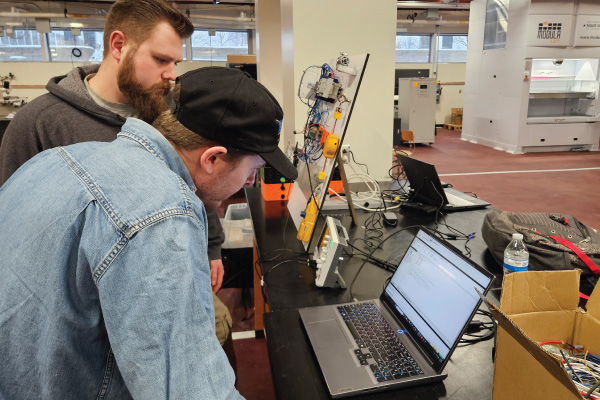
Our Senior Design project is designing a Compressed Air Monitoring System (CAMS) for the Miami University Oxford Instrumentation Laboratory. The engineering students will design and install the CAMS system to track key compressor health and performance data with system pressure, motor current, vibration, drain activity, and HMI inputs. Our goal is to centralize these measurements into a single PLC-based monitoring platform with a touchscreen HMI that displays live status, trends, and alarms. By improving visibility and enabling predictive maintenance, CAMS helps reduce unexpected failures, minimize wasted energy, and support safer, more efficient lab operations.

*Sponsor: Armin J Fleck Fund and Miami University Instrumentation Lab


Tensile Tester Improvements *

Students: Garret Strevell, Tyler Baldasare, Paul Odityo
Advisor: Prof. Rob Speckert

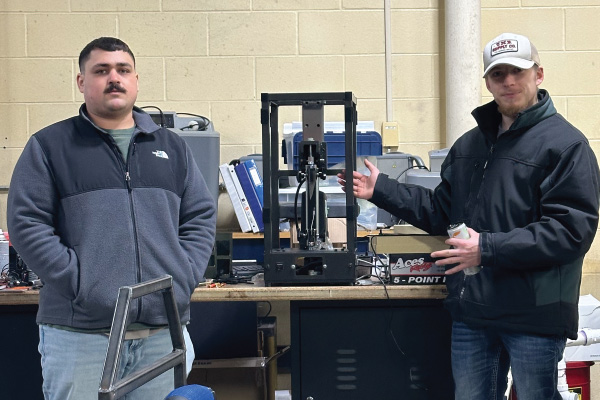
This project involved the design, construction, and validation of a bench-top tensile testing machine intended for educational and experimental use. Sponsored by the Miami University Fleck Scholarship, the goal was to bridge theoretical mechanical engineering concepts with a fully functional, real-world testing system capable of generating accurate stress–strain data.

*Sponsor: Armin J Fleck Fund


Mobile Holographic Display System with Automated Rotation *

Students: Grace Worthington, Michael O’Neill, B Tan
Advisor: Dr. Esmaeil Sadeghi

We’re building a mobile 3D holographic display system that uses the Pepper’s Ghost illusion to project full motion visuals that can be viewed from any angle.

*Sponsor: Armin J Fleck Fund

Powder Layering System for Metal Additive Manufacturing*

Students: Austin Newsom, Christopher Bashaw, Amadou Niang
Advisor: Dr. Esmaeil Sadeghi

This project focuses on the design and development of a belt-fed powder distribution system integrated with a dual-rail gantry mechanism capable of controlled motion along the X-axis over a travel distance of approximately 750 mm. The primary objective of the system is to provide consistent, repeatable powder delivery and spreading while minimizing sensitivity to powder material characteristics such as particle size distribution, flowability, moisture content, and bulk density. The system is intended for use in powder-based manufacturing or research environments where uniform material deposition is critical to overall process performance and quality.

*Sponsor: Armin J Fleck Fund

EV Go-Kart *

Students: Seaver Rothwell, Kevin Massimo, Parker Price
Advisors: Dr. Meenakshi Narayan, Dr. Moataz Salem

For our Senior Design Project, our goal is to build an EV go-kart that will be able to automatically transition from 2WD to 4WD with the use of an IMU sensor, Arduino, and wheel encoders that will detect slippage of the tires, Focusing on the 2-4WD system, this idea will allow for smoother rides no matter the terrain. Developing an EV Go-Kart provides both practical and educational value.

*Sponsor: Armin J Fleck Fund

Mechanically Actuated Peanut Butter and Jelly Sandwich Machine

Students: Bruce Finch and Daniel Chow
Advisor: Dr. Meenakshi Narayan, Dr. Moataz Salem

The objective of this project is to design and develop a mechanically powered kitchen device capable of producing peanut butter and jelly sandwiches efficiently (within 10-15 seconds), consistently, and safely. The device aims to streamline a common household task by automating the steps of bread handling, ingredient dispensing, and sandwich assembly, all powered by a single manual input.


Semi-Autonomous Materials Pickup, Storage, And Delivery Cart *

Students: Takumi Allen, Daniel Zeigler, Weston Fox
Advisor: Dr. Meenakshi Narayan

The purpose of our project is to design an affordable, accessible, and replicable solution for small scale materials handling. Our project aims to deliver a small batch materials delivery robot that operates with minimal human interaction with the goal to create and program lightweight materials transportation bot. This includes elements of line following robotics to efficiently pick up and deliver material to designated areas of a shop floor.

*Sponsor: Armin J Fleck Fund


Smart Energy Control System*

Students: Joshua Cummins, Trey Satterfield
Advisor: Dr. Meenakshi Narayan

It is an automated control system that involves three different energy input sources (solar energy, grid power energy, and wind energy) and uses a PLC to determine which of the three input sources is to be used by determining which is the most efficient and the most optimal. Altogether, the Smart Energy Control System has three main sections to the entire control system: a transducer and signal conditioning system, automated PLC signaling, conditioning, and switching system, and a relay logic system to provide clean and isolated input energy to our system’s load. The end goal of this project is to design and develop a multi energy source control system that is automated and provides the user with a well-organized energy management system that pairs energy efficiency with economic benefits.

*Sponsor: Armin J Fleck Fund


Smart Powered Air Purifying Pump*

Students: Eric Hudyk, Benjy Davis
Advisor: Dr. Meenakshi Narayan

The Smart Powered Air Purifying Pump (SPAPP) will address the lack of affordable and adaptable Powered Air-Purifying Respirator (PAPR) pumps on the current market. Available units are often incompatible with common filter types and respirator designs or include expensive proprietary wear components that create a price barrier for individuals or small businesses. This new design allows for flexibility, by making it usable for many types of respirator masks, such as loose fitting, tight fitting, half face, or full-face masks, along with common filter connections such as the 40mm NATO and 3M Bayonet styles commonly used in industry.

*Sponsor: Hudyks Custom Designs LLC


Trailer Maneuverability Robot*

Students: Nathaniel Crichton, Stephen Malamisuro, Malachi Anderson
Advisor: Dr. Meenakshi Narayan, Dr. Moataz Salem

The goal of this project is to create a working robot that has the capability of pulling a 5,000-pound trailer through a parking lot using remote control. This project required designing and fabricating many steel components to make it durable enough to withstand the towing forces. This project had many distinctive design iterations to create the best prototype possible in the allotted time.

*Sponsor: Armin J Fleck Fund


Vacuum Gauge Data Logger *

Students: Jasmine Guevara-Alvarado, Joseph Boggs, Brice Tchatat Nfinda
Advisor: Dr. Meenakshi Narayan

The purpose of this project is to design and implement a data logging system for the Vacuum Stations at Columbus State Community College (CSCC). The system will interface directly with the existing digital vacuum gauges to automatically acquire, record, and display vacuum pressure data in real-time. The proposed solution will incorporate a user-friendly graphical interface to accommodate both engineering and non-engineering users, support data visualization within the software, and enable data export to Excel. Furthermore, the system will be fully compatible with LabVIEW to facilitate future laboratory expansions and enable advanced data processing and analysis.

*Sponsor: Columbus State Community College