
AI Won’t Take the Computing Jobs of the Future: It’s Building Them
Miami University Computer Science and Software Engineering faculty weigh in on why “there has never been a more exciting time to enter this field”
AI Won’t Take the Computing Jobs of the Future: It’s Building Them
Miami University Computer Science and Software Engineering faculty weigh in on why “there has never been a more exciting time to enter this field”
It’s tough to imagine a future that doesn’t exist yet. Gutenberg’s printing press was first believed to corrupt the mind. Automobiles were thought a passing fad. Fear of computers was so rampant in the 1980s it gained a name: computerphobia.
We have the benefit of time, of course, to know how these innovations worked out. And yet we find ourselves in a similar predicament, playing apocalyptic madlibs with a new technology (artificial intelligence) and the same argument (innovation is coming for our jobs) and the same fears (we’re doomed).
How much of that fear is justified? Will AI, as many LinkedIn pundits would have us believe, replace computer science jobs? Three Miami University faculty members—Vaskar Raychoudhury, Liran Ma, and Honglu Jiang—from the College of Engineering and Computing weigh in on what’s changing, what’s new in computer science education, and what computer science careers of the future might look like.
AI in Context: How Did We Get Here?
Let’s get one thing straight: artificial intelligence is not new. The foundations of AI trace back to Alan Turing and his famously proposed “Turing Test” in 1950 to see if a machine could imitate intelligent behavior. The 1980s and ‘90s saw software that mimicked human decision making in specific fields. Advancements in graphics chips provided processing power for the massive datasets enabled by the internet in the 2010s. This deep learning era paved the way to our current moment, the generative AI era, where we’ve shifted from AI that can process things to AI that can create things.
When large language models (LLMs) like ChatGPT hit the scene beginning in 2022, AI took off in the public discourse. Now, when people talk about AI, they’re often referring to LLMs. But there are other models in addition to generative, including machine learning and deep learning.

As associate professor of Computer Science and Software Engineering Vaskar Raychoudhury likes to tell students, AI isn’t ChatGPT, Gemini, or Claude: “It’s just a bunch of algorithms trying to make intelligent decisions.”
It’s easy to fear for your career trajectory when you don’t understand how the technology works. We see generative AI’s outputs—So affirmative! So natural!—and get swept away in the believability of it.
Let us not forget the artificial in artificial intelligence. Generative AI is a statistical model.
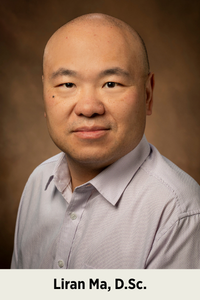
Computer science and software engineering department chair and Naus Family Faculty Scholar Liran Ma offered a helpful example. In a game of rock-paper-scissors, the best strategy for winning is typically unpredictability. LLMs are trained to know this. But if you play the game with an LLM, it favors “rock.” That’s because the word “rock” appears much more often in our language.
Generative AI’s outputs, then, are a game of probability and relevance, which does not necessarily imply cause and effect. This is what causes hallucinations and inaccurate shortcuts.
What’s Changing in Computer Science Education
The modern developer uses AI tools to write code, run tests, create spec files, and speed up tedious tasks. Getting from idea to inception takes considerably less time, though there are trade-offs. Time previously spent programming is still being spent, typically debugging and reviewing AI-generated code.
Ma described this new entry level for computer science roles as more like a mid-level job. All three professors agreed: simply knowing how to program is no longer enough.
“They need to know what’s under the hood,” said Raychoudhury. “They need to know the tricks of the trade.”
Assistant professor in the Center for Cybersecurity, Honglu Jiang, believes students need to have a stronger conceptual understanding and interdisciplinary perspectives to understand why systems work.

While computer science fundamentals remain essential, changing job requirements and technologies mean faculty are regularly adapting how they teach and employ the teacher-scholar model.
In her classes, Jiang has shifted from theoretical learning to primarily experiential learning. Students design and deploy networks, launch attacks to understand the importance of network security, and test the limits of AI’s defenses. Her research aims to design defense mechanisms against the security vulnerabilities of LLMs.
Raychoudhury is leading student teams in several interdisciplinary research projects aimed at improving accessibility, including a navigation system for wheelchair users and health-monitoring systems for older adults.
Ma changes about 20 to 30 percent of the things he teaches each year, always striving to create “suspense and wonderment” that guides learning. He is also working on socially impactful AI collaborations, including real-time monitoring to improve doctor/patient communication and multimodal tools that support substance abuse intervention programs.
Preparing For Careers of The Future
Quantum engineer. AI ethics officer. Machine learning engineer. These are just a few emerging job titles computer science graduates could step into in the years ahead.
With 60% of today’s workforce employed in roles that didn’t exist 85 years ago, preparing students for careers of the future is critical to their success. “To us,” Ma said, “exposure is different from a systematic education.”
The College of Engineering and Computing recently rolled out two new bachelor’s degrees in Artificial Intelligence and Quantum Computing with this approach in mind, bringing the total number of available undergraduate computer science and software engineering degrees up to five.
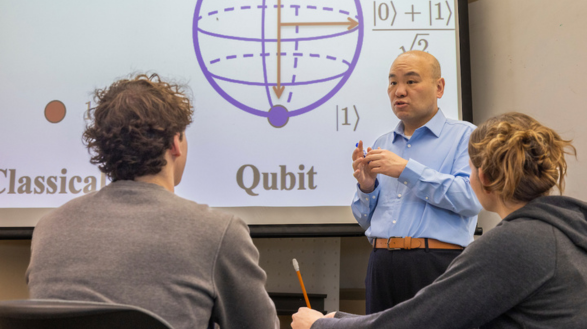
Mathematics, physics, business, ethics—all of these disciplines are part of computer science. Students in the Department of Computer Science and Software Engineering come to recognize the importance of real human intelligence and decision making in an AI-augmented world through interdisciplinary learning, practical projects, and cultural competence.
“With Miami’s background in the liberal arts,” Raychoudhury said, “this is the best place to teach students the technology side and the ethics side and make the best humans for the next generation.”
Will AI Replace Computer Science Jobs?
The short answer is no. Like computers and smartphones before it, AI is a tool.
Demand for software is infinite, and human capacity has long been the limiting factor. Now, Raychoudhury believes, “AI is opening that bottleneck and taking us to the bigger sea. In every discipline, including computer science, you still have to know what you are doing. It doesn’t mean that AI is taking the jobs.”
Ma and Jiang agreed; it’s all about evolving your skillset to meet a new demand. AI is already creating new opportunities and new careers to continue advancing the technology and developing strategies against adversary attacks.
That’s not to minimize the cost of innovation. Disruption is real. Transitions are painful. Successful adoption of new technology always depends on creating more than we destroy.
But if history is any indicator, we continually underestimate our ability to adapt. If our resistance to change had ever surpassed our ability to imagine new futures, we simply wouldn’t be here.
“There has never been a more exciting time to enter this field,” Raychoudhury said. “There are infinite opportunities. If you want to build the future and ensure it is both secure and ethical, then computer science is exactly where you belong.”